PROLOGUE: The $350 Billion Secret
In 1837, a young man named Charles Lewis Tiffany walked into a small stationery shop in lower Manhattan with exactly one thousand dollars borrowed from his father. He had no grand theory about luxury. He had no MBA. He had no playbook. What he had was an instinct that would take nearly two centuries to fully articulate: the understanding that people do not buy objects. They buy meaning.
He could not have known that 188 years later, the French luxury conglomerate LVMH would pay $16.2 billion for the company he founded, making it the largest luxury goods acquisition in human history. He could not have known that a single shade of blue, robin's-egg blue, to be precise, would become so powerfully associated with his brand that it would be granted federal trademark protection by the United States government. He could not have known that a cardboard box in that color would one day trigger an emotional response so reliable that neuroscientists would study it.
But instinct is a funny thing. It operates ahead of theory. And Tiffany's instinct, that what he was really selling was not stationery, not fancy goods, not even jewelry, but the dream of a certain kind of life, would prove to be the foundational insight of the entire luxury industry.
Today, the global jewelry market exceeds $350 billion. The broader luxury goods sector surpasses $1.5 trillion. And the single most important differentiator between the brands that thrive across generations and those that vanish within a decade comes down to one thing: the quality of their story. Stones, gold, and design all matter, but story outlasts them all.
This guide is that story, and the instruction manual behind it.
Forget everything you think you know about textbooks. This guide does not catalog what happened. It dissects why it happened, shows how to make it happen again, and warns, with vivid specificity, what goes wrong when the principles are violated. Triumph lives here, alongside spectacular failure. Brands that seemed invincible crumbled. Brands that seemed doomed rose from the ashes. The space between those stories contains the principles that separate the immortal from the forgettable.
The playbooks drawn upon span far beyond jewelry. Disney's IP strategists turned a cartoon mouse into a hundred-year commercial empire worth more than most countries. De Beers manufactured a cultural tradition from thin air, convincing an entire civilization that an arbitrary stone was the only acceptable symbol of romantic love. In the perfume laboratories of Grasse, France, nose meets neuroscience. In the mobile gaming studios of Helsinki, Finland, data scientists have perfected the art of predicting a customer's lifetime value within twenty-four hours of their first interaction.
The stories inside are dramatic. Gucci's near-death experience: a family feud, a murder, the over-licensing of a once-sacred brand name onto ashtrays and coffee mugs, and then the unknown Texan named Tom Ford who engineered what is arguably the most spectacular brand turnaround in the history of luxury goods. Burberry's chav crisis: Britain's most prestigious check pattern hijacked by football hooligans, then reclaimed through radical restraint and digital innovation. The Hope Diamond on its journey through empires and catastrophes. Faberge eggs traveling from the Tsar's private chambers to the auction houses of the twenty-first century. Coco Chanel spraying her revolutionary fragrance in fitting rooms, inventing influencer marketing seventy years before the term was coined.
One discovery threads through every chapter: the principles of building lifetime customer value, whether the product is a $50,000 diamond necklace or a $4.99 mobile game character, are shockingly universal. The greatest luxury brands are never built on a product. They are built on a promise so compelling that customers pay extraordinary premiums to participate in it, and so durable that it passes from one generation to the next like an heirloom.
Whether you are launching your first jewelry line from a kitchen table or steering a heritage maison toward its next century, the principles in this guide will transform how you think about your brand, your customers, and the invisible architecture that connects them.
Let us begin where all great luxury stories begin: with a single, audacious decision.
BOOK ONE: THE ROOTS
Understanding Where Luxury Comes From
Chapter 1: Before the Brands, a Five-Thousand-Year History of Jewelry as Power
The First Jewelers
Long before Tiffany, before Cartier, before the concept of a "brand" existed in any language, human beings were making jewelry. And they were making it for exactly the same reason they make it today: to communicate something that words alone could not express.
The oldest known jewelry dates to approximately 100,000 years ago. In 2004, archaeologists working in the Blombos Cave on the southern coast of South Africa discovered a collection of forty-one small shells, each with a hole bored through the center, each bearing traces of red ochre pigment. They served no functional purpose. They were beads, strung on a cord and worn around the neck or wrist of a human being who lived in a cave on the edge of the Indian Ocean a hundred millennia before the birth of Christ.
Think about what this means. Before agriculture, before writing, before cities, before religion as we understand it, before every institution of civilization, human beings felt the need to adorn themselves. The drive to wear something beautiful, something that signals identity and belonging and status, runs deeper than culture. It is wired into the species.
This matters enormously for anyone building a jewelry brand, because it means you are not creating demand. You are serving a demand that has existed for a hundred thousand years. The hunger for adornment already exists (though, as we will see with De Beers, you can certainly shape and redirect it). Your job is to understand, respect, and channel it.

Case Study #1: The Tomb of Tutankhamun, When Jewelry Was a Bridge to the Afterlife
On November 26, 1922, British archaeologist Howard Carter peered through a small hole he had chiseled in a sealed doorway deep beneath the Valley of the Kings in Egypt. Behind him stood his patron, Lord Carnarvon, who had spent years and a fortune financing the excavation. "Can you see anything?" Carnarvon asked.
"Yes," Carter replied. "Wonderful things."
What Carter saw, illuminated by the flickering light of a single candle, was the greatest archaeological treasure ever discovered: the intact tomb of the boy pharaoh Tutankhamun, sealed for 3,245 years. And among the "wonderful things" that filled the tomb, jewelry occupied a place of supreme importance.
Tutankhamun's funerary jewelry was not decoration. It was technology. Each piece served a specific spiritual function, designed to protect the pharaoh's soul on its journey through the underworld and ensure his resurrection in the afterlife. The iconic golden death mask, weighing 24 pounds and crafted from two sheets of hammered gold inlaid with lapis lazuli, obsidian, quartz, and colored glass, was not a portrait. It was a magical device, designed to allow the gods to recognize the pharaoh's face in death. The broad collar necklace, composed of rows of gold, carnelian, feldspar, and glass beads arranged in concentric arcs, was a protective shield against evil spirits. The scarab pectoral, featuring a large scarab beetle carved from Libyan desert glass (a natural glass created by a meteorite impact millions of years ago), was a symbol of regeneration, the scarab being associated with the sun god Khepri, who rolled the sun across the sky each dawn.
Every material was chosen for its symbolic resonance, beyond its visual beauty. Gold represented the flesh of the gods, imperishable and eternal. Lapis lazuli, imported at enormous expense from the mountains of Afghanistan, represented the night sky and the realm of the divine. Turquoise symbolized fertility and rebirth. Red carnelian was the color of blood, of life force, of power.
The lesson for modern jewelry brands is profound: jewelry has always carried meaning beyond decoration. From its earliest origins, it has been invested with significance that transcends the physical object. The materials matter, yes, but what they symbolize matters more. When a modern customer chooses a sapphire over a ruby, she is not merely selecting a color. she participates, consciously or unconsciously, in a tradition of symbolic meaning-making that stretches back to the pharaohs.
Case Study #2: The Roman Sumptuary Laws, When Governments Tried to Control Who Could Wear Jewelry
In 215 BCE, the Roman Republic passed the Lex Oppia, one of the earliest recorded laws regulating the wearing of jewelry. The law prohibited any woman from possessing more than half an ounce of gold, wearing multicolored garments, or riding in a horse-drawn carriage within a mile of Rome. The stated purpose was austerity during the Second Punic War against Hannibal. The real purpose was control.
The Romans understood something that every luxury brand manager must also understand: jewelry is a social signal, and social signals have political consequences. When a wealthy merchant's wife wore as much gold as a senator's wife, the visual hierarchy of Roman society blurred. The sumptuary laws were an attempt to restore clarity, to ensure that jewelry communicated status accurately rather than aspirationally.
The Lex Oppia was repealed in 195 BCE after a dramatic protest by Roman women who marched through the streets and blockaded the entrances to the Forum. The historian Livy recorded the scene with a mixture of horror and admiration, describing how the women "could not be kept at home by any authority, any sense of modesty, or any command of their husbands." The women won. The law was repealed. And the principle was established: the desire to adorn oneself is a force that not even the most powerful government on earth can suppress.
For luxury brand builders, this ancient story illustrates two principles. First, jewelry has always been about status signaling. This is not a modern phenomenon, not a product of social media or celebrity culture. It is hardwired into human social organization. Second, attempts to suppress or democratize luxury always fail. Scarcity, exclusivity, and aspiration are not bugs in the luxury system. They are the system. Every attempt to remove them, whether by Roman edict or modern discounting, destroys the very thing that makes luxury valuable.

Case Study #3: The Diamond Necklace Affair, How a Piece of Jewelry Helped Topple a Monarchy
In 1785, a scandal erupted in the court of Versailles that would become one of the proximate causes of the French Revolution. The Affair of the Diamond Necklace is the most dramatic illustration in history of how jewelry can become a political weapon, and how the symbolic meaning of luxury can become more dangerous than any army.
The necklace at the center of the scandal was a monstrous creation: 647 diamonds totaling 2,800 carats, designed by the court jewelers Boehmer and Bassenge for King Louis XV's mistress, Madame du Barry. The king died before the necklace could be delivered, and Boehmer spent years trying to sell it. He offered it to Queen Marie Antoinette. She declined, reportedly saying that France needed ships more than necklaces (an unusually prudent statement from a queen already nicknamed "Madame Deficit" for her extravagant spending).
What happened next reads like a thriller. A confidence woman named Jeanne de la Motte, who claimed to be a friend of the queen, convinced Cardinal de Rohan, a powerful and ambitious clergyman desperate for the queen's favor, that Marie Antoinette secretly desired the necklace but could not be seen purchasing it. De la Motte arranged a midnight meeting in the gardens of Versailles between the cardinal and a woman he believed to be the queen. The woman was actually a prostitute named Nicole Leguay who bore a passing resemblance to Marie Antoinette. In the moonlit gardens, she whispered a few words of encouragement to the cardinal and handed him a rose. The cardinal, convinced he had won the queen's confidence, agreed to purchase the necklace on her behalf for 1.6 million livres.
The necklace was delivered to De la Motte, who immediately had it broken apart and sold the diamonds individually. When the jewelers demanded payment, the fraud unraveled. The cardinal was arrested. De la Motte was tried and branded with a hot iron. And Marie Antoinette, though entirely innocent of involvement, was permanently associated in the public mind with extravagance, deceit, and corruption.
The damage was catastrophic. The trial became the most widely followed event in France, covered in pamphlets and newspapers across Europe. The public, already resentful of royal extravagance, seized upon the affair as proof that the court of Versailles was irredeemably corrupt. Historians consider the Diamond Necklace Affair a significant contributor to the collapse of public trust in the monarchy, which would lead, four years later, to the French Revolution, the execution of Louis XVI and Marie Antoinette, and the end of a thousand years of French monarchy.
The lesson is not merely historical. It is urgently relevant to any luxury brand operating in an era of social media and public scrutiny. Jewelry, because it is the most visible and most emotionally charged symbol of wealth, carries inherent political risk. In times of inequality, conspicuous luxury can become a target for public anger. The brands that understand this manage their visibility carefully, threading the needle between aspiration and arrogance, between celebrating beauty and provoking resentment.

Case Study #4: The Hope Diamond, a Stone That Carries Its Own Story
No gemstone in history has generated more narrative than the Hope Diamond. Its story spans four centuries, three continents, multiple thefts, and a legend of cursed owners that may or may not be true but has proven irresistible to the human imagination.
The stone's documented history begins in 1666, when the French gem merchant Jean-Baptiste Tavernier purchased a 112-carat blue diamond in the Kollur mine in Golconda, India. The diamond was likely part of a Hindu temple idol. Tavernier sold it to King Louis XIV of France, who had it recut into a 67-carat stone known as the French Blue. It remained in the French royal collection for over a century.
During the French Revolution, in September 1792, the French Blue was stolen from the Royal Storehouse along with most of the crown jewels. It disappeared for twenty years. When it resurfaced in London in 1812, it had been recut into a 45.52-carat stone. It passed through several owners before being purchased by the Anglo-Dutch banker Henry Philip Hope in 1839, from whom it takes its current name.
The "curse" legend, which attributes misfortune, madness, and death to the diamond's owners, is largely a twentieth-century invention, enthusiastically promoted by journalists and later by the diamond's most famous owner, the American socialite Evalyn Walsh McLean. McLean, who purchased the diamond in 1911, wore it everywhere, to parties, to horse races, even clipped to her Great Dane's collar. She loved the curse stories because they made her famous. "It's my baby," she reportedly told a friend. "And I don't believe in that curse stuff, but if I did, I'd love it even more."
After McLean's death in 1947, the Hope Diamond was purchased by the New York jeweler Harry Winston. And here the story delivers its most extraordinary marketing moment. In 1958, Winston decided to donate the diamond to the Smithsonian Institution in Washington, D.C. His chosen method of delivery? Regular United States mail.
Winston placed the most famous diamond in the world, valued at the time at approximately $1 million (equivalent to roughly $10 million today), in a small brown paper package, insured it for $145.29 in postage, and sent it via registered first-class mail from New York to Washington. It arrived safely the next day.
The story generated headlines around the world. The sheer audacity of sending a priceless gem through the regular postal service was irresistible to newspapers. Winston received more press coverage from that single act of theater than from any advertisement he had ever run. The Smithsonian received its most famous artifact. And the Hope Diamond entered its final chapter as one of the most visited museum objects on earth, drawing over six million visitors annually.
For brand builders, the Hope Diamond teaches several interconnected lessons. First, a great story compounds in value over time. The diamond's physical properties have not changed in four centuries, but its story has grown richer with every owner, every theft, every curse, every transfer. Each chapter adds narrative density, and narrative density creates perceived value. Second, theater works. Harry Winston's decision to mail the diamond was not recklessness. It was calculated showmanship, a story so surprising and memorable that it would be told and retold for decades. The cost of postage was $145.29. The value of the publicity was incalculable. Third, provenance is the ultimate luxury. The Hope Diamond is not the largest diamond in the world. It is not the most brilliant. But it is the most storied, and that story, that chain of kings and thieves and socialites and museums, is what makes it priceless.
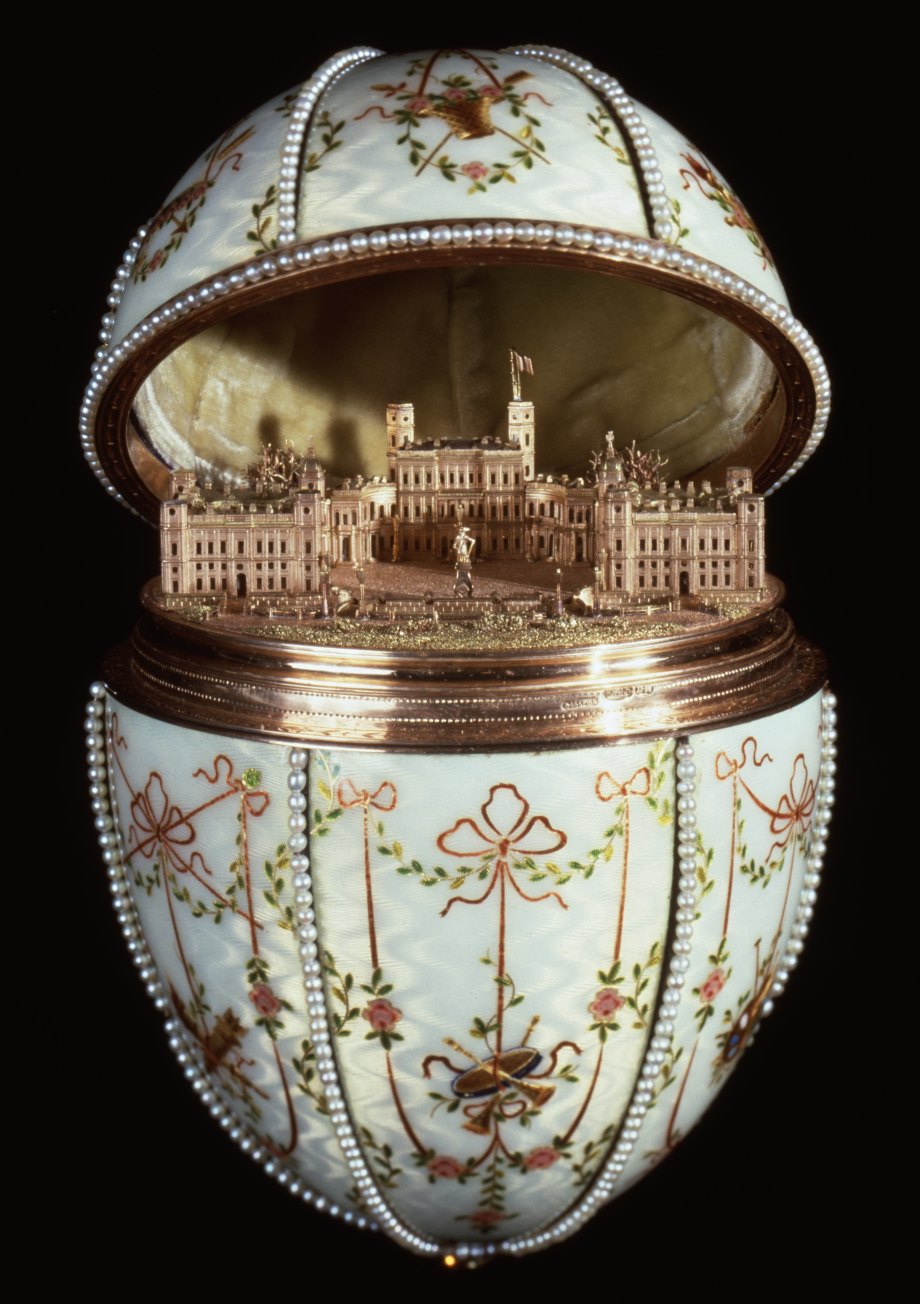
Case Study #5: Faberge, the Artist Who Made Eggs Worth More Than Empires
In 1885, Tsar Alexander III of Russia commissioned the jeweler Peter Carl Faberge to create an Easter egg as a gift for his wife, Empress Maria Feodorovna. The commission was modest by imperial standards. The resulting object was not.
Faberge created an egg of white enamel that opened to reveal a golden yolk. Inside the yolk was a golden hen. Inside the hen was a tiny diamond replica of the Imperial Crown containing a small ruby pendant. The Empress was so delighted that Alexander commissioned Faberge to create a new egg every Easter, with only one condition: each egg must contain a surprise.
Over the next thirty-two years, Faberge and his workshop created fifty Imperial Easter Eggs, each more elaborate than the last. The 1900 Trans-Siberian Railway Egg contained a miniature gold and platinum replica of the entire Trans-Siberian Express, complete with functioning wheels and a tiny key to wind the mechanism. The 1913 Romanov Tercentenary Egg featured eighteen miniature portrait paintings of every Romanov tsar, each framed in diamonds. The 1906 Kremlin Egg, the largest of all, reproduced the Cathedral of the Assumption in gold and enamel, complete with a music box that played a hymn.
Faberge's genius was conceptual, though the technical achievement was extraordinary. He understood that the ultimate luxury lives in the gap between expectation and revelation: a beautiful surprise hidden inside a beautiful object. Each egg was a story waiting to be opened. The exterior promised beauty. The interior delivered wonder. The gap between promise and delivery, that moment of opening, of discovery, of exceeding expectations, was the source of the object's magic.
The Romanov dynasty fell in 1917. The Bolsheviks seized the imperial treasures, and many Faberge eggs were sold on the international market to raise foreign currency for the new Soviet state. Faberge himself fled to Switzerland, where he died in 1920, broken by the loss of his life's work.
But the eggs endured. Today, the surviving Imperial Easter Eggs are among the most valuable decorative objects on earth. In 2007, the Rothschild Egg (a Faberge egg not from the Imperial series) sold at Christie's for $18.5 million. In 2004, a Russian businessman named Viktor Vekselberg purchased nine Imperial Eggs from the Forbes family collection for a reported $100 million.
The story does not end with the historical eggs. In 2015, a junk dealer in the American Midwest purchased a golden egg at a flea market for approximately $14,000, intending to sell it for scrap gold. An internet search led him to discover that it was actually the Third Imperial Easter Egg, one of the missing Faberge masterpieces, created in 1887 and lost since the Russian Revolution. The egg, containing a Vacheron Constantin ladies' watch as its surprise, was eventually valued at approximately $33 million.
A golden egg purchased for $14,000 at a flea market, worth $33 million because of its provenance, its story, and the name "Faberge" attached to it. If you need a single data point to prove that meaning, not material, determines value in luxury, this is it.
The Faberge lesson for modern jewelry brands: Design for the moment of discovery. The opening of a box, the revelation of a hidden detail, the surprise that awaits when a customer looks more closely. Every piece of jewelry should have a story that rewards investigation. A hallmark with a hidden meaning. A stone setting that reveals unexpected beauty from a particular angle. An engraving visible only to the wearer. Faberge understood that luxury is not consumed at a glance. It is experienced in layers, and each layer deepens the emotional bond between the object and its owner.
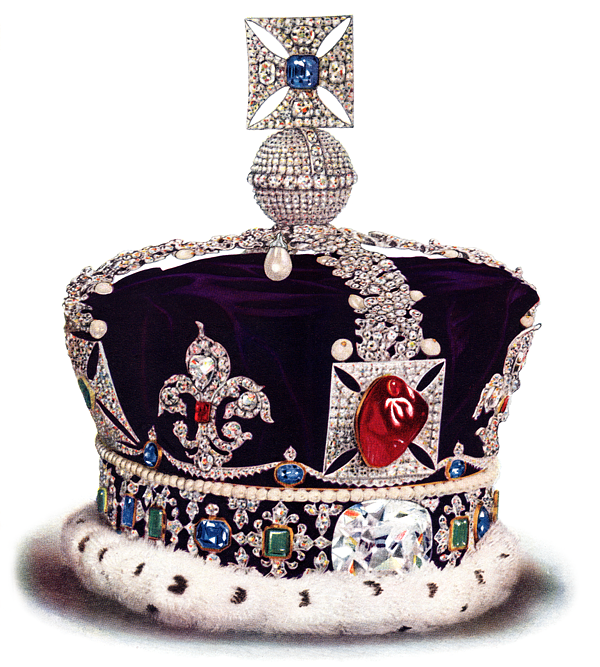
Case Study #6: The Crown Jewels of England, How a Nation Brands Itself Through Gemstones
The Crown Jewels of the United Kingdom, housed in the Tower of London, are the most visited jewelry collection in the world, seen by approximately 2.5 million people each year. They are also, arguably, the most successful branding exercise in the history of nations.
The collection includes 142 objects containing approximately 23,578 gemstones. The Imperial State Crown alone contains 2,868 diamonds, 17 sapphires, 11 emeralds, 269 pearls, and 4 rubies, including the Black Prince's Ruby (which is actually a spinel, but nobody corrects a king). The Cullinan I, also known as the Great Star of Africa, weighing 530.2 carats, is the largest clear-cut diamond in the world and sits at the top of the Sovereign's Sceptre.
But the Crown Jewels are not merely a collection of expensive stones. They are a national brand asset. They communicate the authority, continuity, and legitimacy of the British monarchy in a way that no speech, no document, and no ceremony alone could achieve. When a new monarch is crowned, the physical act of placing the St Edward's Crown on their head, a crown that dates to 1661 and is reserved exclusively for the coronation ceremony, creates a visual link between the new sovereign and every monarch who came before. The crown is, quite literally, a branding device, a physical symbol that transfers the accumulated authority of centuries from one generation to the next.
The lesson for jewelry brands is this: the most powerful jewelry is institutional, representing something larger than any individual: a family, a tradition, a nation, a set of values. When Patek Philippe tells you that you are merely looking after a watch for the next generation, they are applying the Crown Jewels principle to consumer marketing. The product transcends the individual purchaser. It becomes part of an unbroken chain.
Case Study #7: The Koh-i-Noor Diamond, When Heritage Becomes a Diplomatic Incident
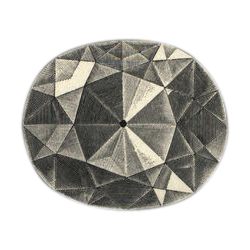
The Koh-i-Noor ("Mountain of Light") is a 105.6-carat diamond currently set in the crown made for Queen Elizabeth The Queen Mother in 1937. Its history is a case study in how ownership of a single gemstone can become a geopolitical flashpoint.
The diamond's documented history stretches back to 1526, when it was owned by the Mughal emperor Babur. For three centuries, it passed through the hands of Mughal emperors, Persian invaders, Afghan warlords, and Sikh maharajas. Each transfer was accompanied by conquest, betrayal, or both. The Persian ruler Nader Shah reportedly gave the diamond its name after seizing it from the Mughal emperor Muhammad Shah in 1739. He reportedly exclaimed "Koh-i-Noor!" upon seeing its brilliance, and the name stuck.
In 1849, after the British annexation of the Punjab, the diamond was seized by the East India Company and presented to Queen Victoria. It was exhibited at the Great Exhibition of 1851 in London, where the public was disappointingly underwhelmed by its appearance. Prince Albert had the diamond recut from 186 carats to 105.6 carats to improve its brilliance, a decision that enhanced its beauty but reduced its historical integrity.
Today, the governments of India, Pakistan, Afghanistan, and Iran have all claimed ownership of the Koh-i-Noor, arguing that it was taken from their territories by force. The British government has consistently declined to return it, stating that "the Koh-i-Noor was obtained legitimately."
The Koh-i-Noor story matters for luxury brands because it illustrates a principle that will recur throughout this guide: provenance is not neutral. The history of a gemstone or a piece of jewelry is not merely a marketing asset. It is a moral question. In an era of increasing cultural sensitivity and postcolonial awareness, brands that source materials from historically contested regions, or that draw aesthetic inspiration from colonized cultures, must navigate these questions with intelligence and humility. The brands that get this right will build trust with a generation of consumers who care deeply about the stories behind their purchases. The brands that get it wrong will face the kind of backlash that can take decades to repair.
Chapter 2: The Great Illusion, Why Jewelry Is Never About the Jewelry
The Night That Changed Everything
In the spring of 1947, a twenty-eight-year-old copywriter named Frances Gerety sat at her desk in Philadelphia, exhausted after a long day at the N.W. Ayer advertising agency. It was late. She was tired. And she had a deadline.
Her task was mundane by the standards of her day: create a new tagline for De Beers, the South African diamond mining conglomerate. The diamond industry was in trouble, serious trouble. During the Great Depression, diamond prices had collapsed. The stones that had once been the exclusive ornament of European aristocracy were now gathering dust in the vaults of Johannesburg. Engagement rings existed, but they were often simple gold bands, or set with rubies, sapphires, or even emeralds. Fewer than ten percent of American brides received a diamond engagement ring. The diamond was a luxury, yes, but not a necessity. Not yet.
Gerety scribbled four words at the bottom of her notepad before going to bed: A Diamond Is Forever.
She reportedly disliked the line the next morning. Her colleagues at N.W. Ayer were lukewarm. But they submitted it anyway, probably because the deadline was tight and no one had anything better. It was a throwaway line, scrawled in exhaustion, destined, they assumed, for the recycling bin of advertising history.
They were wrong. Those four words would reshape the customs of Western civilization.
Within a decade, diamond engagement rings had gone from a niche tradition to a cultural expectation. By 1990, more than eighty percent of American brides received one. The "two months' salary" rule, the idea that a man should spend approximately two months of his income on a diamond ring, was not an ancient tradition. It was invented by De Beers' advertising team. The concept that a diamond should never be resold, that it is a sentimental object, not a commodity, was not a natural human instinct. It was engineered by a marketing campaign designed to suppress the secondary market and maintain the illusion of scarcity.
In 1999, Advertising Age magazine named "A Diamond Is Forever" the greatest advertising slogan of the twentieth century. It had earned the title. No other slogan in history had so fundamentally altered human behavior across so many cultures, so many continents, and so many generations.
Case Study #8: De Beers, Manufacturing Desire from Nothing
The De Beers story is the foundational case study of this entire guide because it proves the most radical principle in luxury marketing: the product is almost irrelevant. The meaning is everything.
To understand the magnitude of what De Beers accomplished, you need to understand what the diamond market looked like before their campaign. In the late 1930s, diamonds were in genuine crisis. The global depression had cratered demand. European war was looming, forcing the Oppenheimer family, which controlled De Beers, to look to the American market as a lifeline. Three-quarters of the company's diamonds were being sold in the United States, but at an average retail price of just $80 per stone. The product had no cultural significance. There was no ritual attached to it. There was no emotional framework that made people need a diamond rather than simply want one.
In 1938, Harry Oppenheimer, son of De Beers founder Ernest Oppenheimer, traveled to New York and met with Gerald Lauck, president of the N.W. Ayer advertising agency. What followed was one of the most consequential meetings in the history of commerce. Oppenheimer needed more than an advertising campaign. He needed a cultural revolution.
N.W. Ayer's strategy was built on four pillars. Understanding each one is essential for anyone building a luxury brand:
Pillar One: Create an emotional anchor. The slogan "A Diamond Is Forever" did not describe a physical property of the stone (though diamonds are indeed very hard). It linked an indestructible mineral to the concept of eternal love. This was a metaphysical assertion, not a product claim, the kind of claim that cannot be disproven because it operates in the realm of emotion, not fact. When you tell a man that his love for his fiancee should be symbolized by something that lasts forever, you are not making a rational argument. You are creating an emotional obligation.
Pillar Two: Manufacture scarcity. This was perhaps the most audacious part of the strategy. Diamonds are not, in geological terms, particularly rare. They are certainly not the rarest gemstone; that distinction belongs to rubies and alexandrites. But De Beers controlled approximately eighty percent of the global diamond supply through its Central Selling Organisation (CSO), and it used this monopoly to carefully regulate the release of stones into the market. Too many diamonds, and prices would drop, shattering the illusion of rarity. Too few, and the market would stagnate. The CSO operated with the precision of a central bank, calibrating supply to maintain the perception that diamonds were precious and scarce.
Pillar Three: Set a spending norm. Left to their own devices, men would spend wildly varying amounts on engagement rings, some a pittance, some a fortune, most somewhere awkward in between. De Beers eliminated this uncertainty by establishing a specific benchmark: two months' salary. This was genius on multiple levels. First, it was specific enough to function as a rule of thumb (people love rules of thumb because they eliminate the anxiety of decision-making). Second, it was flexible enough to scale across income levels (two months' salary means something very different for a factory worker and a surgeon, but the rule applies equally to both). Third, it was framed not as a marketing guideline but as a social expectation: "How else could two months' salary last forever?" The question implies that spending less would be a failure of love itself.
Pillar Four: Make resale taboo. This was the defensive genius of the strategy. If consumers freely resold their diamonds, two things would happen: the secondary market would flood, depressing prices, and the emotional narrative ("a diamond is forever" implies you keep it forever) would collapse. By imbuing diamonds with sentimental value, by making them heirlooms, not assets, De Beers ensured that the supply they released into the market would stay there, locked away in jewelry boxes and safety deposit boxes, never competing with new stones.
The result was staggering in its scope and speed.
The Japan Campaign: Rewriting Fifteen Centuries of Tradition
If the American campaign was impressive, the Japanese campaign was a miracle.
Until the mid-1960s, the importation of diamonds had not even been permitted by the postwar Japanese government. When the campaign began in 1967, not quite five percent of engaged Japanese women received a diamond engagement ring. Japan had no tradition of romance, courtship, seduction, or prenuptial love in the Western sense. Marriages were arranged through intermediaries. The ceremony was consummated according to Shinto law by the bride and groom drinking rice wine from the same wooden bowl. There was absolutely no cultural precedent for gifting a diamond as a token of romantic love.
De Beers did not let this stop them. They launched a campaign tailored specifically to the Japanese market, emphasizing not Western romance but the concepts of harmony, family stability, and modernity. The messaging suggested that a diamond engagement ring was a symbol of Japan's emergence as a modern, internationally connected nation, that it was a mark of sophistication, not Western imitation.
By 1972, the proportion of Japanese brides wearing diamond engagement rings had risen to twenty-seven percent. By 1978, it was fifty percent. By 1981, sixty percent. In fourteen years, a fifteen-hundred-year cultural tradition had been fundamentally rewritten. Japan became the second-largest diamond market in the world, after the United States.
Think about what this means. A company headquartered in Johannesburg, marketing a product mined in Africa, hired an advertising agency in New York to convince a nation on the other side of the world, a nation with no cultural connection to diamonds whatsoever, to adopt an entirely new matrimonial custom. And they did it in less than fifteen years.
This is the power of meaning. This is what happens when you stop thinking about what you sell and start thinking about what people need to believe.
Case Study #9: Elizabeth Taylor's Jewelry, When a Collection Becomes a Legend
Elizabeth Taylor lived her jewelry. Her collection, assembled over five decades of Hollywood stardom and two marriages to Richard Burton, became the most famous private jewelry collection of the twentieth century, and its 2011 auction at Christie's became the most successful jewelry auction in history, generating $116 million in a single evening.
The centerpiece was the Taylor-Burton Diamond, a 69.42-carat pear-shaped stone that Burton purchased at auction in 1969 for $1.1 million (approximately $9 million in today's dollars). When Burton was outbid by Cartier at the auction, he reportedly called them the next morning and bought the diamond from them at a premium. The story of the purchase, the rivalry, the extravagance, the romance, became inseparable from the stone itself.
Taylor wore the diamond to her fortieth birthday party at a Budapest nightclub in 1972, and a photo of the event became one of the most reproduced jewelry images of the century. She wore it to the Academy Awards. She wore it to state dinners. She wore it, memorably, with jeans and a T-shirt. The diamond was not a special-occasion piece. It was part of who she was.
When Taylor died in 2011 and her collection went to auction, every piece sold for multiples of its pre-sale estimate. A jade necklace estimated at $500,000 sold for $1.5 million. A pearl and diamond pendant estimated at $200,000 sold for $11.8 million. The Taylor-Burton Diamond, which Burton had purchased for $1.1 million in 1969, was not in the sale (Taylor had sold it in 1979 to finance hospital construction), but a ruby and diamond necklace by Cartier estimated at $200,000 sold for $3.7 million.
Why did every piece sell for multiples of its estimate? The stones had not improved. The settings had not changed. What had changed was the story. Each piece carried the Taylor provenance, the accumulated narrative weight of decades of public fascination, Hollywood glamour, and legendary romance. The buyer of the Cartier ruby necklace was not buying rubies. She was buying a piece of Elizabeth Taylor. She was buying proximity to a life that fascinated the world.
The lesson for every jewelry brand: association determines value. A diamond in a jewelry store is a commodity with a price. The same diamond around Elizabeth Taylor's neck becomes a legend without a price ceiling. Every marketing decision you make should be evaluated through a single lens: does this association increase or decrease the perceived value of my product?
The Lesson No Jewelry Brand Can Afford to Ignore
Before you design a single piece of jewelry, before you choose a metal or a stone, before you sketch a logo or select a color palette, you must answer one question: What meaning am I creating?
Skip "what product am I making," "what materials am I using," and "what price point am I targeting." Those questions matter, but they are secondary. The primary question, the question that will determine whether your brand exists in ten years or ten months, is about meaning.
De Beers sold eternal love, not diamonds. Tiffany sells the dream of a perfect New York romance. Cartier sells the legacy of kings. Chopard sells the joy of light in motion. Faberge sold the magic of surprise.
What do you sell?
If you cannot answer that question in a single sentence, a sentence that contains no reference to materials, manufacturing, or price, then you are not yet ready to build a brand. You are only ready to build a product. And products, in the luxury market, are commodities. Meaning is the only thing that commands a premium.
Chapter 3: The Graveyard of Brands, What Happens When the Meaning Breaks
Before we learn how to build, we must learn how things break. The luxury graveyard is littered with brands that once seemed invincible, brands that had heritage, craftsmanship, iconic products, loyal customers, and enormous revenues, and still managed to destroy themselves. Understanding how they failed is as important as understanding how the survivors succeeded.
Case Study #10: Gucci, From Murder to Miracle (and Back Again, and Again)
The story of Gucci is the most dramatic in luxury history. It contains family feuds, a literal murder, bankruptcy, one of the greatest turnarounds ever engineered, a second collapse, and a second resurrection. It is a story that would strain credibility if it were fiction. And it contains more lessons per paragraph than any business school case study ever written.
The Rise. Guccio Gucci founded his leather goods company in Florence in 1921, the same year Chanel No. 5 was born. Inspired by the luggage he had admired while working as an elevator operator at The Savoy hotel in London, Gucci built a reputation for exquisite Italian leather craftsmanship. After World War II, the brand flourished. The bamboo-handled bag, the red and green stripe, the double-G logo: these became global symbols of Italian luxury. By the 1970s, Gucci was one of the most recognized luxury brands on earth.
The Fall. Then the family began to devour itself. The conflict between Aldo Gucci (the founder's son, who ran the business) and his nephew Maurizio Gucci (who inherited a controlling stake) was vicious, public, and ultimately fatal, literally. Aldo was convicted of tax evasion and sent to prison. Maurizio seized control and attempted to reposition the brand, but his strategy was incoherent and his spending was reckless. He hired and fired designers in rapid succession. He opened an enormous new headquarters in Milan while the company hemorrhaged cash.
More destructively, in the years of family infighting, Gucci had over-licensed its name onto an astonishing range of products. At its lowest point, the Gucci name appeared on more than 25,000 different products, including ashtrays, playing cards, coffee mugs, and cheap canvas bags sold at airport duty-free shops. The double-G logo, once a symbol of Florentine craftsmanship, had become a symbol of tacky excess. The brand had been strip-mined of its meaning.
In 1993, Gucci lost $22 million on $230 million in sales. Creditors were demanding payment. Employees had not been paid. The supplier relationships that had sustained the brand's manufacturing excellence had been destroyed by years of missed payments. Many industry observers believed Gucci was beyond saving.
And then, on March 27, 1995, Maurizio Gucci was shot dead on the steps of his Milan office. He was forty-six years old. His ex-wife, Patrizia Reggiani, was later convicted of ordering the murder. She served eighteen years in prison. The case became one of the most sensational crime stories in Italian history, later adapted into the Ridley Scott film House of Gucci.

The Resurrection. With Maurizio dead and the Gucci family effectively removed from the business, a new leadership team took control. Domenico De Sole, a Georgetown-educated Italian-American lawyer, became CEO. Tom Ford, a young American designer who had joined Gucci in 1990 as a women's ready-to-wear designer, was appointed creative director.
What De Sole and Ford did next is a masterclass in brand resurrection. Their strategy had five elements that every luxury brand in trouble should study:
First, they slashed the product range. From 25,000 SKUs, they cut to 5,000. This was radical surgery. Every product that diluted the brand, every ashtray, every coffee mug, every cheap canvas accessory, was eliminated. The goal was to restore scarcity and focus. If a product did not reinforce Gucci's identity as a purveyor of the finest Italian leather goods, it was gone.
Second, they repriced everything. De Sole and his merchandising team personally repriced every single item in the collection, lowering prices on average by thirty percent. This seems counterintuitive for a luxury brand, but it was strategically brilliant. Gucci's prices had become arbitrarily high, detached from any relationship to value or competitive positioning. By lowering prices to a point that put Gucci directly alongside Prada and Louis Vuitton, De Sole created a credible value proposition that could attract new customers while the brand rebuilt its prestige.
Third, they rebuilt the supply chain. This was the unglamorous but essential work. De Sole personally visited every manufacturing facility, selecting the best and cutting the rest. He chose Tuscany as Gucci's manufacturing DNA, leveraging the region's tradition of small, highly skilled leather workshops. He created a program that provided selected suppliers with technical and financial support, rebuilding relationships that years of non-payment had destroyed. In exchange, he demanded exclusivity and the highest quality standards.
Fourth, Tom Ford redefined the brand's aesthetic. Ford threw out Gucci's stodgy, classical image and replaced it with something shocking: sex. His collections were provocative, daring, and unapologetically erotic. The Fall 1995 collection, Ford's first as sole creative director, featured velvet hip-huggers, silk shirts unbuttoned to the navel, and a famous ad campaign shot by Mario Testino that oozed raw sensuality. It was a calculated gamble. Gucci's traditional customer, older, wealthy, conservative, might be alienated. But Ford bet that a younger, fashion-forward, culturally connected audience would respond. They responded in droves.
Fifth, they shifted the target customer. This was perhaps the most important decision of all. Instead of trying to win back Gucci's traditional customer (classic, older, wealthy, conservative), Ford and De Sole deliberately targeted a new customer: modern, youthful, urban, fashion-conscious. This new customer had less traditional brand loyalty, they replaced everything every season to follow trends, but they were passionate, vocal, and willing to spend on brands that felt culturally relevant.
The results were astonishing. In fiscal 1997, Gucci saw a 144 percent increase in revenues year-over-year. By 1999, the company was valued at more than $4 billion. It attracted a bidding war between Bernard Arnault of LVMH and Francois Pinault of PPR (now Kering), with Pinault ultimately winning control. Tom Ford had achieved what many considered impossible: he had taken a brand widely considered dead and made it the most desired name in fashion.
The Second Fall. But the Gucci story does not end there, and its second act contains an equally important lesson. When Tom Ford and De Sole departed in 2004, after failing to agree with PPR over artistic control, Gucci entered another period of uncertainty. A series of creative directors (Alessandra Facchinetti, Frida Giannini) attempted to maintain Ford's momentum but struggled to define a clear post-Ford identity. Under Giannini, the brand experienced three consecutive quarters of declining profit by late 2014. The aesthetic drifted. The cultural relevance faded. Once again, Gucci was a brand in search of its meaning.
The Second Resurrection. In January 2015, Marco Bizzarri was appointed CEO. His first and most consequential decision was hiring Alessandro Michele, a relatively unknown accessories designer who had spent years inside the Gucci organization, as creative director. Michele's vision was the polar opposite of Ford's: where Ford had been sleek, minimal, and sexual, Michele was maximalist, eccentric, and romantic. He layered patterns, mixed eras, combined streetwear with haute couture, and embraced a gender-fluid aesthetic that felt perfectly calibrated for the cultural moment.
The effect was electric. Gucci became the most-searched fashion brand in the world on platforms like Lyst between 2017 and 2019. Gen Z adopted it as their defining luxury brand. Revenue surged past $9 billion. Michele had proven that a luxury brand can reinvent itself radically, not once but twice, as long as the new identity is coherent, culturally resonant, and executed with total commitment.
But Michele's tenure also contained a critical failure that every brand builder must study. In 2019, Gucci released a black balaclava sweater that bore an unmistakable resemblance to blackface imagery. The backlash was immediate and severe. Social media erupted. Celebrities and influencers publicly distanced themselves from the brand. Rather than deflecting or minimizing, Gucci took full responsibility, recalled the product from all channels, issued a public apology, and launched "Gucci Changemakers," a long-term program dedicated to diversity, inclusion, and cultural sensitivity training. The crisis was contained, and the brand's willingness to own its mistake actually strengthened its credibility with the values-conscious Gen Z audience it had courted.
The Core Lesson. Gucci's hundred-year saga teaches several interconnected lessons:
Over-licensing is brand suicide. The moment a luxury brand's name appears on products that do not reinforce its core identity, the meaning begins to leak. And once meaning leaks, it does not seep back in gradually. It hemorrhages. The damage compounds. Each cheap product on the market sends a signal to every consumer: this brand is not special.
A brand can survive a change of aesthetic, but not a change of commitment. Both Tom Ford and Alessandro Michele radically reinvented Gucci's look, yet both succeeded because each brought total creative conviction. The failures came when the creative direction was tentative, incoherent, or derivative. Customers can sense hesitation. They cannot forgive it.
Cultural sensitivity has become existential. In the age of social media, a single product can trigger a global crisis within hours. Luxury brands, which trade on aspirational imagery and symbolic meaning, are especially vulnerable. The brand that handles such a crisis with transparency, accountability, and genuine structural change can emerge stronger. The brand that deflects, minimizes, or goes silent will suffer damage that no advertising budget can repair.

Case Study #11: Burberry, When Your Customers Become Your Worst Enemies
If Gucci's crisis was self-inflicted from the inside, Burberry's crisis came from the outside, from the customers themselves. And it is arguably the most terrifying scenario any luxury brand can face: what happens when the "wrong" people start wearing your products?
The Heritage. Burberry's story begins in 1856, when twenty-one-year-old Thomas Burberry opened a draper's shop in Basingstoke, England. His invention of gabardine, a waterproof yet breathable fabric, led to the creation of the trench coat, which became standard issue for British officers in World War I. The brand outfitted polar explorers (Roald Amundsen, Ernest Shackleton), aviators, and adventurers. By the mid-twentieth century, Burberry was synonymous with British aristocratic elegance. Its check pattern, a distinctive plaid lining in camel, red, black, and white, was as recognizable as any logo in the world.
The Crisis. In the 1990s, Burberry made a series of decisions that seemed commercially rational at the time but proved catastrophic for the brand. To increase revenue, the company licensed its famous check pattern to manufacturers around the world, allowing it to appear on products ranging from baseball caps to bikinis to baby strollers. The check became ubiquitous. And ubiquity, in luxury, is poison.
At the same time, a cultural shift was occurring in Britain. The check pattern was adopted by a subculture known as "chavs," working-class youth associated (fairly or unfairly) with antisocial behavior, petty crime, and football hooliganism. The tabloid newspapers feasted on the story. When British soap opera actress Daniella Westbrook was photographed head-to-toe in Burberry check, wearing a Burberry skirt, carrying a Burberry bag, pushing a Burberry stroller, with her daughter in a matching outfit, the image became iconic. The Guardian newspaper described it with withering contempt, suggesting Westbrook had "gorged herself upon it, rolled about in it like a pig in muck."
The damage was swift and devastating. Pubs and bars in England began banning customers wearing Burberry check, associating it with violence and disorder. High-end retailers quietly dropped the brand from their shelves. The wealthy, fashion-conscious consumers who had been Burberry's core customers abandoned it. By 2005, an estimated ninety-nine percent of Burberry check products sold worldwide were counterfeit. The brand that had dressed polar explorers and British officers was now the uniform of petty criminals.
The Recovery. In 2006, Angela Ahrendts, an American executive from Liz Claiborne, was appointed CEO, joining Christopher Bailey, who had been brought in as creative director in 2001. Together, they executed a recovery strategy that should be studied by every luxury brand:
They restricted the check to ten percent of products. This was the single most important decision. By making the check rare again, they restored its exclusivity and severed its association with mass-market accessibility. The baseball caps, the single most visible symbol of the chav association, were eliminated entirely.
They bought back licenses. Burberry aggressively repurchased manufacturing licenses that had allowed third parties to produce Burberry-branded products. This included buying out a Spanish franchise that accounted for twenty percent of group revenues, an enormous short-term financial sacrifice that was essential for long-term brand control.
They raised prices and elevated positioning. Rather than trying to compete with accessible luxury, Ahrendts pushed Burberry decisively upmarket. Prices rose. Product quality increased. The target customer shifted from "anyone who wants the check" to "discerning consumers who appreciate British heritage and craftsmanship."
They chose new faces carefully. Bailey selected brand ambassadors, Emma Watson, Eddie Redmayne, Cara Delevingne, who embodied youthful British sophistication. Each one was an actor, model, or cultural figure associated with intelligence, taste, and creative ambition.
They pioneered digital luxury. Ahrendts made Burberry one of the first major luxury brands to fully embrace digital marketing and e-commerce. Burberry was the first luxury brand to live-stream its runway shows, making them accessible to a global audience. They launched "Art of the Trench," a user-generated content platform that turned customers into brand ambassadors. They created a customization platform allowing customers to personalize trench coats, the brand's most iconic product.
The results were dramatic. Burberry's share price quadrupled during Ahrendts' tenure. Sales increased to over two billion pounds. Market capitalization tripled to seven billion pounds. Wealthy consumers returned to the brand. In 2014, Ahrendts was recruited by Apple to lead its retail operations, a fitting destination for someone who had proven that luxury and technology could not only coexist but amplify each other.
The Deeper Lesson. Burberry's crisis teaches a principle that is profoundly uncomfortable for brand managers: you do not fully control your brand. Your customers do.
A brand is whatever the market believes it is, regardless of what the company says. De Beers spent decades building the belief that diamonds equal love. But Burberry discovered that a brand can be hijacked, its carefully constructed meaning rewritten by consumers in a matter of months. The check pattern's meaning was not "British aristocratic heritage." Its meaning was whatever people wearing it communicated. When those people were Princess Diana, the meaning was one thing. When they were football hooligans, the meaning was something else entirely.
For jewelry brands, this lesson is directly applicable. Your brand's meaning lives in the hands of the people wearing your pieces. If your jewelry is seen exclusively on the wrists and necks of sophisticated, admired, culturally influential people, your brand will accumulate prestige. If it becomes associated with any group that conflicts with your desired positioning, whether through over-licensing, counterfeiting, or simple cultural drift, the damage can be existential.
This is why brand protection belongs in the strategy room, not the legal department. Controlling who wears your product, where your product appears, and how your product is represented is as important as designing the product itself.

Case Study #12: Versace, When the Visionary Dies
On the morning of July 15, 1997, Gianni Versace was shot dead on the steps of his Miami Beach mansion, Casa Casuarina, by the serial killer Andrew Cunanan. He was fifty years old. His death sent shockwaves through the fashion world and left behind a brand that was, in many ways, an extension of a single personality.
Gianni Versace had been more than a designer. He had been a cultural force. His clothing celebrated the human body with an unabashed sensuality that scandalized conservative fashion critics and delighted everyone else. He dressed supermodels (Naomi Campbell, Cindy Crawford, Claudia Schiffer, Linda Evangelista), rock stars (Prince, Elton John), and movie stars (he designed costumes for several films). His friendship with Princess Diana generated global press coverage. His Medusa logo, drawn from Greek mythology, was as recognizable as any symbol in fashion.
After Gianni's death, his sister Donatella took over as creative director, while his older brother Santo managed the business. The transition was rocky. Donatella was a talented designer, but she was not Gianni. She struggled under the weight of grief and public expectation, and her personal battles with substance abuse became tabloid fodder. Revenue declined. Critics questioned whether the brand could survive without its founder.
In 2018, the Versace family sold the brand to Capri Holdings (parent of Michael Kors and Jimmy Choo) for approximately $2.1 billion. The sale was viewed by some as an acknowledgment that the family could not, by itself, sustain the brand at the global scale the luxury market demanded. Under Capri Holdings, Versace has pursued aggressive expansion, but the brand has never fully recaptured the cultural electricity that Gianni generated.
The lesson is painful but important: when a brand is synonymous with its founder's personal charisma, the founder's death creates a void that no successor can fill by imitation. The successor must find a new source of energy, a new reason for the brand to exist, that honors the founder's legacy without attempting to replicate their irreplaceable personality. Chanel after Coco found Karl Lagerfeld, who reimagined the brand for forty years without imitating Coco. Gucci after the Guccis found Tom Ford, who reinvented the brand rather than restoring it. Versace after Gianni has not yet found its equivalent. The search continues.
Case Study #13: Links of London, the Quiet Death of an Accessible Luxury Brand
In October 2019, the British jewelry brand Links of London entered administration (the British equivalent of bankruptcy) and closed all 350 of its global stores. The collapse was swift, decisive, and, for the thousands of employees who lost their jobs overnight, devastating.
Links of London had been founded in 1990 by Annoushka Ducas and her husband John Ayton, starting with a set of fish-shaped cufflinks that became a sensation among London's financial elite. The brand grew rapidly through the 1990s and 2000s, positioning itself in the "accessible luxury" space, above costume jewelry but below the grand maisons. Sterling silver charm bracelets were its signature product.
The brand's problems were structural, not aesthetic. First, it was caught in the dangerous middle ground between true luxury and affordable fashion jewelry. Brands like Pandora competed aggressively on price from below, while brands like Tiffany pulled aspirational customers upward. Links' position, premium but not prestigious, proved untenable.
Second, the brand expanded too aggressively. At its peak, Links of London operated hundreds of stores across the globe, many in expensive high-street locations with crushing rent obligations. When sales declined, the cost structure became unsustainable. The same retail expansion that had driven growth became the weight that dragged it under.
Third, the brand failed to evolve its core product. The charm bracelet concept, while initially distinctive, became commoditized. Pandora executed the same concept at scale with superior operational efficiency. Links of London never developed a second iconic product category to diversify its appeal.
The lesson: the "accessible luxury" space is the most dangerous position in the luxury market. You face competition from true luxury brands reaching down and mass-market brands reaching up, and you lack the heritage, exclusivity, and emotional resonance that protect brands at the top of the pyramid. Brands in this space must either move decisively upward (as Burberry did under Ahrendts) or build such a distinctive product ecosystem that price competition becomes irrelevant (as Pandora did with its charm system). Standing still in the middle is a death sentence.
Case Study #14: Pandora's 2018 Crisis, When Success Becomes the Enemy
Pandora, the Danish jewelry brand that had invented a billion-dollar business around customizable charm bracelets, seemed unstoppable through the mid-2010s. Revenue exceeded $3.5 billion. The stock price soared. The company operated in more than 100 countries with over 7,700 points of sale.
Then, in 2018, the floor fell out. The stock price collapsed by more than sixty percent. Revenue growth stalled. The brand's core product, the charm bracelet, was showing signs of market saturation. Pandora had opened too many stores, diluted its brand with excessive promotions, and failed to innovate beyond the charm concept. Customers who had once felt excited about collecting charms now felt they had "completed" their bracelets. There was no reason to come back.
The company brought in a new CEO, Alexander Lacik, formerly of the consumer goods giant Reckitt Benckiser, who launched a turnaround program called "Programme NOW." The strategy had several elements that are instructive for any brand facing saturation:
First, Lacik stopped the promotional addiction. Pandora had been running constant sales and discounts, training customers to wait for markdowns. He reduced promotional activity and refocused on full-price sales, accepting a short-term revenue hit in exchange for long-term brand health.
Second, he invested in brand elevation. Pandora's marketing had become functional and product-focused, showing individual charms against white backgrounds. Lacik shifted to emotional, lifestyle-focused campaigns that connected the charms to personal stories and milestones.
Third, he broadened the product range beyond charms. New collections in rings, earrings, and necklaces, including lab-grown diamond jewelry, gave existing customers new reasons to return and attracted customers who had never been interested in charm bracelets.
By 2023, Pandora's recovery was well underway. Revenue returned to growth, and the stock price recovered significantly from its 2018 lows. The brand had learned, the hard way, that growth through store expansion and discounting is a sugar rush, not a sustainable strategy. Real growth comes from brand meaning, product innovation, and pricing discipline.
BOOK TWO: THE ARCHITECTURE
The Five Pillars of an Immortal Brand
Now that we have seen both triumph and disaster, we can begin constructing a framework. After studying hundreds of luxury brands across jewelry, fashion, fragrance, automotive, hospitality, and technology, and after analyzing both their successes and their failures, a clear architectural pattern emerges. The greatest luxury brands in history are built on five pillars. Miss one, and the structure wobbles. Miss two, and it collapses. Nail all five, and you create something that can endure for centuries.
Chapter 4: Heritage, the Story of Where You Come From
Every great luxury brand has an origin story, and the best ones read like novels. Heritage goes beyond raw history. It is curated history, the selection and dramatization of specific moments in a brand's past that reinforce its present identity.
Case Study #15: Cartier, the Jeweler of Kings
When Louis-Francois Cartier took over a small Parisian jewelry workshop in 1847, he was inheriting a modest business in an already crowded market. Paris in the mid-nineteenth century was filled with jewelers. What set Cartier apart was neither a product innovation nor a marketing breakthrough. It was something older and more powerful: a relationship.
In the early 1900s, the Cartier business was run by three brothers, Louis, Pierre, and Jacques, who had divided the world between them with almost military precision. Louis ran the Paris operations. Pierre took New York. Jacques conquered London. This geographic strategy was itself a lesson in brand building: by establishing flagship operations in the three most important luxury markets simultaneously, Cartier signaled that it was not a local jeweler with international ambitions. It was a global maison with local roots.
The turning point came when King Edward VII of England ascended to the throne in 1902. Edward, a known lover of fine jewelry and beautiful women, commissioned Cartier to create twenty-seven tiaras for his coronation. The order was enormous both in scale and symbolic significance. When the king reportedly declared Cartier to be "the jeweler of kings and the king of jewelers," he did more than endorse the brand. He gave it an identity that would endure for more than a century.
To this day, every decision Cartier makes, every campaign, every ambassador, every boutique design, every high jewelry presentation, is filtered through a simple question: Does this reinforce our royal heritage? When Cartier partners with BTS member V, it is not abandoning its heritage. It is extending it, demonstrating that royalty in the twenty-first century takes many forms, including cultural royalty. When Margot Robbie wears a custom Cartier necklace to the Academy Awards, a 75-carat piece originally created for the Maharaja of Patiala in 1928, the brand is doing what it has always done: connecting the present to the past through the physical object of a spectacular jewel.
Cartier's brand value grew by 88 percent year-on-year in 2022, making it the top riser in brand value globally. That number reflects the compound interest of 175 years of consistent heritage management.
The lesson for new brands: You cannot fake heritage. If your brand was founded last year, you do not have a century of royal connections to draw upon. But you can begin building heritage today. Document your origin story: why you started, what you believe, what your first piece looked like, where your materials come from. Photograph your workshop. Name your artisans. Every brand that has heritage today was once a brand with no heritage at all. The difference is that someone had the foresight to record the beginning.

Case Study #16: Patek Philippe, Selling Time to Eternity
The Swiss watchmaker Patek Philippe has run one of the most brilliant marketing campaigns in luxury history, and it does not look like a marketing campaign at all. Since 1996, the brand has used a simple tagline: "You never actually own a Patek Philippe. You merely look after it for the next generation."
This single sentence accomplishes something extraordinary. It transforms a purchase into a legacy. It makes the buyer feel not like a consumer but like a custodian of family history. And it justifies a price tag that can reach six or seven figures by reframing the product as an heirloom rather than an accessory.
The campaign, created by the agency Leagas Delaney, features black-and-white photographs of fathers and sons, mothers and daughters, in intimate, timeless settings. There are no celebrities. There are no flashy backgrounds. There is no text beyond the tagline. The simplicity is itself a luxury, a quiet confidence that says: we do not need to explain ourselves. We merely need to remind you what we stand for.
For jewelry brands, this principle translates directly. A diamond ring reaches beyond today, into your granddaughter's wedding. A gold necklace carries the weight of a family story waiting to be told. The brands that frame their products as intergenerational investments, not seasonal purchases, will always command premiums over those that frame them as fashion accessories.

Case Study #17: Guerlain and the Perfume Houses of Grasse, First-Mover Heritage as Competitive Moat
On the sun-drenched hillsides above the Cote d'Azur, in the small Provencal town of Grasse, an industry was born that would define the olfactory imagination of the world. Grasse has been the capital of the perfume industry since the sixteenth century, when its tanneries, known for producing fine leather gloves, began scenting their products with locally grown flowers to mask the smell of the tanning process. The town's unique microclimate, sheltered from harsh winds by surrounding hills and warmed by Mediterranean air, proved perfect for growing jasmine, rose, tuberose, and lavender.
By the eighteenth century, Grasse had pivoted from glove-making to perfumery. The great perfume houses of France, Guerlain, Molinard, Fragonard, and Galimard, drew their raw materials and their perfumers (known as "noses") from this small town. The tradition of the nose is itself one of the most extraordinary apprenticeship systems in any luxury industry. A trainee nose must spend years studying thousands of raw materials, learning to identify each one blindfolded, before being permitted to compose a fragrance. The human nose can distinguish approximately ten thousand distinct scents, and a master nose must have intimate familiarity with several thousand of them. This training cannot be rushed. It cannot be automated. It cannot be outsourced. It is the perfume industry's equivalent of Hermes' forty-eight-hour Birkin handcraft: a genuine, demonstrable commitment to human skill that justifies premium pricing.
Guerlain, founded in 1828 by Pierre-Francois Pascal Guerlain, exemplifies first-mover heritage. The house created Jicky in 1889, widely considered the first modern perfume because it combined natural and synthetic ingredients to create a scent that did not exist in nature. It followed with Shalimar in 1925, Mitsouko in 1919, and L'Heure Bleue in 1912, each of which became landmarks in perfumery. There have been only five "noses" in the family's history, each passing the accumulated knowledge of generations to the next. Thierry Wasser, the current Guerlain nose (and the first not to bear the family name), underwent years of training within the house before being entrusted with the legacy.
The Shalimar bottle, designed by Raymond Guerlain and executed by Baccarat, has remained virtually unchanged for a century. The bottle itself is a museum-worthy design artifact, a piece of decorative art history as much as a commercial product.
For jewelry brands, Guerlain's example is both humbling and encouraging. Humbling because it demonstrates the enormous competitive advantage of genuine longevity, advantages that accumulate over decades and cannot be purchased at any price. Encouraging because every brand that possesses such longevity today was once a startup. Pierre-Francois Pascal Guerlain began with a single shop. His descendants built a dynasty. The compound interest of brand heritage begins accruing from day one. Start documenting your story now.

Case Study #18: The Champagne Appellation, How a Region Trademarked Itself
In 1936, France established the Appellation d'Origine Controlee (AOC) system, which, among many other designations, gave legal protection to the name "Champagne." Under this system, only sparkling wine produced in the Champagne region of France, using specific grape varieties (primarily Chardonnay, Pinot Noir, and Pinot Meunier), harvested and processed according to strict regulations, and aged for a minimum period, may legally be called Champagne.
This is arguably the most successful branding exercise in the history of agriculture. Sparkling wine is produced all over the world: in Spain (where it is called Cava), in Italy (Prosecco), in Germany (Sekt), in California, in Australia, in South Africa. Many of these wines are excellent. Some are, by objective measures, superior to certain Champagnes. Yet none commands the price premium, the cultural prestige, or the celebratory association that Champagne enjoys.
Why? Because the Champagne AOC transcends quality certification. It functions as a brand. The word "Champagne" has been so thoroughly associated with celebration, luxury, victory, and joy that it has transcended its geographic origin and become a universal symbol. "We popped the champagne" means "we celebrated." No other wine region has achieved this linguistic colonization.
The lesson for jewelry brands: geographic and material provenance can become brand assets of extraordinary power, but only if they are protected, promoted, and consistently associated with quality. Colombian emeralds, Burmese rubies, Kashmir sapphires, South Sea pearls: these geographic associations carry premiums precisely because the industry has maintained (however imperfectly) the association between place and quality. If you source your materials from a specific, distinctive location, invest in that association. Tell the story of the mine, the reef, the region. Make the provenance part of the product's identity.

Case Study #19: Meissen Porcelain, Europe's First Luxury Brand
Long before Cartier, before Chanel, before any of the brands we associate with modern luxury, there was Meissen. The Meissen porcelain manufactory, established in 1710 in the town of Meissen in Saxony (present-day Germany), is often considered Europe's first luxury brand, and its story contains lessons that remain startlingly relevant three centuries later.
Before Meissen, porcelain was a Chinese monopoly. European aristocrats coveted Chinese porcelain with an intensity that bordered on obsession. Augustus the Strong, Elector of Saxony and King of Poland, was so desperate for porcelain that he reportedly traded a regiment of 600 soldiers to the King of Prussia in exchange for 151 Chinese porcelain vases. (This trade gave rise to the term "Dragoon vases," after the regiment sacrificed for their acquisition.)
Augustus's obsession drove him to imprison Johann Friedrich Bottger, an alchemist who had claimed he could make gold. When Bottger failed to produce gold (as alchemists invariably did), Augustus redirected him: forget gold, make porcelain. Working under duress in a fortress laboratory with the scientist Ehrenfried Walther von Tschirnhaus, Bottger discovered the formula for hard-paste porcelain in 1708 or 1709, using local kaolin clay. Meissen began production in 1710.
The early strategy reads like a modern luxury playbook. Augustus declared the formula a state secret punishable by death (the ultimate intellectual property protection). He established the manufactory inside a castle fortress to prevent espionage. Each piece was marked with the now-iconic crossed swords, one of the oldest trademarks still in use today. And he restricted sales to the wealthy, ensuring that Meissen porcelain remained a status symbol exclusively associated with courts and aristocrats.
Meissen's market dominance lasted until the secret inevitably leaked (despite Augustus's precautions, workers defected and shared the formula, leading to the establishment of competing factories across Europe). But the brand endured. Today, Meissen still operates from its original Saxony location, still marks its products with the crossed swords, and still commands premium prices based on heritage that stretches back to the age of kings.
The lesson: intellectual property protection is as old as luxury itself. And the first mover who protects their innovation, documents their origin, and maintains quality standards will always command a premium over imitators, even after the technical knowledge becomes common.
Case Study #20: Pierre Cardin, the Cautionary Tale of Over-Licensing
Consider the cautionary tale of Pierre Cardin, once one of the most respected names in French fashion. In the 1960s and 1970s, Cardin was a genuine innovator, a designer who pushed boundaries, dressed the Beatles, and popularized geometric, futuristic fashion. His brand had authentic heritage, creative credibility, and cultural relevance.
Then Cardin licensed his name, relentlessly, indiscriminately, and on a scale that made even Gucci's over-licensing look restrained. At its peak, the Pierre Cardin name appeared on more than 800 products across over 140 countries, including sardine cans, cigarettes, frying pans, toilet seat covers, and baseball caps. The brand that had once dressed Jackie Kennedy was now decorating kitchen appliances.
By the time Cardin died in 2020 at the age of 98, his brand was commercially active but culturally irrelevant. It had no prestige, no exclusivity, and no meaning. It was a name on a label, signifying nothing. The heritage that Cardin had built through decades of creative innovation had been liquidated, traded for short-term licensing fees that, in the long run, destroyed far more value than they created.
The principle: Heritage is a non-renewable resource. Once destroyed, it cannot be rebuilt. It can only be protected or squandered.
Chapter 5: Craftsmanship, the Story of How You Make It
Case Study #21: Hermes, the Artisan as Brand
Hermes employs approximately 5,700 artisans, many of whom undergo years of training in the company's own workshops before they are permitted to work on finished products. A single Birkin bag takes an individual craftsman roughly forty-eight hours to produce by hand, cutting, stitching, finishing, and inspecting every element with a precision that borders on the obsessive. Each bag carries the stamp of the artisan who made it, a personal signature that creates a direct human connection between maker and owner.
This commitment to handcraft represents a strategic decision with profound business implications.
First, it creates genuine scarcity. Hermes cannot scale production of Birkin bags by hiring more artisans and training them faster because the training itself takes years, and the level of skill required cannot be rushed. This means that demand for Birkins structurally exceeds supply, creating the conditions for both premium pricing and extraordinary secondary-market value. (A Hermes Birkin is one of the few luxury goods that reliably appreciates in value, sometimes selling at auction for multiples of its retail price.)
Second, it provides an unassailable justification for premium pricing. When a customer pays $10,000 or more for a Birkin, the price reflects forty-eight hours of human skill, the kind of skill that takes years to develop and cannot be replicated by machines. This narrative is incredibly powerful because it is true. The craftsmanship and the product are the same thing.
Third, it generates the most powerful form of marketing on earth: word of mouth. When someone finally receives their Birkin, after months or years of waiting, they tell everyone they know. The experience of acquisition becomes a story, and stories are the currency of luxury marketing.
Case Study #22: Van Cleef and Arpels, the Mystery Setting
In 1933, Van Cleef and Arpels invented a proprietary technique called the Mystery Setting (Serti Mysterieux). In a conventional setting, gemstones are held in place by visible metal prongs or bezels. In the Mystery Setting, stones are individually cut with tiny grooves on their sides, then slid onto hidden gold rails so that no metal is visible from the front. The result is a surface of pure, uninterrupted color, as if the stones are floating, held together by nothing but their own luminous beauty.
The technique is extraordinarily difficult. Each stone must be custom-cut to fit its specific position. The gold rails must be machined with microscopic precision. A single Mystery Setting piece can take hundreds of hours to complete. Van Cleef patented the technique and trademarked the name, creating an intellectual property asset that is both a technical barrier to competition and a powerful brand differentiator.
When a customer asks "What makes Van Cleef different?" the answer is immediate, tangible, and demonstrable: "We do something no one else in the world can do." The Mystery Setting serves as a proof point, a physical manifestation of the brand's commitment to pushing the boundaries of what is possible in jewelry.
The lesson for every jewelry brand: Identify or develop a technique, a process, a material treatment, or a sourcing method that is uniquely yours. Name it. Protect it (through patents, trademarks, or trade secrets). And make it the centerpiece of your brand narrative. Your signature technique should be the answer to the question: "Why should I buy from you instead of anyone else?"

Case Study #23: Steinway and Sons, Craftsmanship as Brand in a Different Medium
In 1853, Heinrich Engelhard Steinweg (who had anglicized his name to Henry Steinway) founded Steinway and Sons in a small Manhattan loft. Over the next 170 years, the company would become the most prestigious piano manufacturer in the world, with approximately ninety-eight percent of concert pianists choosing Steinway for their performances.
A Steinway grand piano contains approximately 12,000 parts. Each piano takes roughly one year to build. The soundboard is crafted from Sitka spruce that has been air-dried for two years. The rim is formed by bending twenty layers of hard rock maple around an iron press, a process that requires five workers and must be completed in twenty minutes before the glue sets. Each piano is tuned multiple times during assembly, with the final regulation performed by a master technician who adjusts the action of all 88 keys to respond with uniform sensitivity.
Steinway does not compete on price. A Steinway Model D concert grand costs approximately $200,000, while a comparable Yamaha concert grand costs approximately $130,000. The Steinway premium, roughly fifty percent, is justified entirely by the brand's heritage, its craftsmanship narrative, and the self-reinforcing cycle of artist endorsement (great pianists play Steinway, which makes Steinway the piano great pianists play).
The parallel to luxury jewelry is direct. A diamond ring from Cartier is not fifty percent "better" in material terms than a comparable ring from a lesser-known jeweler. But the Cartier ring carries the weight of heritage, craftsmanship narrative, and cultural association that the lesser-known ring does not. The premium is for the story, the certification of quality that the brand name represents, and the social signal it sends. Steinway understood this 170 years ago. The best jewelry brands understand it today.
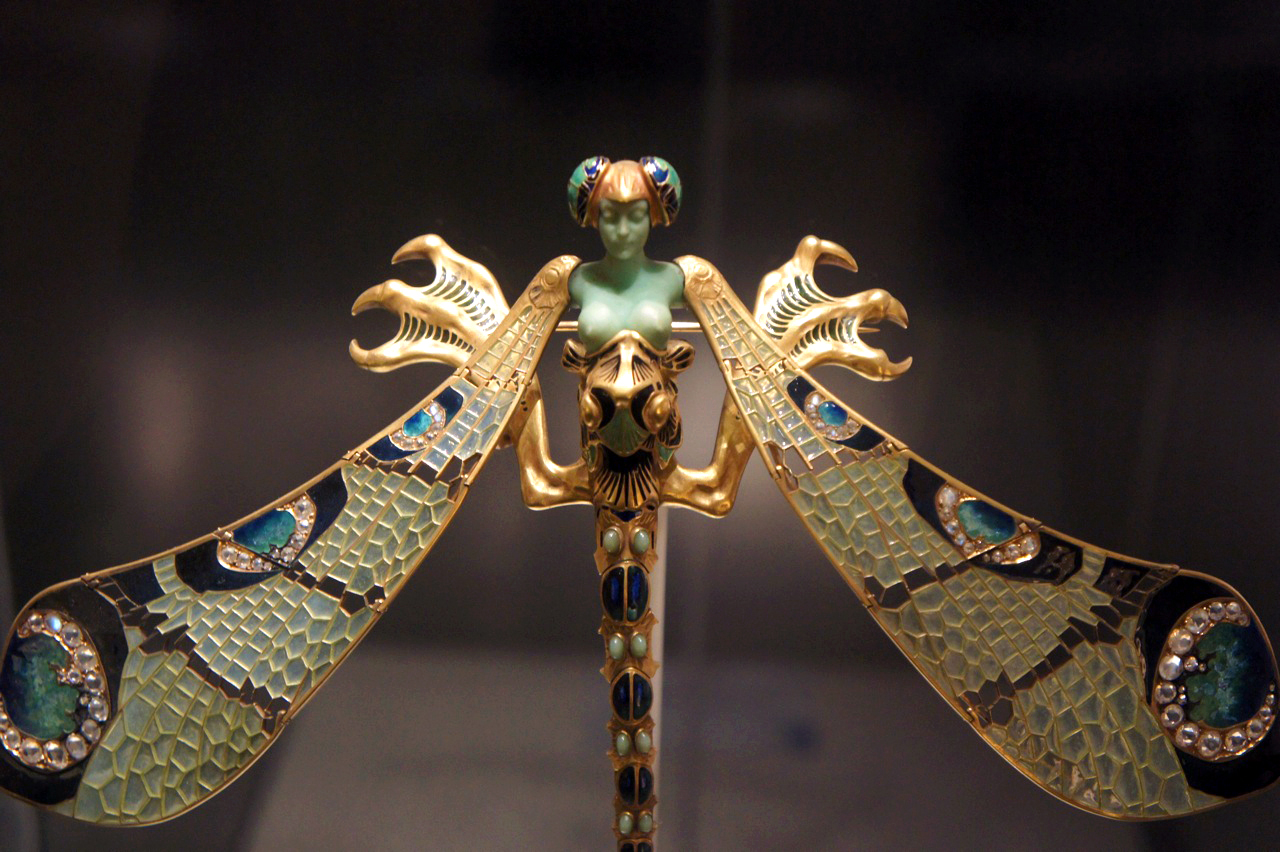
Case Study #24: Rene Lalique, the Man Who Made Jewelry an Art
In the 1890s, the French jeweler Rene Lalique did something that no jeweler had done before: he treated jewelry as art rather than display. This sounds obvious now, but in the late nineteenth century, the value of a piece of jewelry was determined almost exclusively by the intrinsic value of its materials. A necklace was priced by the weight of its gold and the size of its diamonds. The design was secondary. The artistry was irrelevant.
Lalique changed everything. Working in the Art Nouveau style, he created pieces that used materials previously considered unworthy of fine jewelry: horn, enamel, semi-precious stones, glass, and even insects preserved in amber. His famous dragonfly corsage ornament, now in the Calouste Gulbenkian Museum in Lisbon, combines gold, enamel, chrysoprase, moonstones, and diamonds to create a creature of hallucinatory beauty. The dragonfly's wings are translucent enamel. Its body is a carved chrysoprase. Its eyes are cabochon moonstones. The materials are not intrinsically valuable. The artistry is priceless.
Lalique's work was exhibited at the Paris Exposition of 1900, where it caused a sensation. Sarah Bernhardt, the most famous actress in the world, became his patron and champion. The art critic Emile Galle wrote that Lalique had "liberated jewelry from the tyranny of the gemstone."
The lesson for modern jewelers: the value of a piece of jewelry depends on the vision, skill, and originality of its creator, far more than on the cost of its materials. A piece made from inexpensive materials with extraordinary artistry will always be worth more, in the long run, than a piece made from expensive materials with mediocre design. This was true in 1900. It is true today. And it will be true in 2100.
Case Study #25: Rolls-Royce Bespoke, the Art of Making Each Customer Feel Like the Only Customer
Rolls-Royce produces approximately 6,000 cars per year. Each one is, to some degree, bespoke. But the Rolls-Royce Bespoke program, which allows customers to commission entirely unique vehicles, represents the apex of personalized luxury manufacturing.
Customers have requested: a paint color matched to a beloved pet dog's coat. A starlight headliner with 1,340 fiber-optic lights arranged to replicate the night sky as it appeared above a couple's wedding venue on their wedding date. A dashboard clock set with a customer's own collection of rare gems. A picnic set with bespoke silverware and china.
No request is too unusual. And no request, it seems, is refused. The Bespoke team includes specialists in paint, leather, wood, embroidery, engineering, and design. Each commission is treated as a collaboration between the customer and the Rolls-Royce atelier.
The business impact is significant. Bespoke commissions carry substantial premiums above the base price of a vehicle (which already starts at approximately $300,000 for a Ghost and exceeds $450,000 for a Phantom). But the real value of Bespoke is not in the premium. It is in the relationship. A customer who has collaborated with Rolls-Royce to create a unique vehicle feels an emotional bond with the brand that no standard purchase can replicate. They become advocates. They return for their next car. They refer friends.
For jewelry brands, the Rolls-Royce Bespoke model suggests an opportunity: offer a level of personalization that goes beyond selecting a stone size or an engraving. Allow customers to participate in the design process. Show them sketches. Let them choose materials. Introduce them to the artisan who will craft their piece. Transform the transaction into a collaboration, and you will transform customers into family.
Chapter 6: Iconography, the Symbols That Become Shorthand
Case Study #26: Tiffany and Co., the Power of a Color
In the history of branding, there are very few examples of a company successfully trademarking a color. Tiffany and Co. is one of them.
The specific shade of robin's-egg blue that adorns every Tiffany box, bag, and catalog was selected by Charles Lewis Tiffany in 1837, inspired by the turquoise stones popular in nineteenth-century jewelry. In 1998, Pantone officially designated the color as "1837 Blue," named after the year of Tiffany's founding. The color is now a federally registered trademark in the United States. No other brand, in any industry, may use it in a commercial context.
Think about the audacity, and the brilliance, of that. Tiffany trademarked a color. Not a logo, not a name, not a pattern. A color. And it works because that color has become so powerfully, irreversibly associated with luxury, romance, and aspiration that the mere sight of a Tiffany Blue box triggers an emotional response before the box is even opened.
The psychology is well-documented. Studies have shown that Tiffany Blue activates pleasure centers in the brain associated with anticipation and reward, similar to the response triggered by hearing a familiar piece of beloved music. The color has become what neuroscientists call a "conditioned stimulus": a trigger that reliably produces an emotional response because of years of positive associations. Every Tiffany Blue box that has ever contained an engagement ring, a birthday gift, a holiday present, or a milestone celebration has reinforced the association. The color does not merely represent Tiffany. It feels like Tiffany.
For new jewelry brands, the lesson is not that you need to trademark a color (though you should certainly consider it). The lesson is that visual consistency compounds over time. A distinctive color, a signature packaging design, a unique font, a recognizable silhouette: each one functions as a brand asset with enormous economic value. They function as visual shortcuts that communicate your entire brand story in a fraction of a second.
Case Study #27: The Cartier Love Bracelet, an Icon by Design
When Aldo Cipullo designed the Cartier Love Bracelet in 1969, he did something that very few jewelry designers have ever done: he designed a product that is its own marketing.
The bracelet's signature feature is a screwdriver mechanism. It is fastened onto the wrist not with a clasp but with small screws, and it comes with a special screwdriver. Originally, the bracelet could only be put on and removed by another person. The implication was explicit: this is a symbol of commitment. When you wear a Love Bracelet, you are signaling that you belong to someone. When your partner screws it onto your wrist, you are participating in a private ritual of devotion.
The screwdriver mechanism served no practical purpose. It was a narrative device built into the product itself. Every time someone notices the bracelet, and people always notice, the wearer tells the story. "My partner gave it to me. They put it on with a tiny screwdriver. I never take it off." The product generates its own word-of-mouth marketing, constantly, without any advertising spend.
The Love Bracelet was launched with a celebrity seeding campaign that was far ahead of its time. Cipullo gave matching pairs to high-profile couples, including Elizabeth Taylor and Richard Burton. The bracelet became synonymous with romantic commitment in elite circles, and from there it filtered into the broader luxury market.
Today, the Love Bracelet is one of the best-selling luxury jewelry items in the world. It has remained virtually unchanged for over fifty years, a testament to the power of a product that carries its own story. Cartier has extended the Love line into rings, earrings, and necklaces, but the original bracelet remains the anchor. It is an icon not because Cartier tells people it is iconic, but because the product's design makes its own case.
The principle: Design at least one product that tells a story without any advertising. The screwdriver, the ritual, the symbolism: these are not features. They are narrative architecture.
Case Study #28: The Hermes Kelly Bag, How Grace Kelly Created an Icon Without a Contract
In 1956, Princess Grace of Monaco (the former Hollywood actress Grace Kelly) was photographed by paparazzi outside her Paris apartment. She was pregnant, and she held a Hermes Sac a Depeches, a large leather handbag originally designed as a saddle bag, in front of her stomach to shield it from the cameras. The photograph appeared on the cover of Life magazine.
Grace Kelly had not been paid to carry the bag. There was no endorsement deal. There was no PR strategy. There was simply a beautiful, famous woman using a practical bag in a moment of genuine need. But the image was so widely reproduced, and the association between Kelly and the bag so powerful, that customers began requesting "the Kelly bag." In 1977, Hermes officially renamed the Sac a Depeches as the "Kelly," and it became one of the most iconic handbags in fashion history.
The Kelly bag story teaches a principle that seems paradoxical in an age of influencer marketing and paid partnerships: the most powerful associations are organic. An endorsement feels different when it is unsolicited. A product photograph feels different when it is candid. The reason Grace Kelly's photograph created an icon is precisely because it was not planned. It was authentic. It was real. And in a world increasingly saturated with sponsored content and paid promotions, authenticity is becoming the scarcest and most valuable commodity of all.
This does not mean that paid endorsements are worthless. They have their place. But it does mean that the ultimate goal of any brand is to create products so compelling that people of influence choose to use them without being asked. When that happens, you have crossed from marketing into culture.

Case Study #29: The Rolex Crown, the Most Recognized Symbol in Horology
The Rolex crown logo, a five-pointed coronet, was registered as a trademark in 1925 and has remained virtually unchanged for a century. It is one of the most recognized logos in the world, and its genius lies in its simplicity and its connotations.
A crown communicates royalty, authority, and achievement. It is a universal symbol understood across cultures, languages, and eras. When Rolex places its crown on the dial of a watch, the gesture goes beyond branding. It crowns the product. The watch becomes, symbolically, the property of a king. And the person wearing it becomes, symbolically, royalty.
Rolex reinforces this symbolism through its ambassador program, which exclusively features individuals at the absolute peak of their professions: Roger Federer in tennis, Tiger Woods in golf, James Cameron in filmmaking, Placido Domingo in opera. The message is consistent: Rolex is worn by the best. If you wear Rolex, you are signaling membership in an elite class defined not by birth but by achievement.
For jewelry brands, the Rolex lesson is about consistency of symbolism. Your logo, your visual identity, and your brand associations should all tell the same story. If your brand is about artisanal warmth, every touchpoint should feel handmade, organic, intimate. If your brand is about modern sophistication, every touchpoint should feel clean, architectural, precise. Mixed signals are brand poison. Consistency is brand currency.
Chapter 7: Exclusivity, the Art of Controlled Scarcity

Case Study #30: Chanel, the Perfume That Played Hard to Get
In the 1970s, Chanel No. 5, the world's most famous perfume, the fragrance that Marilyn Monroe famously wore to bed, was in trouble. Sales in the United States were declining. The problem was not quality. The problem was ubiquity.
Chanel No. 5 was available in eighteen thousand retail outlets across the United States, including drugstores. It had become the kind of product you could pick up at a pharmacy alongside aspirin and toothpaste. The aura of exclusivity that had once surrounded it, the mystique of a French perfume created by a genius couturiere and worn by the world's most glamorous women, had been diluted by overexposure.
When Alain Wertheimer assumed control of Chanel, he made a decision that terrified the sales team: he reduced the number of outlets carrying the fragrance from eighteen thousand to twelve thousand. He pulled it entirely from drugstore shelves. He invested millions in advertising to restore the brand's premium image.
The result: sales rocketed back up. By restricting distribution, Wertheimer had restored the one thing that makes luxury work: the feeling that not everyone can have it.
This principle, that scarcity drives desire, is ancient. Economists call it the law of supply and demand. Psychologists call it the scarcity principle (people place higher value on things that are harder to obtain). But in luxury, it operates with unusual intensity because the product's primary function is social signaling. A luxury product signals status precisely because it is scarce. If everyone has it, it signals nothing. If only a select few have it, it signals membership in an exclusive group.
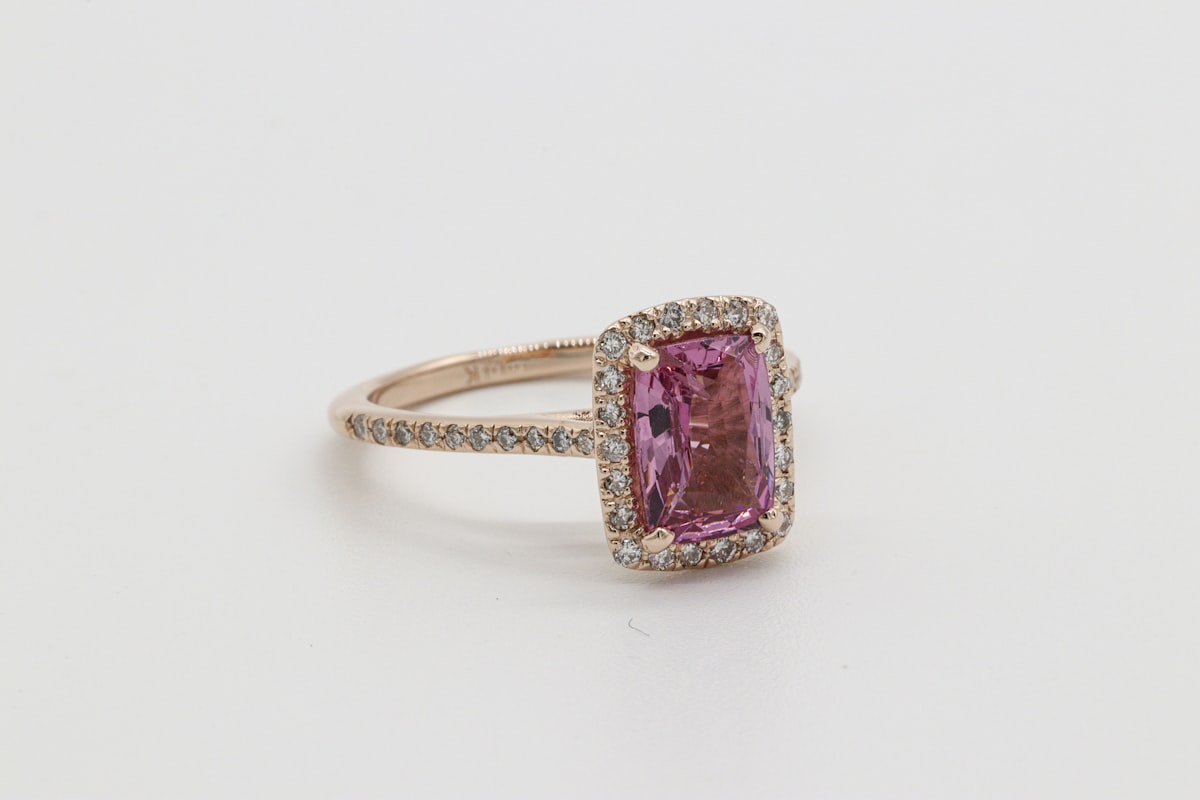
Case Study #31: Hermes and the Birkin Wait List, the Art of Making People Earn Their Purchase
No brand has weaponized scarcity more effectively than Hermes. And no product illustrates this more clearly than the Birkin bag.
To purchase a Birkin, a customer traditionally cannot simply walk into a Hermes store and buy one. There is no "Add to Cart" button. There is no waiting list in the conventional sense (though Hermes has historically been cagey about the exact mechanics). What exists instead is an informal system in which a customer must build a "purchase history" with the brand, buying scarves, belts, wallets, and other accessories, before they are deemed worthy of being offered a Birkin.
This system accomplishes two extraordinary things simultaneously.
First, it transforms the Birkin into a status symbol of cultural capital as much as wealth. Owning a Birkin signals sophistication: you have navigated to navigate the Hermes ecosystem, patient enough to invest time and money building a relationship, and connected enough to receive an offer. The bag itself is beautiful, but its cultural meaning far exceeds its physical form.
Second, it generates massive ancillary revenue. Customers who are "building their profile" for a Birkin spend thousands of dollars on scarves, belts, shoes, and home goods, products they might not otherwise have purchased. The Birkin is the aspirational target; the journey to the Birkin is the revenue engine. Some analysts estimate that the average customer spends $50,000 to $100,000 on other Hermes products before being offered a Birkin.
For jewelry brands, this principle translates directly. Consider creating tiered access to your highest-end collections. A private viewing, accessible by invitation only. A bespoke commission service available only to customers who have reached a certain purchase threshold. A high jewelry collection that requires an appointment at a specific atelier. Each barrier to access increases the perceived value of what lies behind it.
Case Study #32: Ferrari, Selling Less to Earn More
Ferrari produces fewer than fifteen thousand cars per year, despite demand that could easily support ten times that volume. This deliberate constraint maintains exclusivity, preserves the brand's racing heritage, and, most importantly, allows Ferrari to maintain an operating margin exceeding 25 percent, far above the automotive industry average.
Ferrari's former CEO, the late Sergio Marchionne, articulated this philosophy with characteristic bluntness: "We will always produce one car fewer than the market demands." This sentence should be framed on the wall of every luxury brand's boardroom. It captures the essential paradox of luxury: you grow not by selling more, but by selling less.
The parallel for jewelry: resist the temptation to scale production to meet demand. Sometimes, the most profitable strategy is to produce less than the market wants. When demand exceeds supply, you have pricing power. When supply exceeds demand, you have a discount problem.
Case Study #33: Supreme, the Drop Model That Rewrote Retail
Supreme, the New York skatewear brand founded by James Jebbia in 1994, perfected a retail strategy that has since been adopted across fashion, sneakers, and luxury: the "drop."
Rather than releasing seasonal collections through traditional wholesale channels, Supreme releases small quantities of new products every Thursday during its two annual "seasons." Each "drop" is announced on social media with minimal advance notice. Quantities are strictly limited. There are no restocks. When a product sells out, it is gone forever.
The effect is electric. Lines form outside Supreme stores hours before opening. The brand's website crashes from traffic. Products sell out in seconds. And the secondary market explodes: items purchased for $50 retail regularly resell for $500 or more.
Supreme's genius is in recognizing that anticipation is a form of marketing. The weekly drops create a rhythm of excitement that keeps the brand perpetually in the cultural conversation. Each drop is an event. Each purchase is a victory. Each missed opportunity increases desire for the next one.
In November 2020, VF Corporation (parent of The North Face and Vans) acquired Supreme for $2.1 billion. The valuation was based not on Supreme's revenues (which were modest by fashion standards) but on its cultural influence and the power of its scarcity model.
For jewelry brands, the drop model suggests an alternative to traditional seasonal collections. Consider releasing limited-edition pieces on a regular schedule (monthly, quarterly) with genuine scarcity: small production runs, no restocks, and clear communication that each piece is unique to its release. This creates urgency, generates social media engagement, and transforms every purchase into a collectible event.

Case Study #34: Disney's Vault Strategy, Manufacturing Scarcity for Stories
Before the streaming era, Disney operated one of the most sophisticated scarcity strategies in entertainment history: the Disney Vault. The concept was simple but brilliant. Disney would release its animated classics (Snow White, The Lion King, Bambi, The Little Mermaid) on home video for a limited window, typically six to twelve months, and then "lock them away" in the vault for seven to ten years. During the vault period, the films were unavailable for purchase at any price.
The effect was predictable and powerful. When Disney announced that a title was "coming out of the vault," parents rushed to purchase it, knowing that the window was brief and the next opportunity might be a decade away. The urgency drove massive sales volumes during the release window, and the scarcity maintained the films' perceived value.
When Cinderella was released from the vault on DVD in 2005, it generated $108 million in sales in its first two weeks. When The Lion King was released on Blu-ray in 2011, it sold over 3.5 million copies in its first week, making it the best-selling Blu-ray of the year.
Disney eventually abandoned the vault strategy when it launched Disney+ (which made the entire catalog available for a monthly fee), but the principle it demonstrated remains powerful: even intellectual property, an inherently infinitely reproducible good, can command premium pricing when its availability is deliberately restricted.
For jewelry brands, the vault strategy suggests a model for managing heritage designs. Rather than keeping every design in your catalog permanently available, consider rotating designs in and out of production. A signature ring available for one year, retired for three, then re-released as a "heritage edition." The retirement creates scarcity. The re-release creates an event. And each cycle adds another layer of provenance to the design's story.
Chapter 8: Emotional Resonance, the Feeling That Outlasts the Product
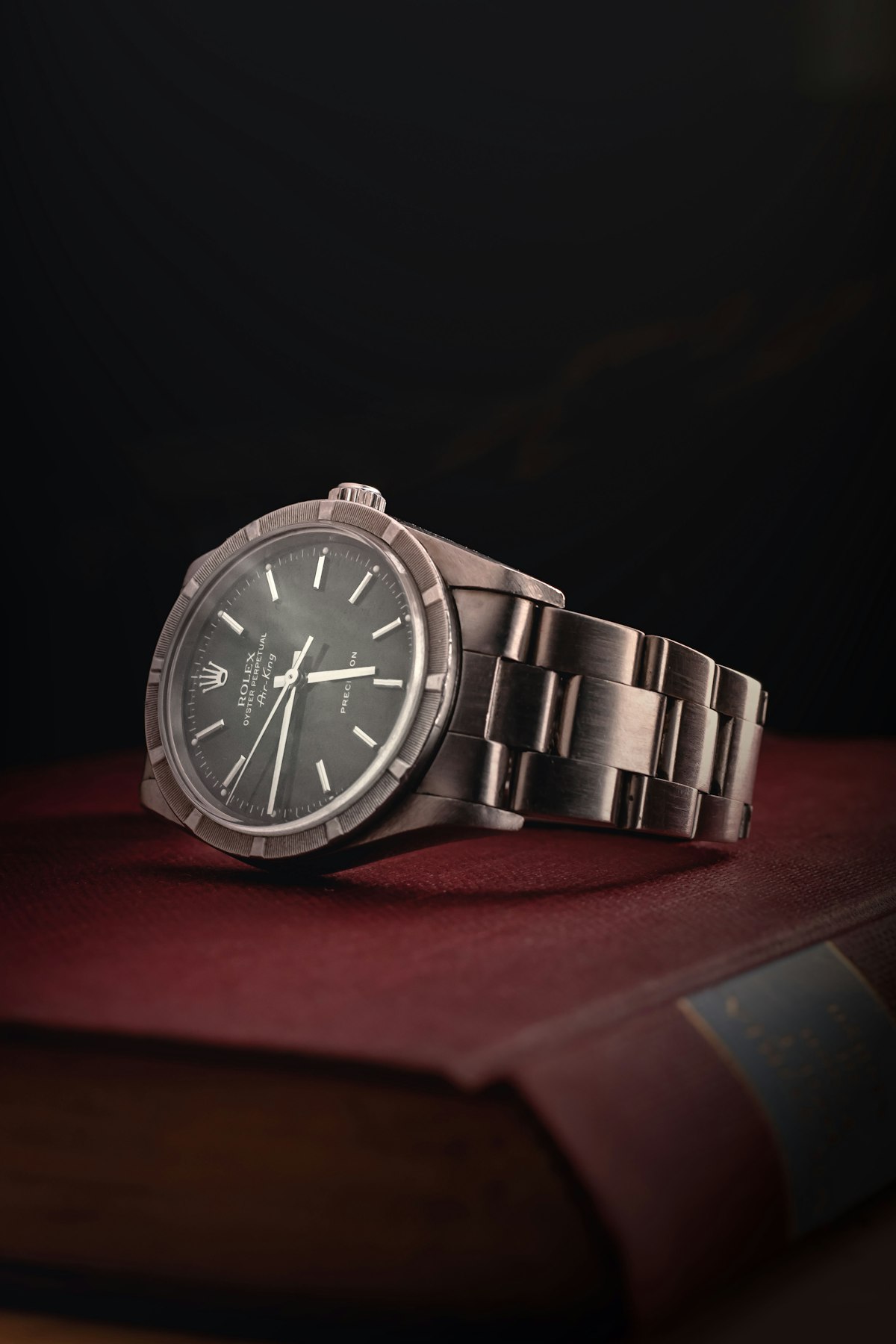
Case Study #35: Chopard, the Happy Diamonds Concept
In 1976, Chopard's designer Ronald Kurowski was hiking near a waterfall in Germany's Black Forest. He noticed the way water droplets, catching the sunlight, seemed to dance and shimmer with a joyful, unpredictable energy. Something about that sight, the playfulness, the spontaneity, the way light transformed motion into beauty, struck him as the perfect metaphor for how diamonds should feel.
He returned to the workshop and designed something unprecedented: a watch with freely moving diamonds trapped between two sapphire crystals. The diamonds were not set in fixed positions. They were loose, rolling and dancing with the wearer's every movement, catching light from different angles, creating an ever-changing play of brilliance.
The "Happy Diamonds" collection was revolutionary not because of any technical breakthrough, but because it turned the emotional experience of wearing diamonds into the product itself. In traditional jewelry, diamonds are static. They sit in their settings, beautiful but inert. Chopard's Happy Diamonds moved with you. They responded to your body. They were, in a very real sense, alive.
This design philosophy, that the experience of wearing the jewelry matters as much as the jewelry itself, is the essence of emotional resonance. The greatest luxury products are not admired from a distance. They are felt. They create a sensory feedback loop between the object and the wearer.
Case Study #36: Mikimoto and the Pearl Revolution, Turning the Impossible into an Industry
In 1893, Kokichi Mikimoto achieved something that had eluded humankind for centuries: the cultivation of a spherical pearl. Natural pearls, formed spontaneously when an irritant enters an oyster, were among the rarest and most valuable gems in the ancient world. Cleopatra, according to Pliny the Elder, dissolved a pearl earring worth ten million sesterces (a staggering sum) in vinegar and drank it to win a bet with Mark Antony that she could consume the most expensive dinner in history.
For millennia, pearl fishing was a dangerous, low-yield enterprise. Divers in the Persian Gulf, Japan, and South Pacific risked their lives descending to depths of thirty meters or more to harvest oysters, most of which contained no pearl at all. A single strand of perfectly matched natural pearls could take years to assemble and cost more than a diamond necklace.
Mikimoto spent years experimenting with the technique of nucleation, inserting a small bead into a living oyster to stimulate pearl formation. His first cultured pearl was semi-spherical. His first perfectly spherical cultured pearl came in 1905. By the 1920s, he had developed techniques to produce cultured pearls at scale, making this once-unattainable gem accessible to a global market.
The pearl industry initially tried to destroy him. Natural pearl dealers, whose product was being undermined by cultured pearls, lobbied for legislation to ban cultured pearls and even staged a public burning of Mikimoto's pearls in Paris, arguing they were "fake" and "unnatural." Mikimoto fought back with science and marketing: cultured pearls were real pearls, produced by real oysters through the same natural process, with the only difference being that humans initiated the process rather than leaving it to chance.
By the time of his death in 1954, Mikimoto had transformed the global pearl market. Cultured pearls now account for virtually all pearls sold worldwide. The Mikimoto brand, still headquartered in Japan, is the most prestigious name in pearl jewelry.
The lesson is dual. First, innovation can create entirely new markets, but it must be defended against incumbents who will attack it as illegitimate. Second, the brand that pioneers a new category and becomes synonymous with it enjoys a permanent first-mover advantage. Mikimoto has become synonymous with pearls. That association, forged through decades of innovation, marketing, and quality standards, is the brand's most valuable asset.

Case Study #37: The Discovery of Tanzanite, How Tiffany Named a Gemstone
In 1967, a Masai tribesman in northern Tanzania discovered a deposit of transparent blue-violet crystals near Mount Kilimanjaro. The stones were identified as a variety of the mineral zoisite, previously unknown in gem quality. Their color was extraordinary: a deep, saturated blue-violet that shifted between blue and purple depending on the angle of view and the lighting conditions.
The stones might have remained a geological curiosity if not for the intervention of Tiffany and Co. Henry Platt, Tiffany's vice president and great-grandson of the founder, recognized the gem's commercial potential and made two critical decisions. First, he declined to market the stone under its mineralogical name, "blue zoisite," which sounded uncomfortably like "blue suicide." Second, he christened it "tanzanite," after its country of origin, creating a name that was exotic, euphonious, and geographically evocative.
Tiffany launched tanzanite with a marketing campaign that positioned it alongside the "big three" colored gemstones (ruby, sapphire, and emerald) and emphasized its extreme rarity (found in only one location on earth, a deposit approximately seven kilometers long and two kilometers wide at the foot of Mount Kilimanjaro). The campaign was a spectacular success. Tanzanite became one of the best-selling colored gemstones of the late twentieth century, and Tiffany became permanently associated with its introduction.
The lesson: naming is branding. The difference between "blue zoisite" and "tanzanite" is not geological. It is linguistic. It is emotional. It is commercial. The right name can transform a mineral curiosity into a global luxury commodity. Every jewelry brand should invest as much creative energy in naming its collections, its signature pieces, and its proprietary techniques as it invests in designing them.
BOOK THREE: THE CROSS-INDUSTRY PLAYBOOK
Lessons from the Masters Outside Jewelry
Chapter 9: The Disney Principle, Intellectual Property as a Century-Long Asset
If there is a single company that every luxury brand in every industry should study, it is The Walt Disney Company. Not because Disney is a luxury brand in the traditional sense; it is not, and its mass-market positioning is almost the opposite of luxury exclusivity. But because Disney has built the most sophisticated intellectual property management operation in human history, and the principles of IP management that Disney has perfected over a century are directly, powerfully, and urgently applicable to jewelry brands.
The Flywheel
In 1928, Walt Disney created a cartoon mouse named Mickey. The animation was primitive. The story was simple. The character was, by any objective standard, a drawing of a rodent in shorts and oversized shoes. Yet that single character has generated more cumulative revenue than the GDP of most countries. Mickey Mouse appears on merchandise, in theme parks, in films, on clothing, in video games, and in hotel rooms on every inhabited continent. He has been redrawn, redesigned, and reinterpreted for every generation, but the core emotional promise has never changed: warmth, optimism, and magic.
Many studios create characters. Disney's genius is in operating what we might call an IP Flywheel, a self-reinforcing cycle where each piece of intellectual property feeds revenue into every other piece, creating a compound growth engine that accelerates over time.
Here is how the flywheel works in practice. Disney releases a film, say, Frozen. The film generates box office revenue (over $1.2 billion worldwide for the original). But box office is just the first revolution of the flywheel. The emotional connection that millions of children and parents form with Elsa, Anna, Olaf, and the story of sisterly love is then monetized through:
Merchandise. Elsa dolls became the best-selling toy of the year. Frozen-branded clothing, school supplies, bedding, and food products generated billions in licensing revenue.
Theme park attractions. The Frozen ride at Epcot, the Frozen-themed area at Disneyland Paris, and the Frozen attractions at Hong Kong Disneyland create physical, immersive experiences that deepen emotional attachment.
Broadway shows. Frozen: The Musical extends the IP into live entertainment, reaching audiences who might not visit theme parks.
Streaming content. Short films, making-of documentaries, and the sequel Frozen II on Disney+ create ongoing engagement.
Consumer products. Frozen-themed everything, from birthday party decorations to Halloween costumes, keeps the IP culturally visible year after year.
Each touchpoint reinforces the emotional connection, which drives demand for the next touchpoint. A child who watches Frozen wants an Elsa doll. The child who has an Elsa doll wants to ride the Frozen ride at Disneyland. The family that visits Disneyland wants to watch Frozen II on Disney+. The flywheel spins faster with every revolution.
Case Study #38: How the Disney IP Flywheel Applies to Jewelry
Your designs are your intellectual property. A signature collection is your "character." And the flywheel principle applies to jewelry as powerfully as it applies to animated films.
Consider how this might work in practice. Imagine you create a collection inspired by the lotus flower, a symbol of purity, rebirth, and transcendence across multiple cultures. You develop a distinctive, immediately recognizable lotus motif.
That motif can then appear across:
Multiple product categories: Rings, necklaces, earrings, bracelets, brooches, and cufflinks.
Multiple price points: A platinum-and-diamond lotus pendant at the top, a gold lotus ring in the middle, a sterling silver lotus charm at the entry level.
Multiple channels: Your flagship boutique, your e-commerce site, wholesale partners, and department store concessions.
Multiple marketing platforms: A social media campaign exploring the lotus symbol in different cultures. A collaboration with a photographer documenting lotus ponds in Vietnam, India, and Japan. A limited-edition collection tied to a cultural institution (a museum of Asian art, for example).
Multiple occasions: A wedding collection (the lotus as symbol of new beginnings). A milestone collection (the lotus as symbol of growth and transformation). A self-purchase collection (the lotus as daily reminder of inner strength).
Each expression of the motif reinforces the others. A customer who buys the silver charm sees the gold ring and begins to desire it. A customer who sees the museum collaboration perceives the brand as culturally sophisticated. A customer who receives the platinum pendant for a wedding anniversary associates the brand with the deepest emotions of her life.
Over time, the lotus motif becomes more than a design element. It becomes your brand's visual language, a symbol that customers recognize, seek out, and associate with a specific emotional meaning. And like Disney's characters, it compounds in value over time.

Case Study #39: Disney's Acquisition Strategy, Buying Universes
Under CEO Bob Iger, Disney executed one of the most brilliant acquisition strategies in corporate history. The three deals that defined his tenure were:
Pixar (acquired 2006, $7.4 billion): Brought animation genius and technological innovation.
Marvel (acquired 2009, $4 billion): Brought an entire universe of superhero characters.
Lucasfilm (acquired 2012, $4 billion): Brought Star Wars, one of the most valuable IP properties in entertainment.
The strategic brilliance of these acquisitions was not in the buying. It was in the managing. Disney did not absorb Pixar into Disney Animation. It did not rebrand Marvel as Disney. It did not sanitize Star Wars. Each acquisition was treated as a universe unto itself, with its own creative leadership, its own aesthetic, its own audience, and its own brand identity. Disney provided the infrastructure: distribution, marketing, merchandising, theme park integration, and access to the world's most powerful IP flywheel. But the creative identity of each brand was preserved.
This is precisely the model that LVMH, Richemont, and Kering follow in the luxury industry. LVMH owns both Bulgari and Tiffany and Co., but they operate as entirely separate brands with separate identities, separate creative directors, and separate customer bases. Richemont houses Cartier and Van Cleef and Arpels under one corporate roof without diluting either. Kering owns both Gucci and Boucheron. The parent company provides operational leverage; the brand provides emotional differentiation.
For emerging jewelry brands, this has two implications. First, if you are considering selling to a luxury conglomerate, understand that the best acquirers will preserve your brand's identity, and you should insist on it. Second, if you are building a portfolio of brands yourself (perhaps a fine jewelry line alongside a fashion jewelry line), treat each brand as a separate universe with its own story, its own customer, and its own visual language. Do not cross-pollinate casually. Each brand dilutes the other when the boundaries blur.

Case Study #40: Nintendo, the Company That Treats IP Like Crown Jewels
Nintendo, the Japanese gaming company founded in 1889 as a playing card manufacturer, offers perhaps the most instructive example of IP management outside the luxury industry. Mario, the mustachioed plumber who debuted in the 1981 arcade game Donkey Kong, is the most valuable character in gaming history, and Nintendo protects him with a ferocity that would make a Swiss watch brand envious.
Nintendo's IP protection strategy has several elements that luxury brands should study:
Quality control above all else. Nintendo famously kills projects that do not meet its quality standards, even after years of development. The company delayed The Legend of Zelda: Tears of the Kingdom by over a year because the development team was not satisfied with the game's polish. Shigeru Miyamoto, Nintendo's legendary game designer, is quoted as saying: "A delayed game is eventually good, but a rushed game is forever bad." This philosophy, quality over speed, is identical to the philosophy that drives Hermes, Patek Philippe, and every luxury brand that refuses to compromise on craftsmanship.
Consistent character identity. Mario has been redesigned over the decades as technology has evolved, but his core personality, cheerful, brave, optimistic, has never changed. He has appeared in racing games, sports games, role-playing games, and educational software, but he has never appeared in a context that contradicts his character. Nintendo refused, for decades, to license Mario for a film adaptation because previous gaming adaptations (including the disastrous 1993 Super Mario Bros. film) had damaged the character. When they finally allowed the 2023 Super Mario Bros. Movie (produced by Illumination), the result was a film carefully calibrated to reflect Mario's personality, and it grossed over $1.3 billion worldwide.
Legal enforcement. Nintendo is legendary for its aggressive legal protection of its IP. The company has pursued legal action against fan-made games, ROM distribution sites, and unauthorized merchandise with relentless consistency. This aggressiveness is sometimes criticized as heavy-handed, but it has maintained the integrity of Nintendo's brand in a way that less vigilant companies have failed to achieve.
For jewelry brands, the Nintendo lesson is about consistency and quality over quantity. A signature design should appear in every context where it strengthens the brand and in no context where it weakens it. A charm bracelet brand that licenses its designs for cheap keychains is doing the equivalent of putting Mario in a violent video game. It may generate short-term revenue, but it damages the character's meaning.
Chapter 10: The LVMH Playbook, Resurrecting Heritage Brands
Bernard Arnault is the richest person in the luxury industry, and frequently the richest person in the world. His company, LVMH Moet Hennessy Louis Vuitton, owns more than seventy brands across fashion, wine, spirits, perfume, cosmetics, watches, jewelry, and retail. But Arnault's genius lies in revival, in taking what others have left for dead and making it breathe again.
LVMH has developed one of the most successful and repeatable playbooks in the luxury sector, a systematic methodology for taking underperforming heritage brands and transforming them into global powerhouses. The playbook has four steps, and understanding each one is critical for anyone who wants to build, manage, or revitalize a luxury jewelry brand.

Case Study #41: The Tiffany Transformation
In November 2019, LVMH announced its acquisition of Tiffany and Co. for approximately $16.2 billion, the largest deal in luxury goods history. The acquisition was immediately followed by the global COVID-19 pandemic, which cratered luxury retail worldwide and led to months of legal wrangling as LVMH attempted (unsuccessfully) to renegotiate the price. The deal finally closed in January 2021 at a slightly reduced $15.8 billion.
What LVMH inherited was a brand with extraordinary heritage, 184 years of history, a globally recognized color, a flagship store on Fifth Avenue that was as famous as any building in New York, but fading contemporary relevance. Tiffany's core business had become dependent on silver jewelry at relatively accessible price points. The brand's signature heart necklace had become a cliche, the kind of thing a teenager might receive for her sixteenth birthday, not the kind of thing a sophisticated woman would choose for herself. Among luxury consumers under forty, Tiffany had become, in the brutal argot of the fashion press, "your grandmother's jewelry store."
LVMH applied its four-step playbook with surgical precision:

Step One: Elevate, don't erase. The first major campaign under LVMH featured Beyonce and Jay-Z, arguably the most powerful celebrity couple in the world, photographed by Mason Poole alongside a rarely seen painting by Jean-Michel Basquiat. The painting's dominant color closely resembled Tiffany Blue, creating a visual bridge between the brand's heritage and contemporary Black culture. Beyonce wore the 128.54-carat Tiffany Diamond, one of the largest and finest yellow diamonds ever discovered, previously worn in public only by Audrey Hepburn and Lady Gaga.
The campaign was provocative by design. Some saw a celebration of a new American dream. Others saw troubling overtones of colonialism, a diamond unearthed in South Africa in 1877 adorning a Black woman. The controversy was itself the point. For the first time in years, people were talking about Tiffany. The brand had become culturally relevant again.
Step Two: Push upstream. LVMH shifted Tiffany's focus from accessible silver jewelry toward high jewelry, where margins are dramatically larger and brand prestige is strongest. This did not mean abandoning the silver business, it generated enormous volume and served as the gateway to the brand. But LVMH ensured that the high-end collections received disproportionate investment in design, marketing, and presentation, so that the aspirational pull of Tiffany's finest work would elevate the perception of the entire brand.
Step Three: Renovate the experience. LVMH invested heavily in renovating the iconic Fifth Avenue flagship, transforming it from a traditional jewelry store into an immersive brand experience, complete with a Blue Box Cafe where customers could literally have "Breakfast at Tiffany's." Boutiques worldwide were modernized with contemporary architecture that honored the brand's history while signaling its future ambitions.
Step Four: Court the next generation. Under Alexandre Arnault (Bernard's son) and CEO Anthony Ledru, Tiffany launched a series of collaborations designed to introduce the brand to new audiences: a Nike Air Force 1 sneaker in Tiffany Blue, a partnership with the streetwear brand Supreme, and the NFTiff project. Each collaboration was limited, culturally targeted, and designed to generate media coverage far exceeding the revenue from the products themselves.
The results speak for themselves. Tiffany reported nine percent revenue growth under LVMH's stewardship, with particularly strong performance in Asia.

Case Study #42: LVMH and Bulgari, the Earlier Proof of Concept
Before Tiffany, LVMH had proven its playbook with Bulgari. After acquiring the Italian jeweler in 2011, LVMH invested heavily in marketing, boutique redesign, and customer communication. Over the following eight years, Bulgari's sales grew substantially and earnings nearly doubled, multiplying five times. This transformation gave LVMH the confidence to pursue Tiffany, knowing the playbook was replicable across different brands, cultures, and price points.

The key insight from both transformations: the value of a heritage luxury brand is almost always greater than its current performance suggests. Heritage is a dormant asset. It cannot be created through advertising. It can only be unlocked through strategic management. LVMH's genius is in recognizing that dormant heritage, combined with modern marketing infrastructure, creates value that far exceeds the acquisition price.
Chapter 11: The Mobile Gaming Secret, What Candy Crush Teaches Cartier
This chapter might seem like the strangest detour in this entire guide. What could a mobile game, played by commuters on subway trains and teenagers in their bedrooms, possibly teach a luxury jewelry brand? The answer: more than almost any other industry on earth.
The mobile gaming industry, worth over $90 billion globally, has developed the most sophisticated understanding of customer lifetime value (LTV) in any consumer sector. And LTV, the total revenue a customer generates across their entire relationship with your brand, is the single most important metric for any luxury jewelry business.

Case Study #43: The Whale Economy
In mobile gaming, the customer base is divided into three categories based on spending behavior:
Minnows are casual spenders who rarely make in-app purchases and contribute the least to revenue. They form the majority of the user base. In jewelry, minnows are the customers who buy a pair of earrings once every few years for a special occasion.
Dolphins are moderate spenders who make regular purchases and contribute steady revenue. In jewelry, dolphins are loyal customers who buy gifts for birthdays and anniversaries and occasionally treat themselves.
Whales are the top one to two percent of players who spend lavishly and generate the vast majority of revenue. In some games, whales account for over fifty percent of all revenue despite representing less than two percent of the player base. In jewelry, whales are the high-net-worth clients who purchase regularly, buy across multiple categories, commission custom pieces, and have a personal relationship with your sales team.
The entire mobile gaming industry is built around four activities:
Identifying whales as early as possible. Modern gaming companies use machine learning models that can predict, within the first twenty-four to forty-eight hours of a new player's activity, whether that player is likely to become a whale. Session frequency, engagement depth, first-purchase timing, and behavioral patterns are all analyzed in real time.
Personalizing the experience for high-value customers. Once identified, whales receive tailored offers, exclusive content, early access to new releases, and VIP treatment designed to deepen their engagement and extend their lifetime spending.
Creating emotional attachment through "sunk cost." Games are designed so that whales develop deep attachment to their in-game investments: rare items, high-level characters, guild leadership positions. This attachment creates a psychological switching cost that makes them reluctant to leave, even when they experience frustration.
Re-engaging whales at the first sign of churn. When a whale shows signs of disengagement, reduced session frequency, declining purchase amounts, the game deploys targeted notifications, special offers, and personalized messages designed to bring them back. The principle: it is far cheaper to retain a whale than to acquire a new one.
Now translate this framework to luxury jewelry:
Identification. What signals does a new customer send that suggest they might become a high-lifetime-value client? First purchase category (a customer who starts with a high-end item has a different trajectory than one who starts with the most affordable option). Purchase context (self-purchase vs. gift, engagement vs. fashion). Interaction depth (does the customer engage with brand content, attend events, follow social media?). Most jewelry brands track none of this systematically. Mobile gaming companies track all of it, in real time, from the first interaction.

Personalization. What does your VIP experience look like? Is it meaningfully different from the experience you offer every customer? Do your best clients have a personal advisor who knows their preferences, their family milestones, and their aesthetic taste? Do they receive early access to new collections? Are they invited to private viewings? The mobile gaming industry invests disproportionately in its top customers because the math is unambiguous: a small increase in whale retention generates more revenue than a large increase in minnow acquisition.
Emotional attachment. What makes a customer feel invested in your brand beyond the products they own? Community membership (a VIP club, an invitation-only event series). Identity alignment (the customer's self-image is tied to your brand). Accumulated history (the customer has a collection that spans years and tells a personal story). Each of these creates a switching cost, not a financial cost, but an emotional one.
Re-engagement. What happens when a previously loyal customer goes silent? In mobile gaming, the answer is immediate: targeted outreach within days. In jewelry, the typical answer is: nothing, until the next mass email campaign. This is an enormous missed opportunity. A personal note from a sales advisor ("We have a new collection that made me think of you"), a birthday acknowledgment, an invitation to a private event: these small gestures cost almost nothing to execute and can reactivate tens of thousands of dollars in lifetime spending.

Case Study #44: Genshin Impact, $5 Billion from Emotional Connection
When Chinese developer miHoYo launched Genshin Impact in September 2020, many in the gaming industry dismissed it. The game was free to download. It required no upfront payment. Its revenue model depended entirely on optional in-game purchases. Within 473 days of launch, it had generated over $3 billion in revenue. By early 2025, lifetime revenue exceeded $5 billion, with roughly ten million daily active players.
Genshin Impact's monetization strategy relies on what the industry calls "gacha" mechanics, essentially digital lotteries where players spend real money to receive randomly selected characters and items. But the genius lies in the emotional design that makes players want specific characters.
Each new character in Genshin Impact comes with a unique backstory, a distinct personality, a beautifully animated design, and a specific set of abilities that affect gameplay. The marketing for each new character unfolds over weeks, with trailers, lore reveals, demo videos, and community discussions building anticipation. By the time a character is released, players do not just want to own them for their abilities. They want to own them because they have developed a genuine emotional connection to a fictional person.
The jewelry parallel is direct. When a customer buys a Cartier Panthere bracelet, they are not buying a piece of metal shaped like a panther. They are buying into a story that stretches back to Jeanne Toussaint, Cartier's legendary creative director in the 1930s, who was nicknamed "La Panthere" for her fierce independence and bold style. The panther motif carries nearly a century of narrative weight, stories of maharajas, Hollywood stars, and the Duchess of Windsor. The "character," the panther, is the narrative vehicle. The physical product is its manifestation.
The lesson from Genshin Impact: invest disproportionately in the narrative surrounding your products, not just the products themselves. The story is what creates the emotional connection. The product is what monetizes it.

Case Study #45: Supercell, the Company That Kills Its Own Games
Supercell, the Finnish mobile gaming company behind Clash of Clans, Clash Royale, and Brawl Stars, has generated over $1 billion in annual revenue with fewer than 400 employees. Its revenue per employee is one of the highest of any company in any industry. But what makes Supercell truly extraordinary is what it kills.
Supercell's organizational model is built around small, independent teams called "cells" (hence the company name). Each cell of five to ten people develops a game independently, with minimal corporate oversight. If a game does not meet the team's quality standards during internal testing, the team kills it. If a game launches in soft release (a limited geographic market test) and the metrics are not outstanding, it is killed. In Supercell's first decade, the company killed more games than it shipped.
The culture around killing is revelatory. When a game is killed, the team does not slink away in shame. They celebrate. They open champagne. They are congratulated by the CEO, Ilkka Paananen, for having the discipline to maintain quality standards. The message is clear: shipping a mediocre game would damage the Supercell brand more than shipping nothing at all.
The luxury jewelry parallel is direct: every product you release, every collection you launch, every piece you sell either reinforces or weakens your brand. A mediocre collection actively damages the perception of your brand in the minds of every customer who sees it. The discipline to kill a design that is not exceptional, even after months of development, is the same discipline that separates the great maisons from the forgettable brands.
Chapter 12: Lessons from Outside Luxury, Cross-Industry Masterclasses

Case Study #46: Lego, From Near-Bankruptcy to the World's Most Powerful Brand
In 2003, Lego was losing approximately $1 million per day. The Danish toymaker, founded in 1932, had diversified recklessly into theme parks, clothing lines, video games, and dozens of product categories that had nothing to do with its core product: the interlocking plastic brick. The company was seven hundred million Danish kroner in debt and months from bankruptcy.
Jorgen Vig Knudstorp, a former McKinsey consultant who became CEO in 2004, executed one of the most celebrated turnarounds in corporate history. His strategy was, at its core, simple: return to the brick.
Knudstorp sold the Legoland theme parks. He closed underperforming product lines. He slashed the number of unique Lego elements from approximately 12,900 to 7,000. He refocused the company on what made Lego unique: the creative, open-ended building system that had captivated children for seven decades.
But Knudstorp did something else that was equally important: he listened to Lego's adult fan community. LEGO had a passionate base of adult fans (known as AFOLs, Adult Fans of Lego) who built elaborate creations, attended conventions, and spent thousands of dollars on bricks. Knudstorp recognized that these fans were not a niche curiosity. They were the brand's most powerful advocates and a significant revenue opportunity. He launched Lego Ideas, a platform where fans could submit designs and, if they received enough community votes, see their creation produced as an official Lego set.
By 2015, Lego had surpassed Mattel to become the world's largest toy company by revenue. The brand was named the world's most powerful brand by Brand Finance. Revenue exceeded $7 billion.
The Lego turnaround teaches luxury brands several lessons. First, diversification without brand coherence is destruction. Every product that does not reinforce your core identity weakens it. Second, your most passionate customers are your most valuable asset, for their advocacy, creative energy, and spending power alike. Third, returning to your core, the thing that made you special in the first place, is always the first step in any turnaround.

Case Study #47: Porsche's Cayenne, the Controversial Bet That Saved the Company
In 2002, Porsche, the legendary sports car manufacturer, did something that horrified automotive purists: it released an SUV. The Cayenne was derided as a betrayal of everything Porsche stood for. Porsche made sports cars. Low, fast, rear-engined, drivers' cars. An SUV was the antithesis of the brand's identity. Critics predicted brand dilution. Porsche loyalists threatened to defect.
They were wrong. The Cayenne became Porsche's best-selling model. It generated the revenue and profit that funded the development of the 911, the Cayman, the Boxster, and every sports car that purists claimed to care about. Without the Cayenne, Porsche might not have survived as an independent company. (Porsche had faced serious financial difficulties in the early 1990s, at one point selling fewer than 14,000 cars per year.)
The lesson is nuanced and important for luxury brands. Brand extension into a new category is not inherently destructive. It is destructive when it is done without strategic coherence. The Cayenne worked because Porsche ensured it was the most athletic, best-driving SUV on the market, consistent with the brand's core promise of engineering excellence. A Porsche SUV that drove like a Toyota would have been brand suicide. A Porsche SUV that drove like a sports car was a category-expanding triumph.
For jewelry brands considering expansion into new categories (watches, fragrances, eyewear, home decor), the Porsche Cayenne principle applies: extend into new categories only when you can deliver excellence in the new category that is consistent with your brand's core promise. A fine jewelry brand that releases a mediocre fragrance dilutes itself. A fine jewelry brand that releases a fragrance crafted by a master nose with the same obsessive attention to quality that defines its jewelry strengthens itself.
Case Study #48: The Swiss Quartz Crisis, How an Industry Nearly Died and Reinvented Itself
In 1969, the Japanese company Seiko introduced the Astron, the world's first commercially available quartz wristwatch. The Astron was accurate to within five seconds per month, far more precise than any mechanical watch. And it was cheap to produce. Within a decade, quartz technology had devastated the Swiss watch industry.
The numbers are staggering. In 1970, Switzerland produced approximately 84 million watches and employed 89,000 people in the watch industry. By 1983, production had fallen to 45 million watches and employment had crashed to 28,000. More than 1,000 Swiss watchmakers went out of business. The industry that had defined Swiss craftsmanship for centuries was on the verge of extinction.
The Swiss watch industry's response came in two waves.
The first wave was Swatch. Nicolas Hayek, a Lebanese-born Swiss entrepreneur, created the Swatch Group and launched the Swatch watch in 1983. The Swatch was a plastic, fashion-forward, affordable quartz watch that competed with the Japanese on their own terms: low price, high accuracy, and bold design. Swatch was not a luxury product. It was a mass-market sensation. But it served a critical strategic function: it generated the cash flow that allowed the Swatch Group to fund the survival of its luxury brands (Omega, Breguet, Blancpain) during the crisis.
The second wave was the repositioning of mechanical watches as luxury goods. This was the more consequential and more relevant response for luxury brand builders. Before the quartz crisis, Swiss mechanical watches competed on accuracy. They were precision instruments. When quartz technology made accuracy trivially cheap, the mechanical watch industry faced an existential question: if quartz watches are more accurate and less expensive, why would anyone buy a mechanical watch?
The answer they found was the same answer that the best luxury brands always find: because meaning transcends function. A mechanical watch is not merely a time-telling device. It is a work of art, a marvel of engineering, a connection to centuries of horological tradition. The hundreds of tiny, hand-finished components working in precise harmony inside a mechanical watch create something that no quartz movement can replicate: wonder.
The Swiss watch industry repositioned mechanical watches as luxury objects, not functional instruments, and prices rose accordingly. The average price of a Swiss watch exported in 2023 was approximately $950, compared to an average quartz watch price of under $5 for mass-market competitors. The Swiss industry now generates more revenue from fewer watches than at any point in its history.
The lesson for jewelry brands is direct: when a technological disruption makes your product's functional attributes commodifiable (lab-grown diamonds, for example, which replicate the physical properties of natural diamonds at a fraction of the cost), the survival strategy is to reposition on meaning. The functional argument ("our diamonds are beautiful") becomes unwinnable. The meaning argument ("our diamonds carry the geological romance of billions of years, the rarity of natural formation, the heritage of generations of master cutters") remains unassailable because it operates in a dimension that technology cannot replicate.

Case Study #49: Brunello Cucinelli, the Philosopher King of Cashmere
Brunello Cucinelli, the Italian fashion entrepreneur who has built a $4 billion empire based on cashmere clothing, offers a model of luxury brand building that is both unconventional and deeply instructive.
Cucinelli's brand is built on a philosophy he calls "humanistic capitalism." He pays his workers approximately twenty percent above the industry average. He limits working hours to eight hours per day and does not allow after-hours email. He has invested over $60 million in restoring the medieval Umbrian village of Solomeo, where his company is headquartered, including renovating a fourteenth-century castle, building a theater, and creating a public park. He tithes twenty percent of profits to his foundation.
These are not marketing gimmicks. They are genuine beliefs, rooted in Cucinelli's reading of Renaissance humanist philosophy, and they permeate every aspect of the brand. The company's annual report reads more like a philosophical treatise than a financial document. Press interviews with Cucinelli are as likely to reference Seneca and Saint Benedict as they are to discuss quarterly earnings.
The business results are remarkable. Cucinelli's company has generated consistent double-digit revenue growth for over a decade. Its stock price has increased more than tenfold since its 2012 IPO. And its customer base, composed primarily of ultra-high-net-worth individuals who value discretion over display, is among the most loyal in the luxury sector.
The Cucinelli lesson for jewelry brands: authenticity compounds. When a brand's values are genuine, when they are lived rather than marketed, customers sense the difference. Cucinelli does not advertise his ethical practices as a selling point. They are simply how the company operates. Customers who discover these practices feel that they have found something rare and real, and that discovery creates a bond that no advertising campaign can replicate.

Case Study #50: Starbucks, the Third Place That Changed Coffee into an Experience
When Howard Schultz visited Milan in 1983, he was a marketing executive for a small Seattle coffee bean retailer called Starbucks. In Milan, he experienced something that did not exist in America: the Italian espresso bar, a neighborhood gathering place where the barista knew your name, the coffee was an art form, and the experience of drinking it was as important as the caffeine.
Schultz returned to Seattle with a vision: create an American "third place," a space between home and work where people could gather, connect, and enjoy excellent coffee in a comfortable environment. He eventually acquired Starbucks and transformed it from a coffee bean retailer into a global coffeehouse empire.
The principle Schultz articulated, that the experience surrounding a product can be more valuable than the product itself, translates directly to luxury jewelry. The most successful jewelry brands go far beyond selling products. They create spaces, rituals, and moments, from the intimate boutique consultation to the ceremonial unboxing, that elevate purchasing from transaction to experience.
A customer who buys an engagement ring online receives a product. A customer who buys an engagement ring after a private consultation in a beautifully appointed boutique, guided by a knowledgeable advisor who helps them understand the significance of their choice, who presents the ring in a ritual of revelation, who follows up with care instructions and anniversary reminders, receives an experience. The product may be identical. The memory, the story, the emotional bond, is not.

Case Study #51: Aman Resorts, the Hospitality Brand That Sells Emptiness
Adrian Zecha founded Aman Resorts in 1988 with a simple but radical concept: a hotel with very few rooms, very little signage, and very little of what traditional luxury hotels considered essential (lobbies, restaurants, conferences). What Aman offered instead was space, silence, and an almost spiritual sense of peace.
The first Aman resort, Amanpuri in Phuket, Thailand, had just forty pavilions. The architecture was designed to disappear into the landscape. There was no check-in desk. Guests were greeted by name and escorted directly to their rooms. The staff-to-guest ratio was four to one. The result was an experience of being cared for without being observed, of luxury without display, of wealth expressed not through gilt and marble but through the most precious commodity of all: uninterrupted tranquility.
Aman's nightly rates, which start at approximately $1,000 and can exceed $10,000 for premier accommodations, are among the highest in the hospitality industry. Yet Aman guests, known as "Aman junkies," display a loyalty and evangelism that exceeds almost any brand in any industry. They travel from Aman to Aman, collecting experiences the way others collect watches or handbags.
The lesson for jewelry brands: the absence of excess can itself be a luxury. In a market crowded with competing claims of "more," the brand that offers "less" (fewer products, less noise, more focus, more quiet) can create an experience of exceptional power. A jewelry brand that shows one piece beautifully is more compelling than a brand that shows a hundred pieces chaotically. A boutique with ten carefully chosen items creates more desire than a showroom with a thousand. Restraint is a form of confidence. Silence can be louder than any advertisement.
BOOK FOUR: THE ART OF STORYTELLING
How to Make People Feel
Chapter 13: Narrative Architecture, Building Stories That Sell
Every great brand is, at its core, a story. Not a mission statement. Not a brand guideline document. Not a deck of slides. A story, with characters, conflict, transformation, and emotional resolution. The brands that understand this build narratives so compelling that customers do not just buy products. They buy membership in a story that makes their own life feel more meaningful.
Case Study #52: The Maharaja of Patiala's Necklace, the Greatest Product Story Ever Told
In 1928, Bhupinder Singh, the Maharaja of Patiala, arrived at Cartier's Paris workshop with an entourage of forty servants and a collection of gemstones so vast that it filled the room. He commissioned what would become one of the most spectacular pieces of jewelry in human history: a ceremonial necklace containing 2,930 diamonds, including the legendary De Beers diamond at 234.69 carats.
The necklace took three years to complete. It weighed close to a thousand carats. It was, by any measure, one of the most ambitious jewelry commissions of the twentieth century.
But the story does not end with the creation. It merely begins.
After the Maharaja's death in 1938, the necklace passed through various hands and eventually disappeared. For decades, its whereabouts were unknown, the subject of speculation, legend, and conspiracy theories. Then, in 1998, Eric Nussbaum, Cartier's heritage director, discovered the necklace at a London estate sale, or rather, parts of it. The De Beers diamond was gone, replaced with a synthetic substitute. Many of the original stones had been removed or replaced. The necklace was a ghost of its former self.
Cartier purchased the necklace and undertook a painstaking restoration, replacing missing stones and returning it as close to its original glory as the historical record allowed. The restored necklace has since been exhibited around the world, always with the story of its creation, disappearance, and resurrection told alongside it.
This single commission, the Patiala Necklace, has been generating marketing value for Cartier for nearly a century. And here is the critical insight: the story follows the same arc as any great novel.
Characters: The flamboyant Maharaja. The master Cartier craftsmen. The anonymous thieves who dismantled it. The detective-like heritage director who found it.
Conflict: The technical challenge of creating the necklace. The tragedy of its loss. The mystery of its disappearance.
Resolution: The discovery. The restoration. The exhibition.
The principle for every jewelry brand: Your best products should generate stories that outlive any advertising campaign. Design pieces that have narrative built into their conception. Commission backstories. Document the journey of materials. Create mystery and reveal. The human brain is wired for narrative; we remember stories far more readily than specifications. A piece of jewelry with a great story behind it will always be worth more, and be more marketable, than an equivalent piece without one.

Case Study #53: Coco Chanel, the Woman Who Invented Herself
Gabrielle "Coco" Chanel is perhaps the greatest self-mythologizer in the history of luxury. She constructed a personal narrative so compelling that it has survived nearly sixty years after her death and continues to power one of the most valuable brands in the world.
The facts of her early life were unpromising. Born in 1883 in a poorhouse in Saumur, France, she was placed in an orphanage at the age of twelve after her mother died and her father abandoned the family. The orphanage was run by nuns of the Congregation of the Sacred Heart, and it was there, in austere, all-white surroundings, that Chanel learned to sew.
Chanel spent her entire adult life reimagining this origin. She claimed to have been raised by two maiden aunts rather than in an orphanage. She invented stories about her father being a traveling merchant rather than an itinerant peddler. She insisted she had been born in Auvergne rather than in a poorhouse. The details shifted with every telling.
But Chanel's mythologizing was not mere vanity. It was strategic. She understood that the founder's story is the brand's origin story, and that the origin story determines how customers perceive everything that follows. An orphanage suggests poverty, deprivation, and charity, associations that are death for a luxury brand. Maiden aunts in Auvergne suggest genteel modesty, good taste, and provincial charm, associations that are perfectly aligned with the brand she was building.
More importantly, Chanel wove her personal philosophy into her brand narrative with extraordinary consistency. Her rejection of the ornate, corseted fashion of the Belle Epoque was presented not as a stylistic preference but as a moral position: women should be freed from the tyranny of decoration, comfort should coexist with elegance, and simplicity should replace ostentation. Her personal wardrobe, which she wore with obsessive consistency (the little black dress, pearls, the tweed jacket, ballet flats), became the visual vocabulary of her brand.
The Chanel brand has survived its founder's death in 1971, Karl Lagerfeld's extraordinary thirty-six-year stewardship (during which he reinterpreted Chanel's vocabulary for the modern era without ever abandoning its core principles), and the transition to Virginie Viard. It is now the largest privately held luxury company in the world, with estimated revenues exceeding $19 billion. The brand's longevity is a direct product of Chanel's original mythologizing: she created a story so powerful, and so deeply embedded in every product and every communication, that it could survive multiple creative directors and nearly a century of cultural change.
The lesson: your personal story is your brand's first asset. Curate it. Tell it. Make it inseparable from your product. But remember that "curate" does not mean "fabricate." The best brand stories are rooted in truth, even if the truth has been selected and shaped. Chanel's orphanage was real. Her poverty was real. Her desire to escape it was real. What she fabricated was not the fact of hardship but the narrative arc: from humble origins to world conquest, from restriction to liberation. That arc, the transformation story, is the most powerful structure in human storytelling.

Case Study #54: Christian Dior's "New Look," the Day Fashion Saved an Industry
On February 12, 1947, Christian Dior presented his first collection in his new couture house at 30 Avenue Montaigne in Paris. The collection, which he called the "Corolle" line (after the petal formation of a flower), was immediately christened the "New Look" by Carmel Snow, the editor-in-chief of Harper's Bazaar.
The New Look was a radical departure from the austere, fabric-rationed fashion of the war years. Where wartime dresses were short, square-shouldered, and economical with fabric, Dior's designs used extravagant amounts of material: full skirts that fell below mid-calf, nipped waists that required corsets or padding, rounded shoulders, and a silhouette that celebrated femininity with almost aggressive exuberance. A single Dior skirt could use fifteen yards of fabric, an almost obscene extravagance in a Europe still recovering from rationing.
The reaction was immediate and polarizing. Some women protested in the streets, holding signs reading "We want long skirts out" and "Monsieur Dior, we abhor dresses to the floor." Feminists argued that the New Look re-imposed the constraints that wartime liberation had loosened. But the fashion press was rapturous, and wealthy women embraced the collection with an enthusiasm that bordered on frenzy. Within months, the New Look had swept across Europe and America, defining the dominant silhouette of the 1950s.
The New Look mattered far beyond fashion. It signaled the rebirth of Paris as the capital of global luxury after the devastation of war. It demonstrated that luxury, far from being frivolous, was essential to cultural renewal, that beauty and extravagance were not embarrassments but affirmations of civilization's resilience. And it made Christian Dior, a relatively unknown forty-one-year-old designer who had spent much of the war growing potatoes on a farm in Provence, the most famous fashion designer in the world.
Dior died suddenly in 1957, just ten years after his triumphant debut. But the brand endured, passing through a succession of creative directors (Yves Saint Laurent, Marc Bohan, Gianfranco Ferre, John Galliano, Raf Simons, Maria Grazia Chiuri) who reinterpreted the New Look's core principles for their respective eras.
The lesson: a single, bold, unmistakable creative statement can define a brand for decades. The New Look was a worldview expressed through fabric. Every great jewelry brand needs its equivalent: a single, defining moment of creative conviction that establishes the brand's aesthetic position so clearly that every subsequent collection is understood as an extension or reinterpretation of that founding vision.
Case Study #55: Succession (HBO), Luxury as Characterization
HBO's Succession, the saga of the Roy family and their media empire, provides a masterclass in how luxury brands function as narrative shorthand in contemporary storytelling. The show's costume designer, Michelle Matland, used jewelry, watches, and clothing not as decoration but as character development.
Consider the watch choices. Stewy Hosseini, the slick private equity dealmaker, wears an Audemars Piguet Royal Oak, the ultimate "money guy" watch, signaling wealth that is comfortable rather than ostentatious. Connor Roy, the eldest son with pretensions to political office, wears a Rolex, aspirational but conventional, reflecting his desire to be taken seriously without the imagination to signal it distinctly. Shiv Roy, the ambitious daughter, wears understated architectural gold jewelry, modern, minimal, sharp-edged, reflecting her desire to be seen as a woman of substance rather than decoration.
Most tellingly, Logan Roy, the patriarch, the most powerful character in the show, wears almost no jewelry at all. His watch is a simple, unbranded timepiece. His clothing is expensive but unremarkable. The message: when you have real power, you do not need symbols of it. Power radiates from presence, not from accessories.
For luxury brands, Succession illustrates a crucial principle: the most powerful marketing often works in the subtext. The goal goes beyond showing someone wearing your product and smiling. The goal is embedding your product in a cultural narrative where it communicates something that words cannot.
This is why the greatest luxury brands invest in product placement in prestige television, independent films, and high-fashion editorial, contexts where their products function as character attributes, not advertisements. When a Cartier watch appears on the wrist of a powerful character in a critically acclaimed drama, the association between Cartier and power is absorbed unconsciously by millions of viewers, far more effectively than any direct advertisement could achieve.
Case Study #56: The MrBeast Method, Radical Simplicity in Communication
MrBeast (Jimmy Donaldson), the most-subscribed individual on YouTube with over 300 million subscribers, built his empire on a principle that luxury brands have traditionally resisted: radical simplicity in communication. His video titles are short and direct. His thumbnails use bold colors and uncluttered compositions. His content opens with a hook in the first three seconds. His widely circulated employee guide emphasizes one thing above all: say less, but make every word count. Never bury the lead. Never assume you have the audience's attention; earn it in every sentence.
While MrBeast's audience and brand positioning could not be further from luxury jewelry, his communication philosophy is profoundly applicable. In an era of infinite content and shrinking attention spans, the brands that win are not the ones that say the most. They are the ones that say the right thing in the fewest possible words.
Consider the most successful luxury taglines:
Patek Philippe: "You never actually own a Patek Philippe. You merely look after it for the next generation." (Fourteen words.)
De Beers: "A Diamond Is Forever." (Four words.)
Cartier: "The jeweler of kings and the king of jewelers." (Nine words.)
Tiffany: The Blue Box. (Zero words. Pure iconography.)
Each communicates an entire brand universe in a single sentence, or less. Complexity in craft. Simplicity in communication. This is the formula.
Case Study #57: The Audemars Piguet Royal Oak, How Gerald Genta Changed Luxury Watches Forever
On the evening of April 15, 1972, at the Basel Watch Fair, Audemars Piguet unveiled a watch that horrified the industry establishment: the Royal Oak. Designed overnight by the legendary Gerald Genta (who sketched it in a single evening at the request of Audemars Piguet's managing director), the Royal Oak violated every convention of luxury watchmaking.
It was made of stainless steel, a material associated with cheap, mass-market watches. It was large (39mm, enormous by the standards of the era). It had an integrated bracelet, meaning the case and bracelet flowed together as a single unit. Its octagonal bezel was secured by eight visible hexagonal screws, giving it an industrial, almost brutalist aesthetic. And it was priced like a gold watch, at 3,300 Swiss francs, roughly four times the price of an average steel watch.
The watch industry was baffled. Retailers refused to stock it. Journalists mocked it. Why would anyone pay gold-watch prices for a steel watch?
The answer became clear within a few years: because the Royal Oak was not competing with other steel watches. It was creating an entirely new category, the luxury sports watch, that had not existed before. The combination of unconventional material (steel), exceptional craftsmanship (the finishing on the Royal Oak was as meticulous as any gold watch), and bold design (the octagonal bezel became one of the most iconic shapes in watchmaking) created a product that defied categorization, and defying categorization is a powerful competitive strategy.
Today, the Royal Oak is one of the most coveted watches in the world. The entry-level model retails for approximately $20,000, but secondary market prices often exceed $40,000. Limited editions sell for hundreds of thousands. The watch that was mocked at Basel in 1972 has generated billions in revenue and defined Audemars Piguet's identity for over fifty years.
The lesson for jewelry brands: sometimes the most powerful creative decision is the one that violates the rules. Using an unconventional material. Pricing against the category norm. Designing something that does not fit neatly into existing categories. The risk is significant, but the reward, if the execution is exceptional, can be transformative.
Case Study #58: The Met Gala, How a Museum Party Became Fashion's Super Bowl
The Met Gala, formally the Costume Institute Gala at the Metropolitan Museum of Art in New York, has become the most important annual event in the luxury fashion calendar. First held in 1948, it was transformed by Vogue editor Anna Wintour into a fundraising spectacle that is equal parts art exhibition, celebrity showcase, and brand marketing opportunity.
The event generates an estimated $1 billion in media value each year. A single photograph of a celebrity wearing a jeweler's creation on the Met Gala red carpet can reach hundreds of millions of people within hours. For jewelry brands, a Met Gala placement is the equivalent of a Super Bowl advertisement, except that it carries the cultural validation of the Metropolitan Museum of Art rather than the commercial connotations of a televised commercial.
The strategic value of the Met Gala illustrates a broader principle: the context in which a product is seen matters as much as the product itself. A diamond necklace worn to a nightclub is beautiful. The same necklace worn to the Met Gala is a cultural statement. The difference lives entirely in the context. And managing context, choosing the right events, the right ambassadors, the right editorial placements, is one of the most important skills in luxury marketing.
Chapter 14: The Emotional Playbook, Specific Strategies

Case Study #59: Tiffany's "Will You?" Campaign
Tiffany's engagement ring campaigns have consistently focused not on the ring itself but on the moment of proposal. The "Will You?" campaign featured intimate, emotionally charged scenes of real couples at the point of asking. The product, the ring, was almost incidental to the composition. The tears, the surprise, the trembling hands, the rush of emotion: these were the real subjects.
This strategy works because it aligns the brand with the most powerful emotions a person can feel. The ring becomes inseparable from the memory. The customer does not remember the carat weight. They remember the tears. They remember the sunset. They remember the feeling of saying "yes." And every time they look at the ring, every day, for the rest of their life, they relive that moment. The ring becomes a time machine.
Case Study #60: Dove's Real Beauty, Cross-Industry Authenticity
In 2004, Dove launched its "Real Beauty" campaign, featuring women of diverse ages, sizes, and ethnicities, a radical departure from the beauty industry's convention of using only young, thin, professional models. The campaign generated enormous media coverage, consumer goodwill, and sales growth.
For jewelry, the parallel lesson is about representation. The traditional luxury jewelry advertisement features a flawless model in a controlled studio setting, beautiful but distant, aspirational but unrelatable. The most emotionally resonant campaigns are increasingly those that show real people wearing jewelry in real moments: a grandmother passing down a necklace at Thanksgiving. A woman wearing her engagement ring while gardening, her hands dirty, the diamond catching mud-filtered sunlight. A couple celebrating a milestone at a kitchen table, not a five-star restaurant.
Authenticity does not diminish luxury. It humanizes it. And humanized luxury creates deeper emotional bonds than aspirational imagery alone.
Case Study #61: Nike's "Just Do It," the Three-Word Universe
Nike sells human potential, not shoes. The swoosh represents ambition, perseverance, and the refusal to accept limitations. Every Nike campaign, from Michael Jordan to Colin Kaepernick, tells the same story: ordinary people can achieve extraordinary things.
The Nike model is instructive for jewelry brands because it demonstrates the power of a worldview. Nike's advertising rarely mentions shoe technology. It rarely compares specifications. It rarely discusses materials. Instead, it tells stories about human triumph. The product is present, but peripheral. The emotion is central.
The lesson for jewelry brands: your tagline, your visual identity, and your brand voice should communicate a worldview, not a product category. Cartier does not sell jewelry; it sells the legacy of royalty. Tiffany does not sell diamonds; it sells the dream of perfect love. Chopard does not sell watches; it sells the joy of being alive. What does your brand sell?
If your answer references materials, techniques, or price, you are thinking about the product. Start thinking about the meaning.

Case Study #62: Red Bull, the Brand That Became a Media Company
Red Bull spends more on content creation than most media companies. Red Bull TV, Red Bull Records, the Red Bull Air Race, and Red Bull's extraordinary YouTube channel have transformed an energy drink brand into a lifestyle media empire. The content does not advertise Red Bull. It embodies the brand's values: extreme performance, adventure, audacity, and the refusal to accept physical limitations.
In 2012, Red Bull sponsored Felix Baumgartner's freefall from the stratosphere, 128,000 feet above the earth. The jump was watched live by over 8 million people on YouTube, a record at the time. The Red Bull logo was visible throughout the broadcast. The cost of the project was estimated at $65 million. The media coverage it generated was valued at billions.
For jewelry brands, the lesson: think beyond product marketing. Create content that embodies your brand values. A documentary series about artisan techniques around the world. A podcast about the hidden history of gemstones. A photography series about the women (and men) who wear your pieces in extraordinary places. A short film about the journey of a stone from mine to masterpiece. The content should not sell the product. It should build the world in which the product exists.
BOOK FIVE: THE DIGITAL FRONTIER
Where Tradition Meets Technology
Chapter 15: Social Media as a Luxury Atelier

Case Study #63: Cartier on Instagram, 15 Million Followers Without a Single Discount
Cartier's Instagram strategy is a benchmark for luxury social media marketing. With over fifteen million followers, the brand maintains above-average engagement rates without ever offering discounts, promotions, sales, or any content that might suggest commercial urgency. Instead, the feed is curated like a museum exhibition: behind-the-scenes craftsmanship videos showing artisan hands at work, celebrity partnerships with carefully selected ambassadors, and artistic collaborations that maintain exclusivity while expanding reach.
The critical insight: Cartier treats social media not as a sales channel but as a storytelling channel. Each post adds a layer to the brand narrative. The feed does not ask you to buy. It invites you to dream. It invites you to admire. It invites you to aspire. The commercial transaction is never mentioned, because in luxury, mentioning commerce directly destroys the fantasy.
Case Study #64: Daniel Wellington, the Instagram-First Watch Brand That Sold $200 Million
In 2011, Filip Tysander, a young Swedish entrepreneur, launched Daniel Wellington, a minimalist watch brand named after a well-dressed British traveler he had met on a trip. The watches were simple: clean dials, interchangeable NATO straps, and prices starting at approximately $150. There was nothing technically remarkable about them. But Tysander's marketing strategy was revolutionary.
Instead of traditional advertising, Tysander sent free watches to thousands of micro-influencers on Instagram, individuals with follower counts between 5,000 and 50,000, who were not celebrities but who had engaged, trusting audiences. Each influencer posted styled photographs of the watch with the hashtag #DanielWellington and a unique discount code for their followers.
The strategy was devastatingly effective. By leveraging thousands of micro-influencers simultaneously, Daniel Wellington created the appearance of organic ubiquity. The watch seemed to be everywhere on Instagram, worn by attractive, aspirational people in beautiful settings. Within four years, the brand's revenue exceeded $200 million. Tysander had built a globally recognized watch brand without a single traditional advertisement.
The Daniel Wellington story is instructive for jewelry brands, but it also carries a cautionary lesson. The brand's accessibility and aggressive discounting (the influencer discount codes became essentially permanent promotions) positioned it as a fashion accessory rather than a luxury product. As the influencer model became commoditized and competitors flooded the market with similar minimalist watches, Daniel Wellington struggled to maintain its early momentum. The brand that had risen on the power of social media discovered that social media gives, and social media takes away.
The lesson: influencer marketing can build awareness with extraordinary speed, but it cannot build the kind of deep, enduring brand meaning that sustains luxury pricing over decades. Use influencer partnerships to amplify your brand story, but never allow them to become a substitute for the story itself.

Case Study #65: Glossier, Community-First Brand Building
While Glossier is a beauty brand, not a jewelry brand, its community-first approach offers powerful lessons. Founder Emily Weiss built Glossier from a beauty blog (Into the Gloss), creating a direct relationship with hundreds of thousands of engaged readers before she ever launched a product. When products finally arrived, they were informed by community feedback and promoted primarily through user-generated content.
For jewelry: build your audience before you build your product. Share your design process on social media. Show sketches. Ask for feedback on stone selection. Film your artisans at work. Create a sense of co-ownership. When your community feels that they helped shape your brand, they become evangelists, the kind of passionate advocates that no advertising budget can create.
Case Study #66: Mejuri, Reframing the Purchase Occasion
Mejuri, founded in Toronto in 2015, disrupted the traditional jewelry market by challenging a fundamental assumption: that jewelry is something women receive as gifts from men.
Mejuri positioned its products as self-purchases, pieces that women buy for themselves, to express their own identity, to celebrate their own achievements, to wear every day as part of their personal style. This reframing expanded the total addressable market dramatically. Instead of competing for engagement ring and anniversary gift spending (occasions that are relatively infrequent and heavily contested by established brands), Mejuri tapped into everyday self-expression, a market with much higher purchase frequency and no dependence on romantic relationships.
The brand's marketing features women buying jewelry for themselves, styling it with casual everyday outfits, and stacking pieces to create personalized combinations. The message: you do not need to wait for someone to buy you jewelry. You deserve it now, from yourself.
Mejuri grew from a small startup to over $100 million in revenue within its first several years, demonstrating that the self-purchase market, long underserved by traditional jewelry brands, represents an enormous opportunity. The company raised significant venture capital funding and expanded into physical retail with standalone boutiques in major cities.
The lesson for established brands: the "gift from him to her" narrative is powerful but limiting. By also embracing the self-purchase narrative, you expand your addressable market, increase purchase frequency, and align with broader cultural shifts toward female economic independence and self-expression.
Chapter 16: E-Commerce, Digital Disruption, and the Future of Luxury Retail

Case Study #67: Blue Nile, the Company That Democratized Diamond Buying
In 1999, Mark Vadon launched Blue Nile, an online diamond retailer that would fundamentally change how Americans buy engagement rings. Blue Nile's insight was simple but powerful: the traditional diamond buying experience was designed to maximize information asymmetry. In a jewelry store, the salesperson knows everything about the diamonds. The customer knows nothing. This asymmetry allows jewelers to charge substantial markups without customers being able to evaluate whether the price is fair.
Blue Nile flipped this dynamic by providing comprehensive, transparent information about every diamond in its inventory: cut grade, color, clarity, carat weight, certification, and high-resolution photographs. Customers could compare thousands of diamonds side by side, filter by any attribute, and purchase with confidence that they were getting a fair price.
Blue Nile's prices were typically twenty to forty percent below traditional jewelry stores, a discount made possible by the absence of physical retail overhead and a lean inventory model (Blue Nile sourced many diamonds from supplier inventories rather than carrying its own stock). By 2004, Blue Nile was the largest online jewelry retailer in the United States. In 2017, it was acquired for approximately $500 million.
The traditional jewelry industry initially dismissed Blue Nile as a threat, arguing that customers would never buy something as emotionally significant as a diamond ring online. They were wrong. Blue Nile demonstrated that transparency, convenience, and fair pricing could overcome the emotional barriers to online luxury purchasing, at least for commodity diamonds (where specifications, rather than brand or design, drive the purchase decision).
For luxury jewelry brands, Blue Nile's success carries a dual lesson. First, the commodity diamond market has been disrupted by transparency, and it will not be un-disrupted. Brands that compete on commodity specifications (carat, clarity, color, cut) will face relentless price pressure from transparent online retailers. Second, and more optimistically, Blue Nile's model does not work for branded, designed jewelry where the value proposition is not "the best diamond at the lowest price" but "the most meaningful experience, the most beautiful design, the most compelling story." E-commerce can extend your reach, but it cannot replace the emotional experience of a physical boutique for high-consideration, high-emotion purchases.
Case Study #68: Brilliant Earth, Building a Brand on Ethics
Brilliant Earth, founded in 2005 by Beth Gerstein and Eric Grossberg, built its brand on a premise that resonated powerfully with millennial and Gen Z consumers: ethically sourced, conflict-free diamonds and gemstones, presented with full transparency about their origin.
The brand's website provides detailed information about its sourcing practices, including its use of recycled precious metals and diamonds sourced from mines with specific environmental and labor standards. Brilliant Earth also offers lab-grown diamonds alongside natural stones, giving customers a choice that aligns with their values.
Brilliant Earth went public in 2021 with a market capitalization exceeding $3 billion, validating the premise that ethics can be a brand differentiator, not just a cost center. The company's growth demonstrated that a significant and growing segment of the diamond market, particularly younger consumers, is willing to pay a premium for transparency and ethical credentials.
The lesson: sustainability and ethical sourcing are not compromises. They are competitive advantages, particularly with the consumer demographics that will dominate luxury spending for the next three decades.
Case Study #69: The Rise of Pre-Owned Luxury, Vestiaire Collective and The RealReal
The pre-owned luxury market, valued at over $40 billion, has grown from a niche curiosity to a strategic imperative for luxury brands. Platforms like Vestiaire Collective, The RealReal, and Rebag have created authenticated, curated marketplaces where consumers can buy and sell pre-owned luxury goods with confidence.
For jewelry brands, the pre-owned market represents both a challenge and an opportunity.
The challenge: pre-owned pieces compete with new inventory. A customer considering a new Cartier Love Bracelet might discover that a pre-owned one, in excellent condition, is available for thirty percent less on The RealReal. This price competition puts pressure on margins and undermines the brand's pricing authority.
The opportunity: a thriving secondary market is proof of lasting value. When a brand's products hold their value on the pre-owned market, it validates the brand's quality, desirability, and durability. Hermes Birkin bags that sell for more than retail price on the secondary market are the ultimate proof of brand strength. Rolex watches that appreciate over time are the ultimate advertisement for Rolex craftsmanship.
Richemont (Cartier's parent company) recognized this dual dynamic when it acquired Watchfinder, a certified pre-owned watch platform, in 2018. The acquisition gave Richemont control over a key channel in the secondary market, allowing it to authenticate products, maintain quality standards, and capture revenue from resales rather than ceding it to third parties.

The strategic lesson: rather than fighting the secondary market, the smartest luxury brands are embracing it, creating their own certified pre-owned programs, controlling the authentication and quality standards, and using the secondary market as proof of value that strengthens the primary market.
Chapter 17: Blockchain, Provenance, and the Future of Trust
Case Study #70: The Aura Blockchain Consortium
In 2021, three of the world's most powerful luxury companies, Cartier (via Richemont), LVMH, and Prada, co-founded the Aura Blockchain Consortium. The platform allows every luxury product to carry a unique digital identifier that records its complete lifecycle: where materials were sourced, when and where it was manufactured, when it was sold, and its complete chain of ownership.
For jewelry, where provenance directly and dramatically affects value, blockchain has transformative potential. A diamond with a verifiable, tamper-proof record of ethical sourcing commands a premium. A vintage piece with a documented history of distinguished ownership becomes more valuable with each transaction, not less.
Case Study #71: De Beers Forevermark, Inscribing Trust at Microscopic Scale
De Beers' Forevermark program inscribes each qualifying diamond with a unique identification number visible only under magnification. The inscription promises that the diamond is "beautiful, rare, and responsibly sourced." Fewer than one percent of the world's diamonds qualify for the Forevermark inscription.
This program demonstrates how technology can reinforce brand positioning. The inscription functions simultaneously as a quality guarantee (only the finest diamonds qualify), a scarcity mechanism (less than one percent means genuine exclusivity), and an ethical credential (responsibly sourced addresses the growing consumer demand for transparency). Three brand pillars, quality, scarcity, and ethics, reinforced by a single microscopic mark.
Case Study #72: Tiffany x CryptoPunks, Physical Meets Digital
In 2022, Tiffany and Co. launched "NFTiff," a collection of 250 custom Tiffany pendants available exclusively to holders of CryptoPunk NFTs. Each pendant was designed to resemble the buyer's specific CryptoPunk character and was crafted with genuine gemstones by Tiffany artisans. At roughly $50,000 each, all 250 sold out in under thirty minutes.
The NFTiff project was notable because it bridged the digital and physical worlds. The NFT served as the access pass, a proof of membership in an exclusive community. The physical jewelry was the reward, a tangible, wearable manifestation of digital ownership. This model, using digital credentials as gateways to physical luxury, may become increasingly common as the technology matures and stabilizes.
BOOK SIX: THE GRAVEYARD
How Luxury Brands Destroy Themselves
Chapter 18: The Anatomy of Brand Death, Fifteen Ways Luxury Brands Destroy Themselves
Understanding how brands die is as important as understanding how they thrive. After studying dozens of luxury brand failures across jewelry, fashion, perfume, and automotive, a clear taxonomy of self-destruction emerges. Every failure falls into one or more of these categories. Recognizing them early, in your own brand or in competitors you are studying, can mean the difference between survival and extinction.
Cause of Death #1: Over-Licensing (The Pierre Cardin Syndrome)
We have already discussed Pierre Cardin's catastrophic licensing strategy. But Cardin is not alone. The temptation to license a luxury brand name is enormous; it generates revenue with minimal effort, since the licensee does all the manufacturing and distribution. But every license is a loss of control. And in luxury, loss of control is loss of meaning.
Consider the numbers: at its peak, the Pierre Cardin name appeared on over 800 products in 140 countries. The licensing fees were substantial. But the brand value, measured by the ability to command premium prices on core products, was destroyed. By the end, Cardin's name on a garment added zero premium. The licensing revenue had killed the golden goose.
The rule: never license your brand name to a product category that you cannot personally quality-control. If you are a fine jewelry brand, licensing your name to a sunglasses manufacturer or a fragrance house might work, if you maintain strict creative and quality oversight. Licensing your name to a luggage company, a hotel chain, or a home furnishings line introduces risks that compound with distance. The further a licensed product is from your core expertise, the more likely it is to dilute your brand.
Cause of Death #2: The Creativity Vacuum (Post-Star-Designer Syndrome)
When Tom Ford left Gucci in 2004, the brand entered a period of creative drift that lasted a decade. When Karl Lagerfeld died in 2019, the fashion world held its breath to see whether Chanel could survive without the man who had defined it for thirty-six years. When Alexander McQueen died in 2010, the brand named after him faced an existential question: can a brand built on a singular creative genius survive that genius's death?
The post-star-designer transition is one of the most dangerous moments in a luxury brand's life. The designer has become so closely identified with the brand that their departure creates a meaning vacuum. Customers do not know what to expect. The creative team does not know what direction to take. The media does not know what story to tell.

Case Study #73: Balmain, Twenty-Two Years in the Wilderness
Pierre Balmain, the French couturier who dressed Sophia Loren, Brigitte Bardot, and the Queen of Thailand, died in 1982. What followed was twenty-two years of creative drift that nearly destroyed the brand entirely.
After Balmain's death, the house cycled through a series of designers, including Erik Mortensen, Oscar de la Renta, and Christophe Decarnin. None found a coherent vision that could replace the founder's. Revenue declined. Cultural relevance evaporated. By the early 2000s, Balmain was a name on a perfume bottle and not much else. The couture house filed for bankruptcy in 2004.
The resurrection came from an unlikely source. In 2011, Olivier Rousteing, a twenty-five-year-old designer of mixed French, Somali, and Ethiopian heritage, was appointed creative director, making him one of the youngest heads of a major fashion house. Rousteing brought three things that his predecessors lacked: a clear aesthetic vision (military-inspired, body-conscious, baroque), an instinctive understanding of social media (he was among the first major designers to use Instagram as a primary communication channel, building a following of millions), and cultural fluency with a new generation of consumers.
By 2016, Balmain's brand had been sufficiently revitalized that the Qatari investment fund Mayhoola (which also owned Valentino) acquired it for a reported $548 million. The brand that had been bankrupt twelve years earlier was now worth over half a billion dollars.
The lesson: a brand can survive a long creative vacuum, but only if the eventual successor brings genuine, distinctive vision rather than safe imitation of what came before. Rousteing did not try to be Pierre Balmain. He became Olivier Rousteing, and in doing so, he gave the brand a reason to exist in the twenty-first century.
Case Study #74: Lanvin, How Firing a Creative Genius Destroyed $350 Million in Value
In October 2015, Lanvin, the oldest continuously operating fashion house in France (founded in 1889), fired its creative director Alber Elbaz. Elbaz had spent fourteen years at Lanvin, transforming it from a heritage curiosity into one of the most critically acclaimed and commercially successful brands in luxury fashion. His departure was widely reported as the result of a power struggle with Lanvin's owner, the Taiwanese media magnate Shaw-Lan Wang.
The consequences were devastating. Without Elbaz's creative vision, Lanvin floundered. A succession of designers failed to replicate his magic. Revenue collapsed. The brand's estimated value, which had been approximately 400 million euros under Elbaz, fell to as little as 45 million euros within three years, a destruction of roughly 89 percent of the brand's value. In 2018, the Chinese conglomerate Fosun International acquired a majority stake in Lanvin, beginning yet another attempted turnaround.
The lesson is brutally clear: when a brand's creative director is its primary source of relevance, firing them without a credible succession plan amounts to self-destruction.
Cause of Death #3: The Discount Death Spiral
The discount death spiral works like this: sales slow. Management panics. They run a "limited time" sale to boost quarterly numbers. Customers buy at the discount. The quarterly numbers improve. But now customers have been trained to expect discounts. They wait for the next sale. Full-price sales decline further. Management runs another sale. The cycle accelerates. Within a few years, the brand has become a de facto discount brand, and the customers who originally paid full price (and justified it as an investment in quality and exclusivity) feel betrayed and leave.
This spiral has destroyed more mid-tier luxury brands than any other single factor. Coach went through it in the early 2010s, when its outlet store strategy cannibalized its full-price business. Michael Kors went through it, with relentless discounting eroding a brand that had once been positioned alongside true luxury.
The rule: never discount. If you must reduce inventory, do it through private sales to loyal customers, charitable donations, or quiet channels that do not create public price precedents. The moment your product appears on a sale rack, you have permanently reduced the maximum price that consumers will ever pay for it.
Cause of Death #4: The Authenticity Collapse

Case Study #75: Dolce and Gabbana, How Three Videos Destroyed a Decade of Work in China
In 2018, Dolce and Gabbana released a series of promotional videos for a planned fashion show in Shanghai. The videos depicted a Chinese model struggling to eat Italian food with chopsticks, accompanied by stereotypical music and commentary that many viewers found condescending and racist. The backlash was instant and devastating. Chinese celebrities pulled out of the show. Chinese retailers removed Dolce and Gabbana products. The show was cancelled. Years later, the brand's sales in China, one of the world's most important luxury markets, had still not fully recovered.
The incident illustrates what happens when a brand's marketing contradicts its professed values. Dolce and Gabbana had positioned itself as a brand that celebrated Italian culture. But the Shanghai videos revealed a disturbing ignorance of, and disrespect for, the culture of its most important growth market. The gap between the brand's self-image (sophisticated, worldly, celebratory) and its actions (tone-deaf, culturally insensitive, arrogant) destroyed trust that had taken decades to build.
The principle: Authenticity means the alignment between what you say and what you do. The moment a gap appears between brand promise and brand behavior, customers will find it, and social media will ensure that everyone knows about it within hours.
Cause of Death #5: The Succession Crisis
Some of the most iconic jewelry brands in history have been destroyed not by market forces but by family dynamics. The Gucci family's internecine warfare, which culminated in a literal murder, is the most dramatic example. But similar, less violent succession crises have plagued countless family jewelry businesses around the world.
The founder builds the brand with vision, passion, and personal commitment. The second generation maintains it, often competently but less brilliantly. The third generation inherits wealth without hunger, reputation without understanding, and authority without having earned it. By the fourth generation, the brand is either sold to a conglomerate, diluted beyond recognition, or bankrupt.
This pattern, common enough to have its own proverb ("shirtsleeves to shirtsleeves in three generations"), is the single most common cause of death for family-owned luxury brands. The cure is professionalization: bringing in non-family management, establishing formal governance structures, creating family constitutions that separate ownership from operational control, and, perhaps most importantly, being willing to admit when a family member is not the right person to lead.
Cause of Death #6: Technological Irrelevance
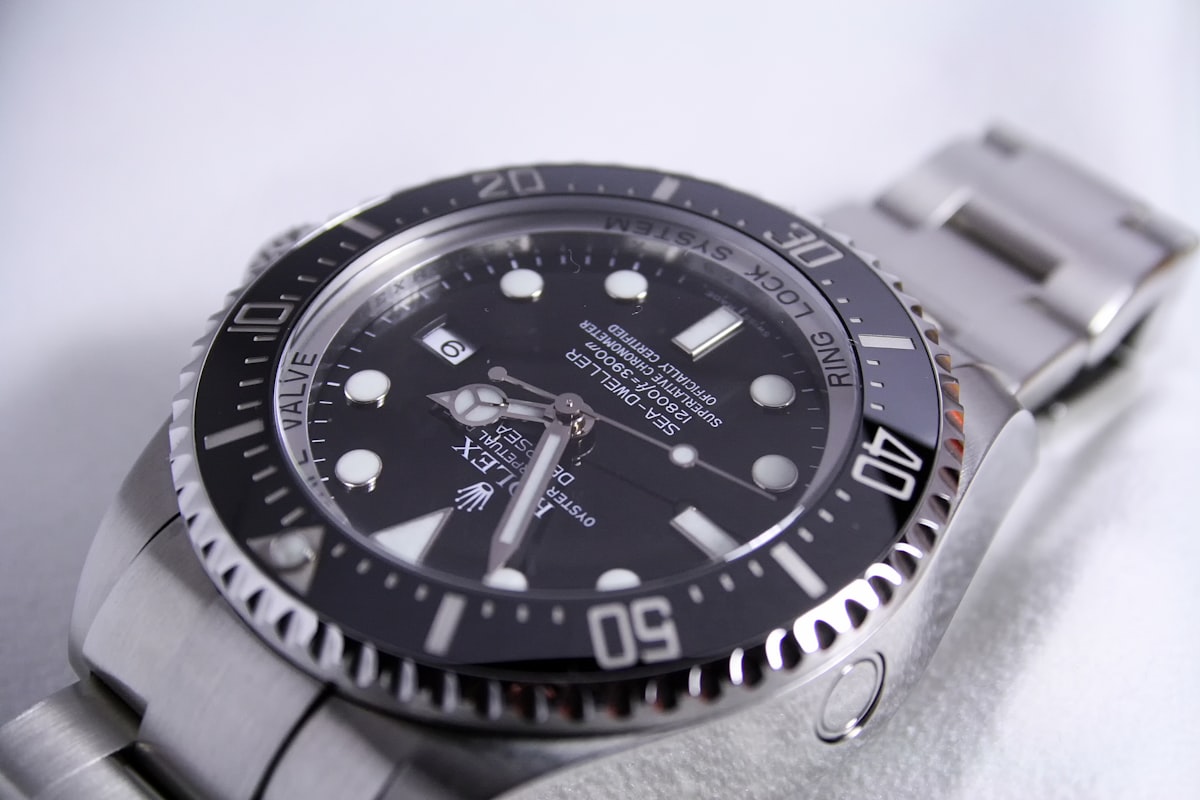
Case Study #76: Vertu, the $10,000 Phone Nobody Needed
Vertu, the luxury mobile phone brand created by Nokia in 1998, is perhaps the purest case study of a luxury brand destroyed by technological irrelevance. Vertu phones were handmade in England from materials including titanium, sapphire crystal, and exotic leather. Each phone included a dedicated concierge button that connected the owner to a twenty-four-hour personal assistant service. Prices ranged from $6,000 to over $300,000 for bespoke commissions.
For several years in the early 2000s, when mobile phones were primarily communication devices with limited functionality, Vertu occupied a viable niche. A luxury phone that made calls and sent texts with beautiful materials and a concierge service had a credible value proposition.
Then the iPhone arrived in 2007. Overnight, the value proposition of a mobile phone shifted from communication to computing. The smartphone was no longer a device for making calls. It was a pocket computer, a camera, a navigation system, an entertainment center, and a gateway to the internet. Vertu's handmade phones, beautiful as they were, ran outdated operating systems, had inferior cameras, and could not run the apps that smartphones had made essential.
Vertu attempted to adapt by incorporating Android and improving its technology, but the fundamental problem was unsolvable: luxury materials could not compensate for technological inferiority. A $10,000 Vertu that could not run Instagram or navigate Google Maps had become an expensive inconvenience.
Vertu changed ownership multiple times, accumulated over $160 million in debts, and was finally liquidated in 2017. The brand has been revived under new ownership, but it remains a cautionary tale about what happens when a luxury brand's product fails to deliver even basic functional value.
The lesson: luxury transcends function, but it cannot ignore it entirely. A mechanical watch can justify its premium by offering craftsmanship, heritage, and beauty that quartz watches cannot match, but it still tells time accurately. A Hermes bag can justify its premium by offering unmatched craftsmanship and cultural cachet, but it still carries belongings effectively. A luxury product that fails at its primary function is simply an expensive failure.
Cause of Death #7: The Accounting Fraud Infection
Case Study #77: Folli Follie and the Destruction of Links of London
The collapse of Links of London in 2019 was not, strictly speaking, a failure of the jewelry brand itself. It was collateral damage from the implosion of its parent company, Folli Follie, the Greek fashion and jewelry group.
In 2018, a short-selling firm published a report alleging that Folli Follie had fabricated approximately $1 billion in revenue through phantom stores and fictitious sales across Asia. The Greek authorities launched an investigation. Folli Follie's stock price collapsed by over ninety percent. The company entered administration, and its subsidiaries, including Links of London, were dragged down with it.
Links of London, which had been a beloved British jewelry brand with over 350 stores worldwide, closed every location overnight. Thousands of employees lost their jobs. Customer orders were cancelled. Gift cards became worthless. The brand, which had done nothing wrong operationally, was destroyed by the financial misconduct of its parent.
The lesson is sobering: a brand's health depends not only on its own management but on the integrity of its corporate ownership. Due diligence in acquisitions and partnerships doubles as brand protection. A single corrupt parent can destroy decades of brand-building in months.
Cause of Death #8: The Industry Scandal Contagion
Case Study #78: Signet Jewelers, When Corporate Culture Poisons Everything
Signet Jewelers, the parent company of Kay Jewelers, Zales, and Jared The Galleria of Jewelry, faced one of the most damaging corporate scandals in the jewelry industry's recent history. A class-action lawsuit filed in 2008 alleged a pervasive culture of sexual harassment across the company's operations, with over 68,000 current and former employees joining the suit.
The allegations described a corporate culture in which female employees were pressured into sexual relationships with male managers, subjected to unwanted advances at company events, and faced retaliation if they complained. The lawsuit, which took over fifteen years to resolve, resulted in settlements exceeding $415 million.
The financial damage was significant, but the reputational damage was worse. Signet's brands, particularly Kay Jewelers with its tagline "Every Kiss Begins with Kay," lost credibility as symbols of romance and love. The cognitive dissonance between a brand selling romantic commitment while operating a workplace culture of exploitation was devastating.
The lesson: brand meaning extends well beyond marketing, into corporate culture, labor practices, supply chain ethics, and every other dimension of how a company operates. In an age of transparency, the internal reality of a company will eventually become its external reputation. The brand that treats its employees with respect, dignity, and fairness is building brand equity with every paycheck. The brand that does not is accumulating a liability that will eventually come due.
Cause of Death #9: Dependency on a Single Customer or Channel
Case Study #79: Watches of Switzerland and the Rolex Trap
Watches of Switzerland Group, the largest luxury watch retailer in the UK and a major player in the US market, illustrates a dangerous but common vulnerability: dependency on a single supplier for the majority of revenue.
Approximately sixty percent of Watches of Switzerland's revenue comes from Rolex. This concentration creates an existential dependency: if Rolex decided to change its distribution strategy, open its own retail stores, or favor other authorized dealers, Watches of Switzerland's business model could be fundamentally undermined.
This risk became vividly real in 2023, when Rolex acquired Bucherer, the Swiss watch retailer, for an undisclosed sum. The acquisition sent shockwaves through the watch retail industry and caused Watches of Switzerland's stock to drop by approximately 29 percent, as investors worried that Rolex might now favor its own retail channel over independent authorized dealers.
The lesson for jewelry brands: diversification of revenue sources has become a survival imperative. A brand that depends on a single retailer, a single customer segment, a single product category, or a single geographic market is building on a foundation that a single event can destroy.
Cause of Death #10: Burning the Evidence of Your Own Success
In 2018, Burberry disclosed that it had destroyed more than 90 million pounds sterling worth of unsold clothing, accessories, and perfume over the previous year to prevent the products from being sold at discount or falling into unauthorized channels. The revelation triggered a public outcry about wastefulness and environmental irresponsibility, particularly among younger consumers who were increasingly conscious of sustainability.
Burberry was far from alone in the practice. Louis Vuitton, Chanel, Richemont, and numerous other luxury brands had long destroyed unsold inventory to maintain scarcity and prevent discounting. But the public disclosure forced a reckoning. Burberry announced it would stop the practice and invest in recycling and donation programs instead.
The lesson: practices that were once invisible to consumers are now visible. The luxury industry's traditional approach to unsold inventory, destroy it to maintain scarcity, is increasingly untenable in an era of environmental awareness. Brands must find new ways to manage excess inventory that maintain exclusivity without destroying resources, such as private sales to loyal customers, charitable donations, recycling programs, or pre-owned certification.
Case Study #80: Carrera y Carrera, the Death of a 134-Year Heritage Brand
Carrera y Carrera, the Spanish jewelry house founded in 1885, possessed something that money cannot buy: 134 years of continuous heritage. The brand was renowned for its sculptural approach to gold, creating pieces that looked more like miniature sculptures than conventional jewelry. Its "Mains" (Hands) collection, featuring intertwined golden hands holding gemstones, was recognized worldwide.
But heritage without sound management is heritage squandered. After years of financial mismanagement and ownership changes, Carrera y Carrera effectively ceased operations in 2019. The workshops closed. The artisans dispersed. The brand's archive, containing over a century of designs, entered an uncertain limbo.
The death of Carrera y Carrera is particularly tragic because the brand possessed exactly the kind of authentic heritage, distinctive craftsmanship, and recognizable design language that brands like LVMH have proven can be revived and monetized. A century of heritage was destroyed not by market forces but by managerial incompetence.
The lesson: heritage is necessary but not sufficient. Without competent management, disciplined finances, and strategic vision, even the richest heritage will wither. The opposite is also true: competent management, applied to rich heritage, can create extraordinary value, as LVMH has demonstrated repeatedly with brands like Tiffany, Bulgari, and Dior.
Case Study #81: Barneys New York, When Landlords Kill Luxury
Barneys New York, for decades the most influential luxury department store in America, filed for bankruptcy in August 2019 and was liquidated by February 2020. The collapse of Barneys was not caused by a failure of taste, merchandising, or brand management. It was caused by a rent increase.
The landlord of Barneys' iconic Madison Avenue flagship raised the annual rent from approximately $16 million to $30 million, an increase that the store's economics could not support. Combined with the broader shift from physical retail to e-commerce, the rent increase was the final blow.
Barneys' liquidation sale, which generated $271.4 million but saw the brand's carefully curated merchandise sold alongside "Everything Must Go" banners, was a poignant illustration of how quickly a luxury institution can be dismantled. The brand name was subsequently acquired for use in licensing, but the store, the experience, the cultural institution that had launched the careers of countless designers and defined New York luxury for four decades, was gone.
The lesson for jewelry brands with physical retail: your lease is your lifeline. A landlord who demands unsustainable rent can destroy a brand as surely as a creative failure or a marketing scandal. Negotiate long-term leases with reasonable escalation clauses. Consider owning your flagship locations rather than leasing them. And always maintain the financial flexibility to survive a dramatic change in real estate economics.
Chapter 19: The Complete Customer Experience, From First Touch to Forever
The customer's relationship with your brand unfolds as a journey. And every touchpoint on that journey, from the first Instagram post they see to the moment they pass a piece of your jewelry down to their granddaughter, is an opportunity to strengthen or weaken their emotional bond with your brand.
The Seven Stages of the Luxury Customer Journey
Stage 1: Discovery. The customer encounters your brand for the first time. This might happen through social media, a magazine feature, a friend's recommendation, a store window, or a celebrity wearing your piece. At this stage, the customer forms a first impression in approximately three seconds. Everything, your visual identity, your brand voice, your product photography, the quality of your website, contributes to that impression.
Stage 2: Education. The interested customer begins to learn about your brand. They visit your website. They read your brand story. They explore your collections. They look at reviews and social media content. At this stage, the quality of your content marketing, your storytelling, your craftsmanship videos, your brand history, determines whether the customer moves forward or moves on.
Stage 3: Consideration. The customer is seriously considering a purchase. They may visit a boutique, request an appointment, or spend significant time on your e-commerce site. At this stage, the quality of your sales experience, the knowledge and warmth of your staff, the ambiance of your store, the ease of your online experience, is decisive.
Stage 4: Purchase. The transaction occurs. But the purchase marks the beginning of the relationship. The packaging, the personal note, the follow-up communication: each one lays the foundation for repeat business.
Stage 5: Experience. The customer wears the jewelry. They receive compliments. They feel the weight of it against their skin. They notice how it catches the light. The product itself becomes the primary marketing tool, a daily, physical reminder of the brand's promise.
Stage 6: Advocacy. The satisfied customer becomes an advocate. They recommend your brand to friends. They post about it on social media. They return for additional purchases. At this stage, your referral programs, loyalty initiatives, and community-building efforts determine how actively the customer promotes your brand.
Stage 7: Legacy. The customer passes the jewelry to the next generation. The piece becomes an heirloom, a physical embodiment of family history. At this stage, the durability of your craftsmanship and the timelessness of your design determine whether the next generation develops their own relationship with your brand.
BOOK SEVEN: THE MASTERY
Advanced Strategies for World-Class Brands
Chapter 20: The Tiered Value Ladder, Engineering the Customer Journey
The most profitable luxury brands do not sell products at a single price point. They build what we might call a value ladder, a series of products at escalating price points, each designed to pull the customer upward toward the next level.
Case Study #82: The Luxury Pyramid
Consider how the great jewelry houses structure their offerings:
Level 1: The Gateway (Under $500). Tiffany's silver jewelry line, the heart necklaces, the Return to Tiffany bracelets, the simple silver bangles, functions as the entry point to the brand ecosystem. These products introduce young consumers to the Tiffany experience: the Blue Box, the white ribbon, the feeling of opening a Tiffany package. The margin on these products is relatively thin. But their strategic value is enormous: they create the first emotional association with the brand and establish the expectation that future life milestones will be marked with Tiffany purchases.
Level 2: The Commitment ($1,000 to $15,000). The engagement ring. For most jewelry brands, this is the moment a casual customer becomes a committed one. The De Beers doctrine, the cultural expectation of a diamond engagement ring costing two months' salary, funnels enormous spending into this single life event. The customer is spending not just on a product but on a symbol of the most important decision of their life. The brand that captures this purchase has a customer for decades.
Level 3: The Anniversary ($2,000 to $25,000). De Beers pioneered the "second diamond" strategy in the 1960s, when they promoted eternity rings and anniversary bands as symbols of enduring love. The message: the engagement ring is the beginning, not the end. Each wedding anniversary, each milestone birthday, each significant achievement deserves to be marked with jewelry. This transforms the customer relationship from a single transaction to a recurring one.
Level 4: The Statement ($25,000 to $500,000 and beyond). High jewelry and one-of-a-kind pieces represent the pinnacle of the value ladder. These are not impulse purchases. They are considered investments, in beauty, in heritage, in status. Customers at this level have typically spent years climbing the previous rungs. They know the brand intimately. They trust it completely. And they are willing to invest extraordinary sums in pieces that will define their legacy.
Level 5: The Legacy (Custom and Bespoke). Custom commissions, bespoke pieces, and family heirlooms represent the final level, where the customer is not buying for themselves but for future generations. At this level, the relationship between brand and customer is almost familial. The jeweler knows the customer's family history, their aesthetic preferences, and their deepest aspirations. The product becomes a collaboration.
Case Study #83: Pandora, the $3 Billion Charm System
When Pandora launched its charm bracelet concept in 2000, it was dismissed by traditional jewelers as a gimmick. The bracelet itself was relatively inexpensive, a simple chain with a clasp. The genius was in the charms.
Pandora released dozens of charm designs, each with a different meaning: travel charms, family charms, milestone charms, passion charms. New designs launched seasonally, creating ongoing purchase occasions. A customer might buy the bracelet once, but she would return again and again, for her birthday, for Valentine's Day, for a new baby, for a promotion, for a vacation, to add charms that commemorated the moments of her life.
By 2023, Pandora was generating over $3 billion in annual revenue. The company had cracked the recurring revenue code for jewelry. While traditional jewelry brands depend on major life events (engagements, anniversaries, milestone birthdays), Pandora created a system where any moment could be an occasion for purchase.
Case Study #84: The Nespresso Model and Razor-Blade Economics
Nespresso's business model offers an unexpected but illuminating parallel. The Nespresso machine is sold at a relatively modest price point. The real revenue comes from the proprietary coffee capsules that customers purchase repeatedly over years. The machine is the gateway; the capsules are the recurring revenue stream.
For jewelry, the parallel might be: sell a beautiful pendant mount or chain at an accessible price point, then offer interchangeable gemstones, seasonal pendants, or charms that create ongoing purchase occasions. Pandora perfected this model. But there is room for a fine jewelry brand to execute it at a higher price point, a gold chain with interchangeable diamond, sapphire, and emerald drops, for example, combining recurring revenue mechanics with genuine luxury positioning.

Case Study #85: In-N-Out Burger, the Anti-Growth Growth Story
In-N-Out Burger has operated for over seventy-five years with essentially the same menu: burgers, fries, shakes, and drinks. The company has never franchised. It has never gone public. It has never expanded beyond a manageable geographic footprint. It has never added trendy menu items to chase fads.
And it generates an estimated $4 billion in revenue from company-owned stores alone, with per-store revenues that dwarf its fast-food competitors. Customer loyalty is fanatical. The "secret menu" (customizations known only to regulars) has become a cultural phenomenon.
In-N-Out proves a principle that luxury brands should internalize: disciplined restraint can be a growth strategy. By refusing to expand faster than its quality standards allow, by keeping its menu focused rather than sprawling, and by maintaining private ownership rather than submitting to the short-term pressures of public markets, In-N-Out has built one of the most valuable and beloved brands in American food service.

The jewelry parallel: you do not need to be in every market, every category, and every price point to build an extraordinary brand. Sometimes the most powerful statement is the product line you do not launch, the market you do not enter, and the partnership you decline. Focus compounds. Diffusion dilutes.
Chapter 21: The Art of the Collaboration
Case Study #86: Louis Vuitton x Supreme, the Collaboration That Proved Luxury Could Coexist with Street Culture
In January 2017, the fashion world was stunned when Louis Vuitton, the most venerable name in French luxury goods, announced a collaboration with Supreme, a New York streetwear brand whose core audience was skateboarding teenagers and hip-hop fans. Critics within the luxury establishment were apoplectic. They predicted brand dilution, customer alienation, and long-term damage to Louis Vuitton's carefully cultivated prestige.
They were wrong. The collection sold out instantly. Pieces appeared on the secondary market at multiples of their retail price. The media coverage was worth hundreds of millions of dollars. And crucially, Louis Vuitton's core luxury customer did not abandon the brand. The collaboration was treated as an event, a limited, time-bound experiment that generated excitement without permanently altering the brand's positioning.
The key lesson: collaborations work when they are ephemeral and unexpected. A collaboration should feel like a surprising encounter, not a permanent marriage. It should generate energy, attention, and cultural conversation. And it should end cleanly, leaving both brands enhanced by the association but unchanged in their core identity.
Case Study #87: Tiffany x Nike, Bridging Worlds
When Tiffany and Co. collaborated with Nike on the Air Force 1 "1837" sneaker in 2023, it bridged the gap between luxury jewelry and sneaker culture. The shoe featured Tiffany Blue on the Nike swoosh and came packaged in a custom Tiffany-style box. The collaboration generated an estimated $47 million in media value and introduced the Tiffany brand to millions of sneaker enthusiasts who had never set foot in a Tiffany boutique.
This is the strategic value of cross-industry collaborations: they expose your brand to entirely new audiences in a context that feels organic rather than commercial. The sneakerhead who buys the Tiffany Nike may never buy a Tiffany engagement ring. But his girlfriend might, and now she associates Tiffany with something culturally current, not just her grandmother's jewelry box.
Chapter 22: The Psychology of Pricing
Case Study #88: The Veblen Effect, When Higher Prices Increase Demand
In 1899, economist Thorstein Veblen described a paradox that defies classical economic theory: for certain goods, demand increases as the price rises. These "Veblen goods" defy the basic law of supply and demand because their primary function is social signaling. The higher the price, the more effectively the product communicates wealth, status, and taste.
Jewelry is the prototypical Veblen good. A diamond ring that costs $50,000 does not contain fifty times more material value than one costing $1,000. But it communicates fifty times more social status. The customer is not paying for carbon atoms arranged in a crystal lattice. They are paying for what those carbon atoms mean when arranged on a finger in a specific setting from a specific brand.
Understanding the Veblen effect has direct implications for pricing strategy. If you lower your prices to attract more customers, you may actually reduce demand, because the lower price diminishes the social signaling value that is the product's primary function. This is why luxury brands almost never discount. A Chanel bag on sale is no longer a Chanel bag. It is a Chanel bag that nobody wanted badly enough to pay full price for.
Case Study #89: Chanel's Annual Price Increases, Turning Inflation into Marketing
Chanel has implemented regular price increases across its handbag line that far exceed inflation. The Classic Flap bag cost approximately $1,150 in 2005. By 2024, the same bag cost over $10,000, an increase of nearly 800 percent in under twenty years. Rather than suppressing demand, these increases have consistently generated two effects: urgency ("buy now before the price goes up again") and investment narrative ("Chanel bags appreciate in value"). Both effects increase sales.
For jewelry brands, regular price increases, particularly on signature pieces, can serve the same function. The key is consistency, predictability, and communication. Customers should understand that your pieces will be more valuable next year than they are today. This understanding transforms a purchase from an expense into an investment.
Case Study #90: The Quiet Luxury Movement, When the Logo Disappears
In the early 2020s, a cultural shift occurred in luxury consumption that industry analysts call "quiet luxury" or "stealth wealth." Driven partly by economic uncertainty, partly by cultural backlash against conspicuous consumption, and partly by the influence of television shows like Succession, a significant segment of wealthy consumers began favoring discreet, logo-free luxury over visible branding.
Brands that had long practiced this philosophy, Brunello Cucinelli, Loro Piana (acquired by LVMH for $2.7 billion in 2023), The Row (founded by Mary-Kate and Ashley Olsen), thrived. Brands that depended on visible logos for their value proposition faced a more challenging environment.
By 2025, quiet luxury accounted for an estimated 28 percent of the global personal luxury goods market, up from approximately 18 percent in 2019. This reflects a structural shift in how a significant portion of wealthy consumers define luxury: as private pleasure rather than public display, as quality rather than logo, as personal satisfaction rather than recognition by strangers.
For jewelry brands, the quiet luxury movement has direct implications. Pieces that are beautiful without being ostentatious, that signal quality through craftsmanship rather than through visible branding, that reward the wearer's private appreciation rather than demanding public attention, will increasingly command premiums. The customer who wears a discreet Van Cleef and Arpels Alhambra pendant is not seeking attention. She is seeking satisfaction. And she is willing to pay extraordinary premiums for it.
Chapter 23: Building Cultural Capital

Case Study #91: Fondation Cartier, Art as Brand Strategy
The Fondation Cartier pour l'Art Contemporain, established in 1984 in a building designed by Jean Nouvel in Paris's 14th arrondissement, has hosted exhibitions by artists ranging from Jean-Paul Gaultier to David Lynch to Patti Smith. The Foundation has absolutely nothing to do with selling jewelry. It has no retail component. It generates no direct revenue for Cartier's commercial operations.
But it has everything to do with building Cartier's cultural capital. By investing in the arts, by positioning itself as a patron of culture, beyond its identity as a jeweler, Cartier echoes the Renaissance tradition of the Medici, who understood that patronage elevates the patron as much as the artist. The Foundation attracts a customer who values intellectual sophistication, creative courage, and cultural depth. And it creates a halo effect that elevates the perception of every product Cartier sells.

Case Study #92: The Medici Model, How Renaissance Bankers Used Art to Build a Dynasty
The Medici family of Florence offers perhaps the oldest and most instructive example of using cultural patronage as a brand-building strategy. The Medicis were, at their core, bankers. Their wealth came from lending money and currency exchange. But banking, in fifteenth-century Italy, was considered morally dubious (usury was condemned by the Catholic Church). The Medicis needed to transform their reputation from money-changers to enlightened rulers.
Their solution was patronage on a monumental scale. They commissioned works from Brunelleschi (the dome of the Florence Cathedral), Donatello (the bronze David), Botticelli (The Birth of Venus), and Michelangelo (the Medici Chapel). They founded the Platonic Academy, which became the intellectual center of the Renaissance. They collected manuscripts, built libraries, and sponsored festivals.
The result was a transformation of identity. Within two generations, the Medici name was associated not with banking but with culture, beauty, and intellectual achievement. This association generated political power (the family produced four popes and two queens of France), social prestige, and a legacy that endures five centuries later.
For luxury jewelry brands, the Medici lesson is that cultural investment functions as an asset, one that compounds over decades and creates associations that no advertising campaign can replicate. A brand that sponsors art exhibitions, commissions documentary films, endows design scholarships, or partners with museums is building a cultural moat that competitors cannot cross.

Case Study #93: YETI, How a Cooler Brand Became a Lifestyle Empire
YETI, the premium cooler and outdoor gear company, offers an unexpected case study in brand building that luxury jewelry brands can learn from. YETI sells coolers for $300 to $1,300, in a market where competitors sell coolers for $30. The price premium, roughly ten to forty times the competition, is sustained not by superior insulation technology (though YETI's products are well-engineered) but by brand meaning.
YETI built its brand by targeting a specific, passionate community: hunting, fishing, and outdoor enthusiasts. Rather than pursuing mass-market awareness, YETI invested in relationships with professional guides, outfitters, ranchers, and outdoor influencers, people whose endorsement carried authentic weight within their communities. YETI's marketing featured real stories of real people in real outdoor environments, not staged studio shots or celebrity endorsements.
The brand's 2024 revenue exceeded $1.83 billion. Its market valuation has approached $5 billion. YETI proved that a brand can command extraordinary premiums in a commodity category if it builds authentic community, tells genuine stories, and maintains unwavering quality.

The lesson for jewelry: you do not need to appeal to everyone. You need to matter deeply to someone. A jewelry brand that is beloved by a specific, passionate community (whether that community is defined by culture, geography, profession, or aesthetic sensibility) will always outperform a brand that is vaguely appealing to a generic audience.
BOOK EIGHT: THE ETHICS
Building a Brand That Deserves to Last
Chapter 24: Sustainability as Strategy
Case Study #94: Patagonia, When a Brand Gives Itself Away
In September 2022, Patagonia founder Yvon Chouinard transferred ownership of his company, valued at approximately $3 billion, to a trust and nonprofit dedicated to fighting climate change. The announcement generated global media coverage worth hundreds of millions of dollars. It cemented Patagonia's position as the most authentic sustainability brand in the world. And it proved that genuine environmental commitment is not just ethically admirable; it is commercially powerful.
While few jewelry brands will follow Chouinard's example, the lesson is about the power of genuine commitment. Sustainability is no longer a nice-to-have for luxury brands. It is a strategic imperative. Younger consumers, the customers who will define the next thirty years of the luxury market, overwhelmingly prefer brands with credible, demonstrable environmental and social commitments. They can detect greenwashing instantly. And they punish it severely.

Case Study #95: The Kimberley Process, When an Industry's Shadow Threatens Every Brand
In the late 1990s, investigative journalists and human rights organizations revealed that diamonds mined in conflict zones, particularly in Sierra Leone, Angola, and the Democratic Republic of Congo, were being sold on the international market to finance armed insurgency, child soldier recruitment, and civilian atrocities. The term "blood diamonds" entered the public vocabulary, and it threatened to destroy the romantic fantasy that De Beers and the entire diamond industry had spent half a century constructing.
The 2006 film Blood Diamond, starring Leonardo DiCaprio, brought the issue to a mass audience with devastating effect. Suddenly, the diamond that was supposed to symbolize eternal love also symbolized, for a growing number of consumers, human suffering. The industry faced a crisis of meaning that struck at the very foundation of its value proposition.
The Kimberley Process Certification Scheme, established in 2003, was the industry's collective response, a certification system designed to prevent conflict diamonds from entering the legitimate market. The system is imperfect: it has been criticized for loopholes, inadequate enforcement, and a narrow definition of "conflict" that excludes diamonds mined under conditions of severe human rights abuse but without direct connection to armed insurgency.
But the Kimberley Process illustrates a critical principle for every luxury industry: brand reputation is collective. A scandal at one diamond company damages consumer trust in all diamond companies. A child labor expose at one gold mine taints every gold jewelry brand. This is why industry-wide initiatives, ethical sourcing standards, responsible mining certifications, labor protections, are not just ethical obligations. They are collective brand protection.
Case Study #96: Chopard's Journey to Fairmined Gold
In 2018, Chopard committed to using 100 percent ethical gold in all its jewelry and watch production. The "Journey to Sustainable Luxury" initiative sourced gold from artisanal and small-scale mining operations that meet strict environmental and labor standards.
This was not cheap or easy. Ethical gold costs more to source. The supply chain is more complex to manage. Certification requires ongoing auditing. But the investment has paid dividends in brand differentiation and customer loyalty, particularly among younger, values-driven consumers who are willing to pay a premium for products they can wear with a clear conscience.
Case Study #97: Lab-Grown Diamonds, Disruption or Opportunity?
The rise of lab-grown diamonds represents perhaps the most significant disruption in the jewelry industry since De Beers invented the engagement ring tradition. Lab-grown diamonds are physically and chemically identical to mined diamonds; they have the same hardness, brilliance, and optical properties. But they are produced in factories in a matter of weeks rather than extracted from the earth over billions of years.
De Beers initially resisted lab-grown diamonds. Then, in a strategic pivot, they launched Lightbox, a separate brand selling lab-grown diamond jewelry at dramatically lower price points ($800 for a one-carat stone, compared to several thousand for a natural equivalent). The positioning was deliberate: by framing lab-grown diamonds as affordable fashion items rather than luxury products, De Beers protected the premium positioning of its natural diamond business while capturing revenue from a growing market segment.
For brand builders, the lab-grown question forces a fundamental decision about brand identity. If your story is about the romance, rarity, and geological miracle of natural stones, lab-grown diamonds are a competitive threat to be addressed through differentiation. If your story is about design, craftsmanship, and accessible luxury, lab-grown diamonds are an opportunity to offer extraordinary beauty at revolutionary prices. The answer depends entirely on your brand's positioning and your customer's values. There is no universally correct answer, only strategically coherent ones.
The parallel to the Swiss quartz crisis is instructive. When quartz watches threatened to destroy the Swiss mechanical watch industry in the 1970s and 1980s, the Swiss response was not to compete on accuracy (a battle they could not win) but to reposition mechanical watches as luxury objects where the meaning of the mechanism, its heritage, its craftsmanship, its connection to centuries of horological tradition, mattered more than its functional performance. Natural diamonds may follow a similar trajectory, repositioning from "the prettiest stone" (a competition lab-grown diamonds can win) to "the most meaningful stone" (a competition they cannot).
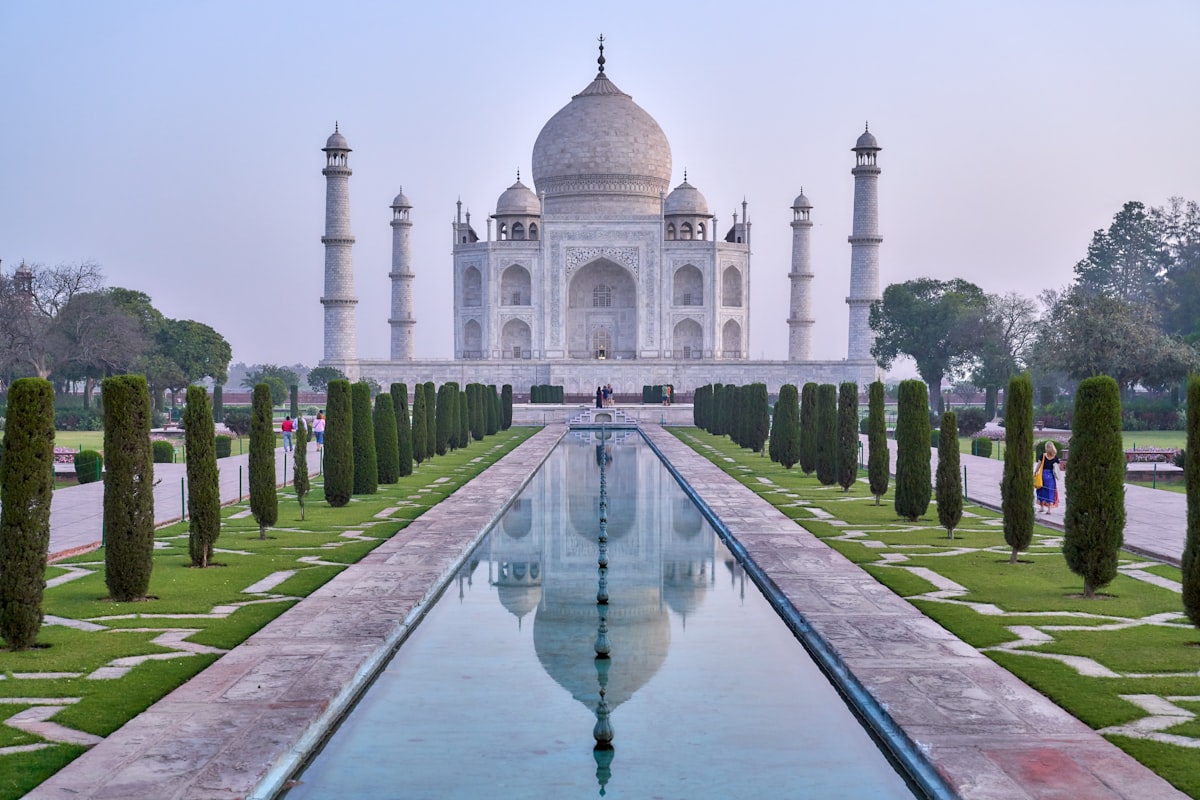
Case Study #98: The Jade Standard, How Chinese Culture Protected a Gem's Meaning for Five Millennia
Jade has been the most culturally significant gemstone in Chinese civilization for over five thousand years. The Confucian philosopher Xu Shen, writing in the second century CE, identified five virtues embodied by jade: benevolence (its warm luster), righteousness (its translucency reveals truth), wisdom (its clear, musical tone when struck), courage (it can be broken but not bent), and equity (its flaws do not conceal its beauty).
Jade went beyond decorative in ancient China. It was spiritual armor. Jade burial suits, composed of thousands of small jade plaques sewn together with gold, silver, or copper wire, were created for members of the imperial family in the Han dynasty (206 BCE to 220 CE), in the belief that jade would preserve the body and facilitate passage to the afterlife. The most famous example, the burial suit of Prince Liu Sheng, contains 2,498 jade plaques connected by 1,100 grams of gold wire.
The cultural protection of jade in Chinese civilization, its investment with philosophical, spiritual, and political meaning over millennia, has maintained its value and significance in a way that no marketing campaign could achieve. When a Chinese consumer purchases jade today, they are participating in a tradition that predates Christianity, Islam, and the Roman Empire. The stone's meaning is not manufactured. It is inherited.
The lesson for luxury brands seeking to operate in culturally rich markets: respect the existing meaning infrastructure. If a material or a motif already carries deep cultural significance, your role is to honor and extend that significance, not to impose a new narrative from outside. The brand that approaches a culture with humility and genuine understanding will be welcomed. The brand that approaches with arrogance will be rejected.
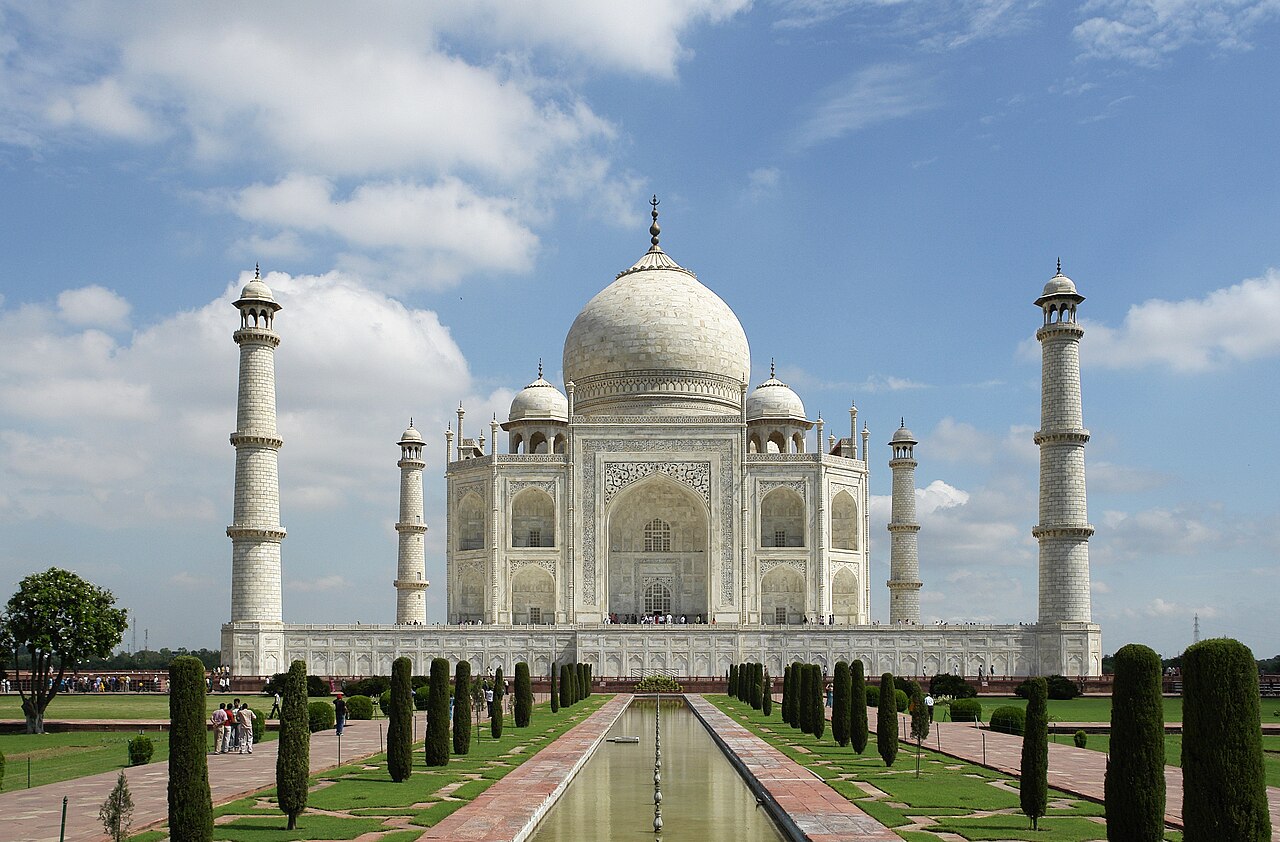
Chapter 25: The Mughal Jewelry Tradition, When Empires Expressed Power Through Gems
The Mughal emperors of India (1526 to 1857) created what is arguably the most extravagant jewelry tradition in human history. Their passion for gemstones went beyond aesthetic. It was political. A Mughal emperor's jewels were a visible demonstration of divine authority, military power, and cosmic order.
The Peacock Throne, commissioned by Emperor Shah Jahan in 1628, took seven years to complete and consumed 1,150 kilograms of gold and 230 kilograms of gemstones, including the Koh-i-Noor diamond, the Timur Ruby, and the Shah diamond. By contemporary accounts, the throne cost twice as much as the Taj Mahal. It was designed not merely as a seat of government but as a material manifestation of paradise on earth, with golden peacocks whose tail feathers were composed of sapphires, rubies, emeralds, and diamonds arranged to replicate the cosmic order.
The Mughal jewelry tradition also gave the world two techniques that remain central to Indian jewelry-making today: Kundan, a method of setting gemstones in pure gold foil that allows the stones to catch maximum light, and Meenakari, the art of enameling metal with vibrant colors, often applied to the reverse side of Kundan pieces so that even the hidden surfaces are beautiful.
When Cartier's Jacques Cartier traveled to India in 1911, he was profoundly influenced by Mughal jewelry traditions. The result was the "Tutti Frutti" style, which combined rubies, sapphires, and emeralds carved in the Indian style with Cartier's European platinum settings. The Tutti Frutti pieces became some of the most celebrated and valuable jewelry in the world, demonstrating that the fusion of cultural traditions, when executed with respect and skill, can create something greater than either tradition alone.

For modern jewelry brands, the Mughal tradition teaches that jewelry at its highest expression is not personal adornment. It is architecture. It is storytelling. It is the material expression of a worldview. The brands that approach jewelry with this level of ambition, that treat each piece as a small monument to a set of values, will always create more meaningful and more valuable work than those that treat jewelry as mere decoration.
BOOK NINE: THE FUTURE
Where the Industry Is Heading
Chapter 26: Emerging Markets and the New Luxury Consumer

Case Study #99: India, the World's Largest Untapped Jewelry Market
India is the world's largest consumer of gold jewelry by volume, with a cultural tradition of jewelry as both adornment and financial security that stretches back thousands of years. Hindu weddings traditionally involve lavish jewelry exchanges. Gold is considered auspicious, and its purchase is tied to religious festivals like Dhanteras and Akshaya Tritiya. Yet the organized, branded jewelry market in India remains relatively small compared to the unorganized sector of family jewelers and local gold merchants.
For international luxury brands, India represents an enormous opportunity, but one that requires genuine cultural engagement, not mere geographic expansion. Cartier has approached India with culturally specific strategies, developing bolder, more colorful designs that reflect Indian aesthetic preferences while maintaining global brand standards. Tanishq, India's largest domestic jewelry brand (owned by the Tata Group), has built a multi-billion-dollar business by combining local cultural understanding with modern retail practices.
The Indian jewelry market teaches a principle that applies to every emerging market: you cannot export your brand identity unchanged and expect it to resonate. The core values (heritage, craftsmanship, exclusivity) translate universally. The expression of those values (color palettes, design motifs, communication styles, retail experiences) must be adapted to local culture.

Case Study #100: China's Gen Z, the Self-Expression Economy
Chinese Gen Z consumers are rewriting the rules of luxury consumption. Unlike their parents, who often purchased luxury goods primarily as status signals, Gen Z in China values self-expression, individuality, and cultural resonance. They are as likely to buy from a niche independent designer as from an established maison, if the designer's brand story resonates with their personal identity.
This shift has profound implications for jewelry brands. The traditional strategy of leveraging Western heritage and exclusivity is no longer sufficient on its own. Brands must also demonstrate cultural fluency, an understanding of local aesthetics, values, and digital platforms (WeChat, Xiaohongshu, Douyin) that goes beyond surface-level localization. The brands that treat China as merely a new geography to sell the same products will struggle. The brands that treat China as a distinct cultural market requiring distinct strategies will thrive.
Case Study #101: The Middle East, Where Tradition Meets Opulence
The Middle East, particularly the Gulf Cooperation Council (GCC) states of Saudi Arabia, the UAE, Qatar, Kuwait, Bahrain, and Oman, represents one of the most concentrated luxury markets on earth. Per-capita luxury spending in the GCC exceeds that of most Western markets. And jewelry, with its deep roots in Islamic and Arabian culture, occupies a place of particular importance.
The opening of Saudi Arabia's entertainment and tourism sectors under Vision 2030 has created new opportunities for luxury brands. International jewelry houses are expanding their presence in Riyadh, Jeddah, and the new development of NEOM. The Saudi consumer, particularly the young, digitally connected Saudi woman who represents a rapidly growing segment of the market, is eager for luxury jewelry that respects her cultural values while reflecting her modern aspirations.
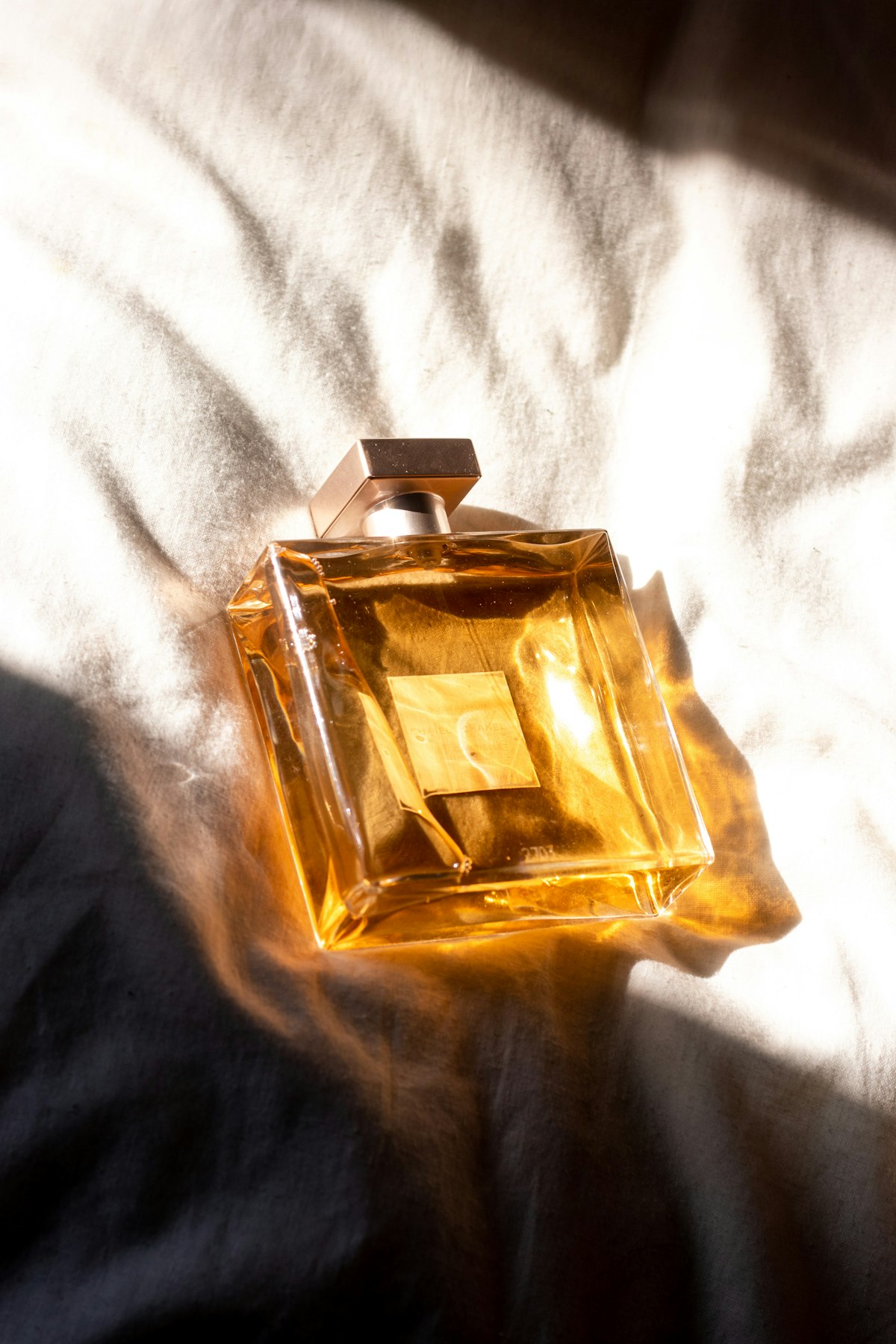
For jewelry brands entering the Middle Eastern market, several principles apply. First, high jewelry and one-of-a-kind pieces resonate particularly strongly, reflecting a cultural tradition of commissioning extraordinary jewelry for weddings, celebrations, and family milestones. Second, the relationship between the brand and the client is paramount; personal service, private viewings, and bespoke commissions are expected, not exceptional. Third, digital engagement is critical; Middle Eastern luxury consumers are among the most digitally active in the world, with social media platforms playing a central role in discovery and aspiration.

Chapter 27: Technology and the Future of Luxury
The Personalization Revolution
The luxury industry is on the cusp of a personalization revolution driven by artificial intelligence, data analytics, and digital technology. The brands that harness these tools, while maintaining the human touch that defines luxury, will define the next era of the industry.
Case Study #102: How AI Is Reshaping Luxury Retail
Several luxury brands are already deploying artificial intelligence to enhance customer experience and operational efficiency:
Gucci has implemented AI-powered visual search tools that allow customers to photograph a piece of clothing or jewelry and find similar items in Gucci's catalog. The technology reduces the friction between inspiration and purchase, turning any encounter with a beautiful object into a potential shopping moment.
LVMH has deployed AI across its supply chain to optimize inventory management, predict demand trends, and reduce waste. The technology allows brands to produce more precisely calibrated quantities, reducing the need to destroy unsold inventory while maintaining the scarcity that luxury requires.
Multiple luxury brands are experimenting with AI-powered personal shopping assistants that remember customer preferences, anticipate needs, and make personalized recommendations. The vision is a digital sales advisor that combines the knowledge of a master jeweler with the recall of a perfect database, available twenty-four hours a day across every channel.
For jewelry brands, AI offers several specific opportunities. First, it can enhance the customization process, allowing customers to visualize bespoke designs through AI-generated renderings before committing to production. Second, it can improve gemstone grading and authentication, using machine learning to analyze microscopic characteristics with greater consistency than human inspection. Third, it can power recommendation engines that suggest pieces based on a customer's purchase history, browsing behavior, and expressed preferences.
But the greatest brands will use AI to enhance, not replace, the human connection that is at the heart of luxury. A machine can recommend a necklace based on past purchases. It cannot read the emotional cues that tell an experienced sales advisor that the customer is buying this piece to commemorate a loss, not a celebration, and adjust the tone of the interaction accordingly. Technology is a tool. Humanity is the luxury.

Case Study #103: Netflix and the Recommendation Engine Applied to Jewelry
Netflix's recommendation algorithm, which drives approximately eighty percent of content viewed on the platform, is one of the most sophisticated personalization systems in any consumer industry. The algorithm analyzes viewing history, genre preferences, time-of-day patterns, and thousands of other signals to present each user with a customized interface that feels personally curated.
Netflix estimates that its recommendation system saves over $1 billion per year by reducing subscriber churn. The principle is simple: the more relevant the content feels, the more engaged the user remains, and the less likely they are to cancel.
For luxury jewelry, the recommendation engine concept translates directly to CRM (customer relationship management) strategy. Imagine a system that tracks every customer interaction: purchases, browsing behavior, event attendance, email engagement, social media activity. The system identifies patterns: this customer prefers yellow gold over white gold, tends to buy around anniversaries in October, gravitates toward Art Deco designs, has inquired about sapphires twice without purchasing.
Armed with these insights, a sales advisor can reach out with a personalized communication: "We have just received a new Art Deco-inspired sapphire ring in yellow gold that I thought you might appreciate. Would you like me to reserve it for a private viewing?" This is not spam. It is service. And the difference between the two, relevance, is what AI can provide.
Case Study #104: Augmented Reality and Virtual Try-On
Several jewelry brands have deployed augmented reality (AR) technology that allows customers to virtually "try on" pieces using their smartphone cameras. The technology is still in its early stages, but it has already demonstrated several benefits:
It reduces the hesitation associated with online jewelry purchases by allowing customers to see how a piece looks on their own hand, wrist, or neck before committing.
It extends the showroom into the customer's home, allowing browsing and consideration at the customer's convenience rather than requiring a boutique visit.
It creates shareable moments: customers who virtually try on a piece often share screenshots on social media, generating organic brand awareness.
The technology is not a replacement for the physical luxury experience. The weight of a gold bracelet on the wrist, the brilliance of a diamond under boutique lighting, the knowledge of a trained advisor: these cannot be replicated digitally. But AR can serve as a powerful discovery and consideration tool, bridging the gap between online browsing and in-store purchasing.
Chapter 28: The Competitive Landscape, Understanding Your Position
The Three Tiers of the Jewelry Market
The global jewelry market is not a single market. It is three distinct markets, each with different customers, different competitive dynamics, and different strategies for success.
Tier 1: High Jewelry (Haute Joaillerie). This tier is dominated by a small number of heritage houses: Cartier, Van Cleef and Arpels, Bulgari, Harry Winston, Graff, and a handful of others. Products are priced from $50,000 to several million dollars. Customers are ultra-high-net-worth individuals, collectors, and museums. Competition is based on heritage, craftsmanship, stone quality, and cultural prestige. Marketing is almost entirely based on private events, personal relationships, and editorial placement. Social media and digital advertising play a supporting role but are not the primary customer acquisition channel.
Tier 2: Premium Jewelry. This tier includes brands like Tiffany and Co., David Yurman, Buccellati, Pomellato, and Mikimoto. Products range from $1,000 to $50,000. Customers are affluent professionals and aspirational luxury consumers. Competition is based on brand recognition, design distinctiveness, and retail experience. Marketing involves a mix of editorial, digital, celebrity endorsement, and experiential retail. This is the tier where LVMH, Richemont, and Kering compete most intensely.
Tier 3: Accessible Luxury and Fashion Jewelry. This tier includes Pandora, Swarovski, Mejuri, Kendra Scott, and numerous direct-to-consumer brands. Products range from $50 to $1,000. Customers are mainstream consumers seeking affordable self-expression and gift-giving. Competition is based on design freshness, price accessibility, and digital marketing effectiveness. This tier has seen the most disruption from e-commerce and social media-native brands.
The strategic imperative is to choose your tier deliberately and compete accordingly. A brand that tries to straddle tiers, offering $50 earrings alongside $50,000 necklaces, risks being seen as unfocused and incoherent. The great brands pick their tier, own it, and build every aspect of their brand (product, pricing, distribution, marketing, customer experience) around a coherent positioning within that tier.
For brands in Tier 3 aspiring to Tier 2, the path is clear but difficult: elevate product quality, raise prices gradually, restrict distribution, invest in heritage-building, and accept short-term revenue sacrifice for long-term brand strength. Pandora's "Programme NOW" is a current example of this upward migration. LVMH's transformation of Tiffany is a more dramatic one.
For brands in Tier 2 aspiring to Tier 1, the path is even more demanding: develop truly extraordinary craftsmanship, acquire or develop expertise in rare materials, build relationships with the ultra-high-net-worth community, and invest in cultural capital (museum partnerships, art patronage, heritage documentation) that signals the seriousness and longevity that Tier 1 requires.
For brands in Tier 1, the imperative is preservation: maintain the heritage, protect the craftsmanship, nurture the relationships, and resist the constant temptation to "grow" by reaching down to lower tiers. The moment a Tier 1 brand begins competing for Tier 2 customers, it signals to its Tier 1 customers that it is no longer exclusively theirs. And exclusivity, as we have seen throughout this guide, is the foundation on which all of luxury is built.
EPILOGUE: The Eternal Brand
Let us return to where we began.
A young man walks into a small shop in Manhattan with a thousand borrowed dollars and an instinct for what people really want. He does not know it yet, but he is about to start building something that will outlast him by nearly two centuries, something that will be worth $16 billion, that will define how millions of people celebrate the most important moments of their lives, that will make a single shade of blue trigger joy in the hearts of strangers.
What did Charles Lewis Tiffany know that so many others did not?
He knew that he was not selling stationery. He was not selling fancy goods. He was not even selling jewelry. He was selling meaning. He was selling the idea that certain moments in life deserve to be marked with something beautiful, something lasting, something that carries within it a promise of permanence in a world of constant change.
Today, the same instinct that guided Tiffany in 1837 guides the greatest luxury brands on earth. Cartier, born in a modest Parisian workshop in 1847, is now the most valuable jewelry brand in the world. Chanel No. 5, created in a perfumer's laboratory in 1921, remains the best-selling fragrance in history. The Love Bracelet, designed in a New York workshop in 1969, is still one of the best-selling luxury jewelry items on the planet, virtually unchanged after more than fifty years.
What connects these stories is not money, not talent, not luck, though all played their parts. What connects them is a relentless, almost obsessive commitment to building meaning. Each of these brands understood, in their own way and in their own era, that they were not in the business of selling products. They were in the business of selling stories. Selling emotions. Selling membership in something larger than a transaction.
And yet, as we have seen throughout this guide, the path to immortality is not a straight line. It is a winding road littered with the wreckage of brands that once seemed invincible.
Gucci nearly died. Twice. A family feud, a murder, the indignity of seeing its double-G logo on airport ashtrays. And twice it rose again, first through Tom Ford's sexual revolution, then through Alessandro Michele's eccentric maximalism. Each resurrection required not merely a new designer but a new reason to exist, a new answer to the eternal question: Why does this brand matter?
Burberry was hijacked by the very consumers it could not control. Its check pattern, once the emblem of British aristocracy, became the uniform of football hooligans. Recovery required radical restraint: retiring the check, buying back licenses, sacrificing short-term revenue for long-term meaning.
Pierre Cardin, Vertu, Links of London, Escada, Carrera y Carrera: each had heritage. Each had quality. Each had customers. And each was destroyed, not by market forces beyond their control, but by decisions within their power: over-licensing, over-expansion, over-discounting, managerial incompetence, or simple failure to evolve.
The lesson from the graveyard is as important as the lesson from the throne room. Heritage is necessary but not sufficient. Craftsmanship is essential but not protective. Quality is fundamental but not differentiating. The brands that endure are the ones that manage all five pillars, heritage, craftsmanship, iconography, exclusivity, and emotional resonance, simultaneously, decade after decade, generation after generation.
And now you carry these principles forward.
If you are launching a new brand, begin with meaning. Not with product. Not with materials. Not with a business plan. Begin with the question: What do I want to make people feel? The answer to that question is your brand. Everything else, the designs, the materials, the pricing, the marketing, the partnerships, the retail experience, flows from that answer.
If you are managing an established brand, audit your five pillars. Is your heritage being documented and dramatized? Is your craftsmanship genuine and demonstrable? Do you have iconic products that tell their own stories? Is your exclusivity real, or is it being eroded by over-distribution and discounting? Are your customers emotionally connected, or merely transactionally engaged?
If you are reviving a dormant brand, remember the LVMH playbook: elevate, don't erase. Push upstream. Renovate the experience. Court the next generation. The heritage is your most valuable asset; unlock it, do not replace it.
And wherever you are in your journey, remember the five-thousand-year lesson that began with shells strung on a cord in a South African cave: the human desire for beauty, for meaning, for objects that carry stories and promises and memories, is not a market trend. It is a fundamental human need. It was there at the dawn of civilization. It will be there at the dawn of whatever comes next.
Build your brand as if it must last forever.
Because in luxury, the only brands that truly succeed are the ones that are built to be eternal.
And that eternity begins with your next decision.
APPENDIX: Complete Case Study and Story Index
- 1. The Tomb of Tutankhamun: When Jewelry Was a Bridge to the Afterlife
- 2. The Roman Sumptuary Laws: When Governments Tried to Control Who Could Wear Jewelry
- 3. The Diamond Necklace Affair: How a Piece of Jewelry Helped Topple a Monarchy
- 4. The Hope Diamond: A Stone That Carries Its Own Story
- 5. Faberge: The Artist Who Made Eggs Worth More Than Empires
- 6. The Crown Jewels of England: How a Nation Brands Itself Through Gemstones
- 7. The Koh-i-Noor Diamond: When Heritage Becomes a Diplomatic Incident
- 8. De Beers: Manufacturing Desire from Nothing
- 9. Elizabeth Taylor's Jewelry: When a Collection Becomes a Legend
- 10. Gucci: From Murder to Miracle (and Back Again, and Again)
- 11. Burberry: When Your Customers Become Your Worst Enemies
- 12. Versace: When the Visionary Dies
- 13. Links of London: The Quiet Death of an Accessible Luxury Brand
- 14. Pandora's 2018 Crisis: When Success Becomes the Enemy
- 15. Cartier: The Jeweler of Kings
- 16. Patek Philippe: Selling Time to Eternity
- 17. Guerlain and the Perfume Houses of Grasse: First-Mover Heritage as Competitive Moat
- 18. The Champagne Appellation: How a Region Trademarked Itself
- 19. Meissen Porcelain: Europe's First Luxury Brand
- 20. Pierre Cardin: The Cautionary Tale of Over-Licensing
- 21. Hermes: The Artisan as Brand
- 22. Van Cleef and Arpels: The Mystery Setting
- 23. Steinway and Sons: Craftsmanship as Brand in a Different Medium
- 24. Rene Lalique: The Man Who Made Jewelry an Art
- 25. Rolls-Royce Bespoke: The Art of Making Each Customer Feel Like the Only Customer
- 26. Tiffany and Co.: The Power of a Color
- 27. The Cartier Love Bracelet: An Icon by Design
- 28. The Hermes Kelly Bag: How Grace Kelly Created an Icon Without a Contract
- 29. The Rolex Crown: The Most Recognized Symbol in Horology
- 30. Chanel: The Perfume That Played Hard to Get
- 31. Hermes and the Birkin Wait List: The Art of Making People Earn Their Purchase
- 32. Ferrari: Selling Less to Earn More
- 33. Supreme: The Drop Model That Rewrote Retail
- 34. Disney's Vault Strategy: Manufacturing Scarcity for Stories
- 35. Chopard: The Happy Diamonds Concept
- 36. Mikimoto and the Pearl Revolution: Turning the Impossible into an Industry
- 37. The Discovery of Tanzanite: How Tiffany Named a Gemstone
- 38. How the Disney IP Flywheel Applies to Jewelry
- 39. Disney's Acquisition Strategy: Buying Universes
- 40. Nintendo: The Company That Treats IP Like Crown Jewels
- 41. The Tiffany Transformation Under LVMH
- 42. LVMH and Bulgari: The Earlier Proof of Concept
- 43. The Whale Economy: What Mobile Gaming Teaches Jewelry
- 44. Genshin Impact: $5 Billion from Emotional Connection
- 45. Supercell: The Company That Kills Its Own Games
- 46. Lego: From Near-Bankruptcy to the World's Most Powerful Brand
- 47. Porsche's Cayenne: The Controversial Bet That Saved the Company
- 48. The Swiss Quartz Crisis: How an Industry Nearly Died and Reinvented Itself
- 49. Brunello Cucinelli: The Philosopher King of Cashmere
- 50. Starbucks: The Third Place That Changed Coffee into an Experience
- 51. Aman Resorts: The Hospitality Brand That Sells Emptiness
- 52. The Maharaja of Patiala's Necklace: The Greatest Product Story Ever Told
- 53. Coco Chanel: The Woman Who Invented Herself
- 54. Christian Dior's "New Look": The Day Fashion Saved an Industry
- 55. Succession (HBO): Luxury as Characterization
- 56. The MrBeast Method: Radical Simplicity in Communication
- 57. The Audemars Piguet Royal Oak: How Gerald Genta Changed Luxury Watches Forever
- 58. The Met Gala: How a Museum Party Became Fashion's Super Bowl
- 59. Tiffany's "Will You?" Campaign
- 60. Dove's Real Beauty: Cross-Industry Authenticity
- 61. Nike's "Just Do It": The Three-Word Universe
- 62. Red Bull: The Brand That Became a Media Company
- 63. Cartier on Instagram: 15 Million Followers Without a Single Discount
- 64. Daniel Wellington: The Instagram-First Watch Brand That Sold $200 Million
- 65. Glossier: Community-First Brand Building
- 66. Mejuri: Reframing the Purchase Occasion
- 67. Blue Nile: The Company That Democratized Diamond Buying
- 68. Brilliant Earth: Building a Brand on Ethics
- 69. The Rise of Pre-Owned Luxury: Vestiaire Collective and The RealReal
- 70. The Aura Blockchain Consortium
- 71. De Beers Forevermark: Inscribing Trust at Microscopic Scale
- 72. Tiffany x CryptoPunks: Physical Meets Digital
- 73. Balmain: Twenty-Two Years in the Wilderness
- 74. Lanvin: How Firing a Creative Genius Destroyed $350 Million in Value
- 75. Dolce and Gabbana: How Three Videos Destroyed a Decade of Work in China
- 76. Vertu: The $10,000 Phone Nobody Needed
- 77. Folli Follie and the Destruction of Links of London
- 78. Signet Jewelers: When Corporate Culture Poisons Everything
- 79. Watches of Switzerland and the Rolex Trap
- 80. Carrera y Carrera: The Death of a 134-Year Heritage Brand
- 81. Barneys New York: When Landlords Kill Luxury
- 82. The Luxury Pyramid: From Entry to Apex
- 83. Pandora: The $3 Billion Charm System
- 84. The Nespresso Model and Razor-Blade Economics
- 85. In-N-Out Burger: The Anti-Growth Growth Story
- 86. Louis Vuitton x Supreme: Luxury Meets Street Culture
- 87. Tiffany x Nike: Bridging Worlds
- 88. The Veblen Effect: When Higher Prices Increase Demand
- 89. Chanel's Annual Price Increases: Turning Inflation into Marketing
- 90. The Quiet Luxury Movement: When the Logo Disappears
- 91. Fondation Cartier: Art as Brand Strategy
- 92. The Medici Model: How Renaissance Bankers Used Art to Build a Dynasty
- 93. YETI: How a Cooler Brand Became a Lifestyle Empire
- 94. Patagonia: When a Brand Gives Itself Away
- 95. The Kimberley Process: When an Industry's Shadow Threatens Every Brand
- 96. Chopard's Journey to Fairmined Gold
- 97. Lab-Grown Diamonds: Disruption or Opportunity?
- 98. The Jade Standard: How Chinese Culture Protected a Gem's Meaning for Five Millennia
- 99. India: The World's Largest Untapped Jewelry Market
- 100. China's Gen Z: The Self-Expression Economy
- 101. The Middle East: Where Tradition Meets Opulence
- 102. How AI Is Reshaping Luxury Retail
- 103. Netflix and the Recommendation Engine Applied to Jewelry
- 104. Augmented Reality and Virtual Try-On